Politics & Government
Venice At Odds With County In Combating Hepatitis A Outbreak
LA County voted Tuesday to install temporary restrooms near homeless encampments even as Venice locks its public bathrooms at night.


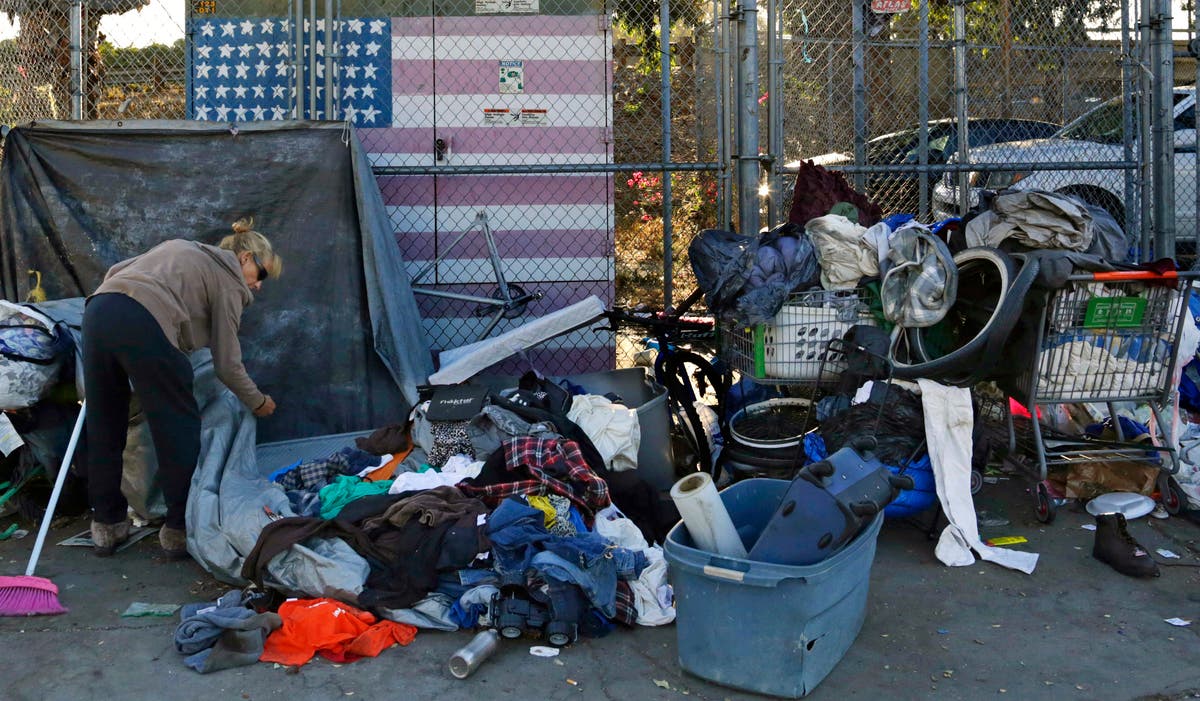
LOS ANGELES, CA — As Los Angeles grapples with the nation's largest homeless population and a hepatitis A outbreak that prompted Gov. Jerry, Brown to declare a state of emergency in California, community leaders are battling over starkly divergent approaches.
Hoping to curb the deadly spread of hepatitis A, the Los Angeles County Board of Supervisors Tuesday approved a plan to install portable toilets and hand-washing stations near densely populated homeless encampments in four unincorporated areas and along the Los Angeles and San Gabriel riverbeds.
However, even as County officials commit tax dollars to install bathrooms for the homeless in some parts of the county, officials in Venice and Santa Monica have chosen over the years to lock their abundant public restrooms at night for fear of attracting more homeless residents. The antithetical approaches reflect the rift in attitudes about how to handle the region's homeless crisis. Some want to discourage homeless people from settling locally with policies and laws that make it hard to live on the street. Others want to make it easier for the homeless to maintain safe hygiene.
Find out what's happening in Venice-Mar Vistafor free with the latest updates from Patch.
Supervisor Hilda Solis said it was a matter of need.
"Having an area to wash your hands is a human rights issue, but today we are making sure our at-risk communities have access to this basic human need," Solis said.
Find out what's happening in Venice-Mar Vistafor free with the latest updates from Patch.
The toilets and hand-washing stations will be available as long as the hepatitis A outbreak lasts, which will likely be at least six months.
The county has reported 32 outbreak-related cases of the virus but no new cases in the last two weeks, as compared to the 561 cases and 20 deaths last reported in San Diego County, where a state of emergency was extended on Monday.
Hepatitis A is a highly contagious liver disease and the risk is particularly great among homeless individuals who are often living in unsanitary conditions, suffering from other health issues and don't have ready access to treatment.
However, the Los Angeles Bureau of Engineering recently approved a Coastal Development Permit that would allow the city to continue to close beach bathrooms in Venice at night, according to the news outlet Yo! Venice. Santa Monica also locks its public restrooms every night at 8 p.m.
In A Los Angeles Times Op-Ed column, Conor Friedersdorf criticizes both communities for locking its public restrooms at night, leaving the large homeless population to defecate on the streets.
"But rather than exploit those bathrooms to help protect residents and visitors from biohazards, the powers that be close the beachside bathrooms every night at midnight, and keep them locked until 5 a.m. The predictable result is more people defecating during those hours on the beach, where barefoot tourists walk and children play," he wrote. "That outcome would be idiotic even absent a hepatitis epidemic. In the midst of one, it veers closer to insane. And needlessly depriving a population of available toilets on a nightly basis is flagrantly inhumane."
Santa Monica resident Helen Baines agrees.
"I think public bathrooms should be open 24/7," said Baines. "I am not sure where the homeless public is expected to go when these facilities are shut."
Joe Harper, another Santa Monica resident said, "At night, Hotchkiss Park is not safe. I feel restrooms open late, encourage drug use. I feel public restrooms is pandering to the questionable homeless elements here currently."
TELL US WHAT YOU THINK IN THE COMMENTS: Should communities with homeless populations keep public restrooms open at night?
In choosing locations to install temporary bathrooms, Public Health Director Barbara Ferrer told the board teams surveyed densely populated homeless areas, beginning on Skid Row near downtown Los Angeles and in Venice and Hollywood and then moving on to encampments in unincorporated areas and along riverbeds. Staffers visited 222 sites and ultimately identified 50 encampments countywide that are home to at least 30 people, according to board documents.
Ferrer acknowledged that 30 was a somewhat arbitrary number, but told the board it made sense to prioritize the most densely populated areas where contagion can spread quickly.
"We have homeless people living in ones and twos and threes (throughout the county) ... it would impossible to think about placing a toilet every place there is a homeless person," Ferrer said.
The four encampments in unincorporated areas which will get facilities are in Lennox, West Athens, West Carson and Palmdale. According to the survey results, an estimated 190 homeless individuals live in West Carson, making it the most densely populated of the four locations.
But many encampments in incorporated cities -- where the county cannot act alone -- are much larger. Homeless advocates estimate that 1,800 people sleep on Skid Row, for example.
Supervisor Janice Hahn highlighted the need to share data with city officials and help them understand the threat of contagion, an effort that Ferrer said is already underway.
"Some cities are being very accommodating, some are not," Hahn said.
The Los Angeles City Council unanimously voted last month to create a plan for portable restrooms and Ferrer told the board that the city "has been a great partner."
County staffers will also explore the possibility of mobile showers, which advocates said can make a huge difference for people living on the street.
Hahn, who was surprised not to see any facilities allocated to her Fourth District, said it wasn't just about the spread of hepatitis A, but "just basic human dignity for folks."
Public health workers will continue to survey unincorporated areas and report back in 45 days.
City News Service; Photo: The increased number of hepatitis cases in the homeless population and the geographic spread of the disease led California to declare a state of emergency in October. (AP Photo/Gregory Bull)
Get more local news delivered straight to your inbox. Sign up for free Patch newsletters and alerts.