Community Corner
Avon Had 1 in 10 of All Bear Sightings in CT Over the Past Year
In Connecticut, only nearby Farmington (at 446) had more bear sightings than Avon's 438 over the past 12 months, according to the state.


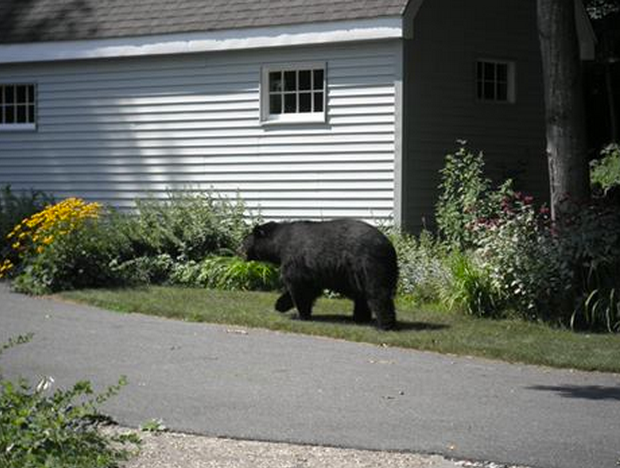
Seen a bear in the past 12 months? Join the crowd in Avon, where there were 438 sightings from Aug. 9 of last year through Thursday, Aug. 7, 2014.
And it looks like this area is the epicenter for bear sightings in Connecticut.
Only Farmington’s 446 beat Avon for frequency of bear sightings, according to statistics just released by the state Department of Energy and Environmental Protection. Overall, the state had 4,343 bear sightings, so more than 1 in 5 of them were from either Avon or Farmington.
Find out what's happening in Avonfor free with the latest updates from Patch.
Other towns in the area also had well over the norm — Burlington, 217; Canton, 179; Simsbury, 215; West Hartford, 67; Bristol, 164. Few other towns in the state, even rural ones, break 100 sightings a year. You can see the full list here (towns without sightings aren’t listed on it).
Here’s how to report a bear sighting.
Find out what's happening in Avonfor free with the latest updates from Patch.
Photo credit: Alan Iacoviello
Sidebar: What To Do and Not To Do with a Bear
Here’s information taken from a DEEP Web page with advice for those in the company of bears (it’s all a quote):
In recent years, a resident population has become established in Connecticut, primarily in the northwestern region. Bears have also wandered into heavily populated residential areas. Connecticut residents need to learn more about bears and how to reduce the likelihood of bears becoming a problem.
BEARS NEAR YOUR HOME
Bears are attracted to the garbage, pet food, compost piles, fruit trees and birdfeeders around houses.
DO remove birdfeeders and bird food from late March through November.
DO eliminate food attractants by placing garbage cans inside a garage or shed. Add ammonia to trash to make it unpalatable.
DO clean and store grills away after use.
DON’T intentionally feed bears. Bears that become accustomed to finding food near your home may become “problem” bears.
DON’T leave pet food outside overnight.
DON’T add meat or sweets to a compost pile.
BEARS SEEN WHEN HIKING OR CAMPING
Bears normally leave an area once they’ve sensed a human. If you see a bear, enjoy it from a distance. Aggression by bears towards humans is exceptionally rare.
DO make your presence known by making noise and waving your arms if you see a bear while hiking.
DO keep dogs on a leash and under control. A roaming dog might be perceived as a threat to a bear or its cubs.
DO walk away slowly if you surprise a bear nearby.
DON’T cook food near your tent or store food inside your tent. Instead, keep food in a secure vehicle or use rope to suspend it between two trees.
DON’T climb a tree, but wait in a vehicle or building for the bear to leave an area.
BEARS, LIVESTOCK AND BEEHIVES
Bears occasionally attack livestock and damage beehives.
DO protect livestock with electric fencing and move livestock into barns at night if possible.
DO reinforce beehives to prevent them from being knocked over or protect them with electric fencing.
Get more local news delivered straight to your inbox. Sign up for free Patch newsletters and alerts.