Politics & Government
Bethany and Woodbridge probate courts wind down operations
Controversy still swirls around state decision to consolidate

The clock is ticking on the demise of the small-town oriented probate system that Connecticut has employed for hundreds of years. As of Jan. 5 the state will finish consolidating 117 small courts into 54 district courts, which obliges Bethany residents to use the Hamden Probate Court and sends Woodbridge residents to the Derby court, located in Ansonia.
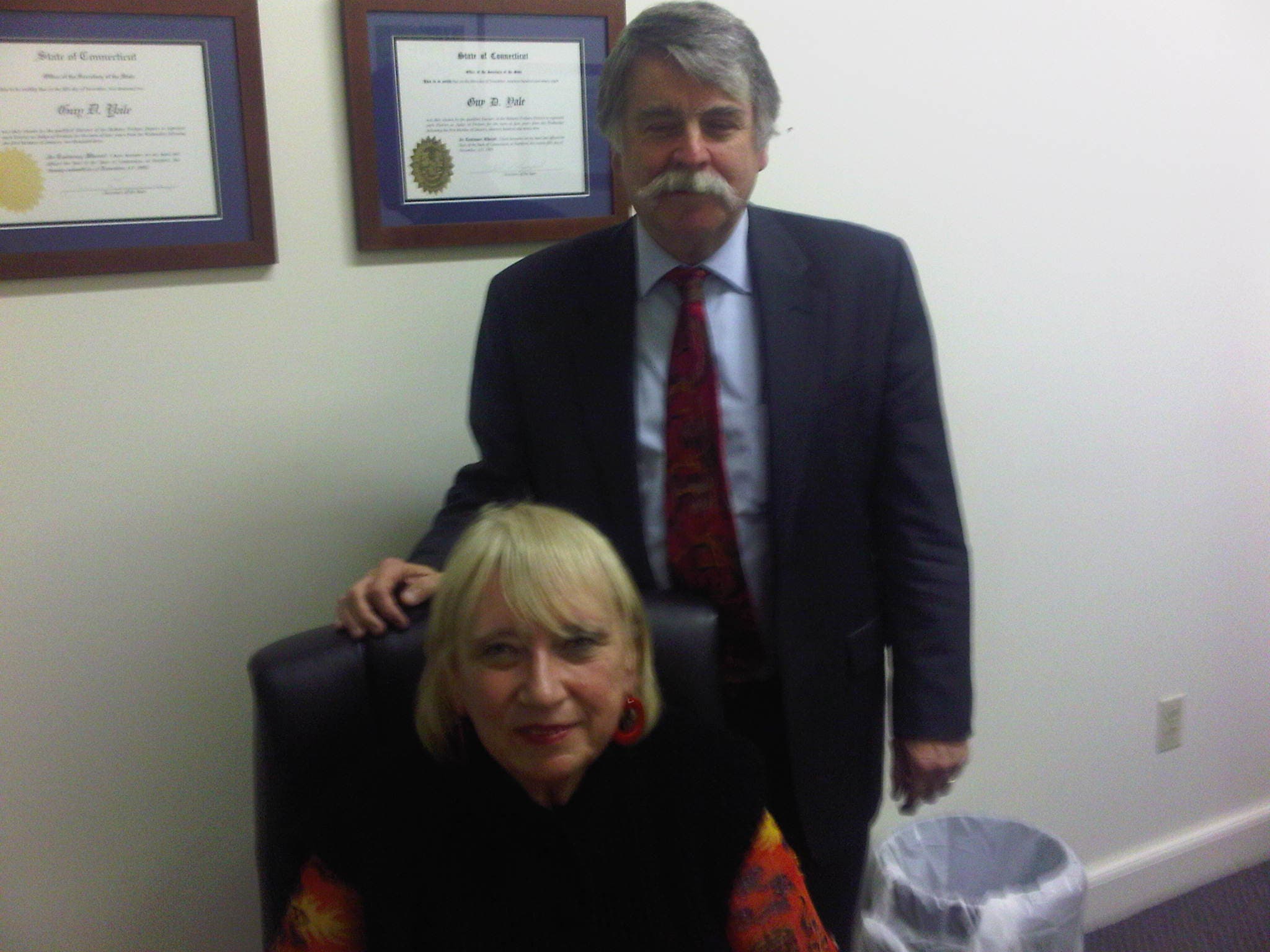
Bethany Probate Judge Guy Yale and his wife, Probate Clerk Judith Yale, are not convinced the change is good. In fact, in a system fraught with political maneuvering, they claim there was a lot more politics involved in the decision than the public was led to believe.
According to Vincent Russo of the state probate administrator's office the decision to consolidate was financial and the state had been progressing towards this end for at least eight years. Then, in 2006, the probate court system had a deficit the state could not make up.
Find out what's happening in Bethwoodfor free with the latest updates from Patch.
"To make the system more cost-effective we eliminated 63 courts," Russo said. "The legislature anticipates a $4 to $8 million savings from this."
Russo said $2.5 million in savings will come from reduced judicial compensation and benefits while a half million in savings is expected from centralizing probate's bookkeeping.
Find out what's happening in Bethwoodfor free with the latest updates from Patch.
The Yales, however, believe if the state had left the system alone, it would have been able to fend for itself as it has for the past 350 years where it's functioned as the oldest judicial system in the country.
"A lot of factors came into play," Judge Yale said.
The probate system had a surplus, Yale said, which the state transferred from probate to the general fund. He believed the amount was in the area of twenty million dollars. The downturn in the economy began to tax the system with fewer dollars coming in due to estates being smaller. The new children's courts became an additional expense the state had never experienced before, and the skyrocketing cost of health care certainly didn't help, nor did the hiring of additional staffing to the Probate Court Administration's offices. But politics, perhaps, was the biggest factor according to Yale.
"The big city courts were in favor of consolidating," Yale said. "They claimed the smaller courts were receiving money they needed."
For a while, he said, the probate assembly was divided into two camps, one pro-consolidation and one pro-small court, and each side ran their own slate of officers which led to a continuous dispute about numbers and funding. In the end, however, it may have been the negative publicity that drove the last nails into town-run probate court coffin.
"The Hartford Courant embarked on a campaign where they alleged there were a number of scandals," Yale said, "and made it their mission to eliminate all probate courts and combine them with the superior court system."
In the end, the compromise was consolidation, and the smaller courts are now packing their boxes and hoping for the best.
Vincent Russo understands that some people are disgruntled, and he confirms the state did transfer $15 million of a $30 million surplus to the general fund in 2002 and 2003.
"The law permits the state to take from the fund when it needs it," Russo said.
He denies the state probate office has added staff, and said they are working with a smaller staff than ever. Russo also said it wasn't just the city courts that were struggling financially, and that about 50 probate courts were looking at deficits due to an inability to pay skyrocketing health care costs.
The final blow to Amity came at the redistricting hearings. The selectmen from Woodbridge, Orange and Bethany spoke before the commission and asked that the three towns be consolidated into one probate district. However they did not meet the commissions parameters of at least 40,000 people (the combined towns have around 30,000) nor would the three towns have a weighted work load of 3,000 cases (1,000 would be the average.) A last-ditch effort to add Cheshire to the district was denied. Judge Yale said he believes there had already been a deal cut that tied Cheshire to the Southington court; Russo said he had no knowledge of this.
According to Judith Yale, they are sad to leave, but have loved working for the people of Bethany in their respective capacities.
"We feel we have served the people of Bethany well," she said, "and it has been an honor."
Neither Judge Guy D. Yale of Bethany nor Judge Peter D. Hershman of Woodbridge are running for election in the new districts where both incumbent probate judges will run unopposed.
Get more local news delivered straight to your inbox. Sign up for free Patch newsletters and alerts.