Neighbor News
Quinnipiac’s Maureen Helgren Receives 2026 Rare Impact Award
Helgren is among a distinguished group of individuals and organizations recognized by the National Organization for Rare Disorders
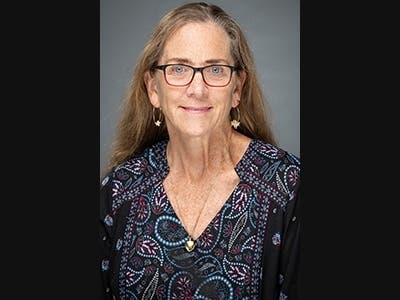
Maureen Helgren, associate professor of medical sciences and director of anatomy at Quinnipiac University’s Frank H. Netter MD School of Medicine, has been recognized by the National Organization for Rare Disorders (NORD) as a 2026 Rare Impact Award Community Champion for her contributions to rare disease education and advocacy.
Helgren is among a distinguished group of individuals and organizations recognized by NORD this year for advancing research, education, advocacy and support for the more than 30 million Americans living with rare diseases.
“I am honored to receive this award from NORD and grateful for Quinnipiac's commitment to preparing students across disciplines to make a meaningful impact on the rare disease community. Although rare diseases affect 1 in 10 people, education on the diagnosis and management of rare disorders remains limited in many health professional curricula,” Helgren said. “This gap leads to clinicians’ uncertainty, which contributes to prolonged diagnostic odysseys, delayed treatment, and significant emotional, physical and financial burdens for patients and their families.”
Find out what's happening in Cheshirefor free with the latest updates from Patch.
According to NORD, Helgren was selected for the Community Champion Award for her work integrating rare disease education into the curriculum at Quinnipiac’s Netter School of Medicine and fostering student advocacy through the university’s NORD Students for Rare chapter.
“Receiving this award reinforces the importance of shedding light on rare diseases and elevating awareness among future healthcare professionals, researchers, policymakers and advocates,” Helgren added. “This award is not only a recognition of past efforts but also a reminder of the work that remains ahead. By continuing to expose students to rare diseases, we can help ensure that patients are seen, heard, diagnosed sooner, and connected to the care and support they deserve.”