Politics & Government
Malloy Proposes Route 9 Upgrade to Eliminate Accidents; Reduce Congestion
Malloy's nearly $40 billion budget proposal includes criminal justice reform, a sales tax reduction and spending increases by 3.1 percent.


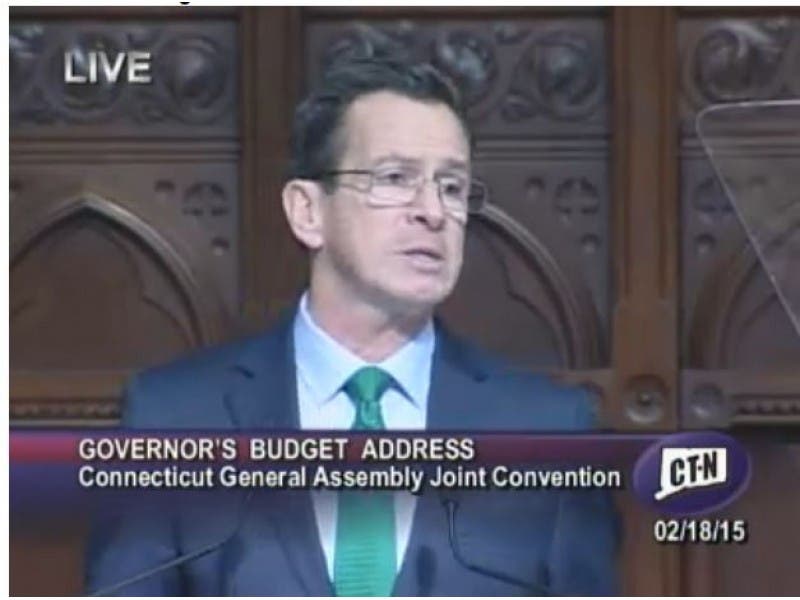
Gov. Dannel Malloy announced a massive proposal for transportation, criminal justice reform and other initiatives in his budget address to state legislators Wednesday, Feb. 18.
The nearly $40 billion budget over two years would represent a total increase of 3.1 percent from the prior fiscal year. It includes $590 million in cuts to the current services budget.
Find out what's happening in Middletownfor free with the latest updates from Patch.
“The budget I present to you is filled with tough choices,” Malloy said.
Malloy’s proposals addressed immediate concerns, as well as initiatives that would carry into the mid-century.
Find out what's happening in Middletownfor free with the latest updates from Patch.
Among Malloy’s proposals is to lower the sales tax to 6.2 percent from 6.35 percent on Nov. 1 and to further reduce it to 5.95 percent in 2017, which would be the lowest level since 1971. The sales tax was 6 percent before Malloy came into office.
Malloy’s budget recommendation includes no across-the-board layoffs, early retirement proposals and furlough days. It also increases the statewide hiring lapse, which should increase savings by $25 million, according to budget documents.
There has been talk about reintroducing tolls to Connecticut highways, but Malloy didn’t address the matter in his speech to the General Assembly.
Tax Changes
Malloy’s proposed sales tax reduction would come with a few other caveats.
Clothing and shoes less than $50 was scheduled to be exempt from taxes in July, but the proposal would eliminate that.
Consumers wouldn’t pay a tax on over-the-counter drugs.
The sales tax was 6 percent before Malloy came into office.
Malloy touts the reduction as a way to save middle class taxpayers money and said the difference could be made up for by simplifying the tax code and reining in loopholes and corporate tax credits.
The proposal also puts the stop on other tax breaks that affect people from the working poor to corporations, according to the Connecticut Mirror. Although Malloy’s administration pitches the plan with no tax increases, others argue that an increase in tax receipts and closing loopholes represents a tax increase.
Last week, Malloy revealed a proposal to extend alcohol sale hours and change minimum pricing rules. Malloy’s administration projects that it will bring in $3.2 million in additional revenues each fiscal year.
- What do you think about Malloy’s proposal? Join the conversation below.
Criminal Justice Reform
The proposed Second Chance Society proposal would make simple drug possession a misdemeanor instead of felony and get rid of drug-related mandatory minimums.
“We built modern prisons, when we should have been building modern schools; from 1985 to 2008, our prison population tripled in size,” Malloy said.
Malloy said many of his proposals aren’t novel ideas and are already happening in states like Texas, California, Mississippi and Washington, D.C.
Malloy’s team predicts that the Department of Correction would save $24.3 million in fiscal year 2016 and $24.6 million in 2017 due to a reduced prison population.
Certain functions of the Judicial Department’s Court Support Services Division would be transferred to the Department of Children and Families and DOC.
Juvenile probation services, residential and family services would be transferred to DCF and would affect about 755 positions.
Adult probation and alternative incarceration program would be transferred to the DOC and affect 753 positions.
Bail commissions, pretrial intake, support enforcement and victim services would remain in the Judicial Department.
Chief Justice Chase T. Rogers released a statement opposing the budget proposal and the transfer of judicial branch duties to the executive branch offices.
“Our concern is that we have seen no evidence substantiating how this proposal will result in greater efficiencies or better outcomes in the criminal justice system, the juvenile justice system or the family court system,” he said. “Additionally, we do not agree that the proposal will result in budgetary savings.”
Transportation
Malloy proposed a massive 30-year, $100 billion transportation build-up that would have a five-year ramp-up plan immediately.
The five-year $2.8 billion plan builds on the $3.8 billion baseline plan for the state Department of Transportation.
Connecticut residents spend on average 42 hours a year, or one full work week in traffic, which costs residents about $4 billion in wasted time and resources annually.
Some parts of the proposal, including widening I-95 have drawn criticism.
Malloy didn’t outline where future revenues would come from to fund the proposal years from now, according to the Connecticut Mirror.
Some limited options include the restitution of tolls, but Malloy’s budget director Ben Barnes said tolls wouldn’t generate enough money for the proposal, according to WFSB.
The following is included in the massive transportation proposal:
Highways, Bridges, and Roads
- Replacing the I-84 Viaduct in Hartford, which costs millions of dollars annually just for maintenance.
- Building new ramps to the Charter Oak Bridge in Hartford to eliminate accidents and traffic delays.
- Upgrading Route 9 in Middletown to eliminate accidents and reduce unnecessary congestion.
- Replacing the aging interchange of Route 8 and I-84 in Waterbury, known as the Mixmaster.
- Widening the 5-mile, two-lane stretch of I-84 in Danbury between Exits 3 and 8 to alleviate congestion.
- Widening I-95 between Bridgeport and Greenwich.
- Completing the Merritt Parkway interchange on Route 7 in Norwalk.
- Widening I-95 from Old Saybrook to New London, including the interchange with I-395, to mitigate congestion and improve safety.
- Completing Route 11.
- Upgrading the Gold Star Bridge on I-95 between Groton and New London
- Boosting funding to cities and towns by doubling the Local Transportation Improvement Program, increasing local bridge funding, and creating a new state-funded traffic signalization program.
Rail and Buses
- Significantly expanding the capacity and improving the infrastructure of the New Haven Line to allow for subway-life frequency as well as fast and reliable intercity service.
- Building train stations up and down the New Haven-Hartford-Springfield Line (the “Hartford Line”), bringing commuter rail service to Enfield, West Hartford, Newington, North Haven and Hamden.
- Double-tracking the entire Hartford Line from New Haven to Springfield, allowing for more efficient and increased service.
- Constructing new stations along the New Haven Line, including the new Barnum Station in Bridgeport, reconstruction of the Merritt 7 station in Norwalk on the Danbury Branch, and a new station in Orange.
- Completing a new parking garage at Union station in New Haven to expand ridership and further encourage transit-oriented development in the area.
- Replacing the Walk Bridge in Norwalk, as well as rehabilitating or replacing the Devon, SAGA and Cos Cob moveable bridges on the New Haven Line.
- Making improvements to the Waterbury Branch, including a new signal system, sidings and equipment to allow for increased capacity and more frequent service.
- Expanding local and express bus service as well as paratransit across the state to reach unserved urban areas and markets.
Walkways and Bikeways
- Creating a new program to help cities and towns install bike and pedestrian safety improvements in urban areas and town centers.
- Repairing existing trails that have fallen into disrepair.
- Completing new bike and pedestrian trails across the state.
Education
Malloy specifically said that he would not sign a budget that is balanced on the backs of towns and schools.
Chief among Malloy’s education proposals is a bill that would ensure every child in the state would receive a full-day kindergarten experience by fall of 2017. Many school systems across the state have transitioned or are in the process of transitioning toward full-day kindergarten.
“We’ll make sure all our youngsters receive the time they need to learn and reach their full potential, right from the moment they enter elementary school,” Malloy said.
He also addressed student loan debt and proposed a bill that would allow the state’s Higher Education Student Loan Authority to refinance the loans of state residents.
However, Malloy’s budget isn’t all peaches and cream for education and it includes spending reductions for the state college system.
“While we don’t yet know its full impact, this level of spending reduction will almost certainly require a significant increase in student tuition and changes to how Connecticut State Colleges and Universities conducts its operations,” said Gregory Gray, president of CSCU.
Healthcare
Malloy has proposed moving adults with income over 138 percent over the federal poverty line out of the HUSKY system and into the health insurance exchange. The move would allow those individuals to purchase health coverage at a discounted rate and would save the state an estimated $44.6 million in the 2016 fiscal year and $82.1 million in the next fiscal year.
Another proposal involves cutting off entry into the state-funding home care program and increase the cost share from 7 percent to 15 percent for current members. The estimated savings are $4.6 million and $8.6 million for fiscal years 2016 and 2017 respectively.
The plan drew fire from AARP Connecticut, according to the CT Mirror.
Coverage of services for children under 21 with autism spectrum disorder would cost the state $14.1 million and $38.2 million in fiscal years 2016 and 2017 respectively.
Proposals to reduce reimbursement to Medicaid providers would save the state $68.9 million and $74.3 million in fiscal years 2016 and 2017.
Image via CT-N
News Around Patch
- Guilford Native Nick Fradiani May Make the Top 24 Thursday on American Idol Season 15
- $13,000 in Cash Seized After New London Motor Vehicle Stop
- Groton Cocaine Dealer Receives 77 Month Prison Sentence
- Mystic in the Running for Best Coastal Small Town
Get more local news delivered straight to your inbox. Sign up for free Patch newsletters and alerts.