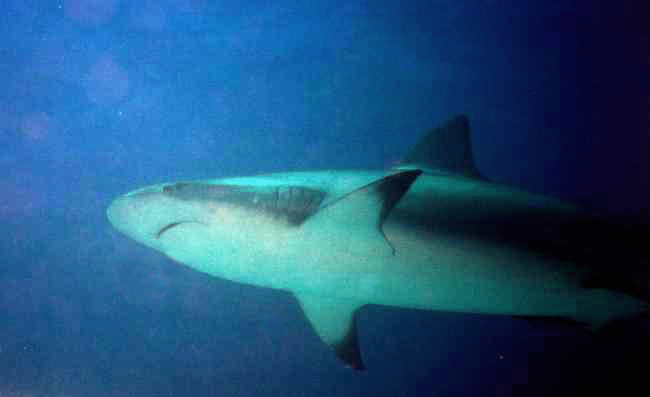
One of the most exciting things that I saw as I watched the ocean this winter is tracking great white sharks. Yes, they are out and about in the Atlantic and if you are interested in tracking a few, you can do it through Ocearch - an organization that tags and monitors great white sharks for their television show and research data. And if anyone has been following their interactive website, you might know the name Mary Lee.
Mary Lee is a 16-foot female great white that was tagged on September 17, 2012 off of Cape Cod. She has can move along a about fifty miles in a day and weighs 3456 pounds. She has moved from Cape Cod, down to Florida, back up the coast, around Cape Cod during the blizzard, cruised Bermuda, back down south and now is eating off the Continental Shelf south of of Montauk again. This shark moves. It has been interesting to see Mary Lee track along the Atlantic Ocean while Facebook supporters and fans of Ocearch guess and where she is heading and when she might change direction. They began making Mary Lee t-shirts and using the interest and the technology in shark tracking to move their cause. If you like Shark Week, or you are just interested in the ocean and the fish out there, this is a great arm chair oceanographer resource.
Great White sharks are apex predators and while they deserve respect, they aren't waiting at the beach for you. They are hundreds of miles offshore feeding and looking for food. They do come close to Cape Cod in the summer to feed on the seals there. And just because the Ocearch program has tagged these sharks, it doesn't mean that others aren't out there. This isn't meant to scare people, it is meant to remind us of the huge ecosystem that is out our front doors. There two other tagged sharks in the southern waters that you can track and follow. Lydia and Genie are on their own journeys. As a scuba diver, I think about those big sharks moving around, but I try to understand their behavior, patterns, and what to expect from them. And knowing Mary Lee is offshore hundreds of miles away makes me want to dive more, understand this environment, and enjoy this amazing natural resource that is our oceans.
The shore will certainly look different after it took a beating with a busy fall and winter, including a hurricane, Nor’easter, and a blizzard. Be careful of nails and glass in the sand early because the beaches haven’t been raked off yet. There are a few other web places to check the ocean. I use the NOAA site to watch the weather. When offshore weather comes our way (including hurricanes) you often see a significant difference in the wind speeds and waves out in the ocean. An app that I like is the NOAA buoys that give your wind speed, water temperature, and wave heights. This is interesting data to check out too. Below are some of the links that will get you started. If you find something cool and you want to share, please add them into the comments or send me an email. Enjoy your ventures to the shore and your time in the water.
Ocearch - for all your shark tracking needs: http://www.ocearch.org/INACTION.html
NOAA weather center: http://www.weather.gov/
National Data Bouy System: http://www.ndbc.noaa.gov/