Politics & Government
Safe City Commission Will Focus on Five Areas
Teams to identify goals, work outside of regular meeting


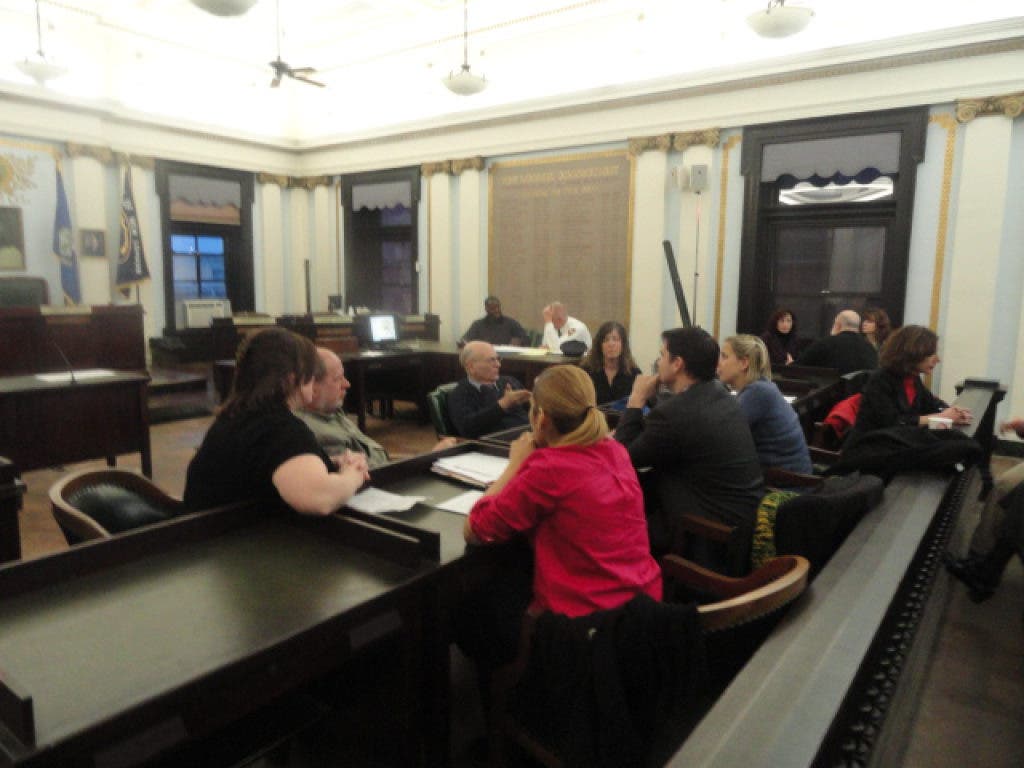

The Safe City Commission identified several goals to be addressed by five subgroups at its regular meeting on Monday. These teams will work outside of the regular commission gatherings, scheduled to occur twice a month before making final recommendations to the City Council in April.
Chairman Michael Buscetto arranged the groups members based on an e-mail sent out to the commission. The teams focus on direct action, which aims to conduct focus groups to understand the needs in the community; a data, research, and evaluation team to examine existing information to help guide what work the commission should do; a scope, perception and consequence team to examine how serious violence in the city is and identify what measures may be used to control it; a programming team to identify existing resources and determine the needs of youth in job skills training as well as after-school and mentoring programs; and a communications team to represent the commission and develop its message.
The commission was after Buscetto, a city councilor, proposed the group as a way of identifying problems in the city and actionable ways to address them. The proposal was a response to the arrest of six teenagers, who are accused of murder and accessory to murder in the Oct. 29 homicide of 25-year-old Matthew Chew.
Find out what's happening in New Londonfor free with the latest updates from Patch.
The idea of a curfew, floated as something to be discussed by the scope, perception and consequence team, brought some discussion on Monday. Tommie Major, director of the , said youth programs must be made available if a curfew is put into place.
“If we’re going to suggest a curfew, there has to be some type of alternative,” he said.
Find out what's happening in New Londonfor free with the latest updates from Patch.
Capt. Bill Ditman of the said he believes the city should have established a youth crisis center several years ago as a place for officers to take children. He said children picked up by police are usually returned to their homes, and that parents often aren’t there.
“Some of these kids don’t even eat,” said Ditman. “I see cops taking money out of their pocket and buying Subway stuff for them. These are big issues.”
After initial discussions, the teams reported their immediate plans to the commission. Laurel Holmes, director of ’s Community Partnerships and Outreach program, said only two of the data subgroup’s four members were present and that it would meet again to firm up a plan. She said their initial goal will be to find what they hope to achieve and what the best practices are.
Tommy Thompson, principal of , said the programming subgroup will identify available resources through the Community and Campus Coalition. He said the group will also identify ways to prevent youth violence from occurring as well as intervention methods for students who have been involved in incidents.
Jeanne Milstein, Child Advocate of the State of Connecticut, said the communications subgroup needs to combat a negative perception of the community and let the public know it is a “safe and vibrant city.” She said this effort will involve distribution of crime statistics and getting young people involved in the commission.
Chris Soto, who is heading the newly formed , said the direct action subgroup will match members with communities and determine how many focus groups will be scheduled for community input.
Get more local news delivered straight to your inbox. Sign up for free Patch newsletters and alerts.