Schools
Speaking of Autism
Autism Awareness Week at Bennie Dover Jackson Middle School ends with a greater understanding of the brain disorder that affects a growing number of students
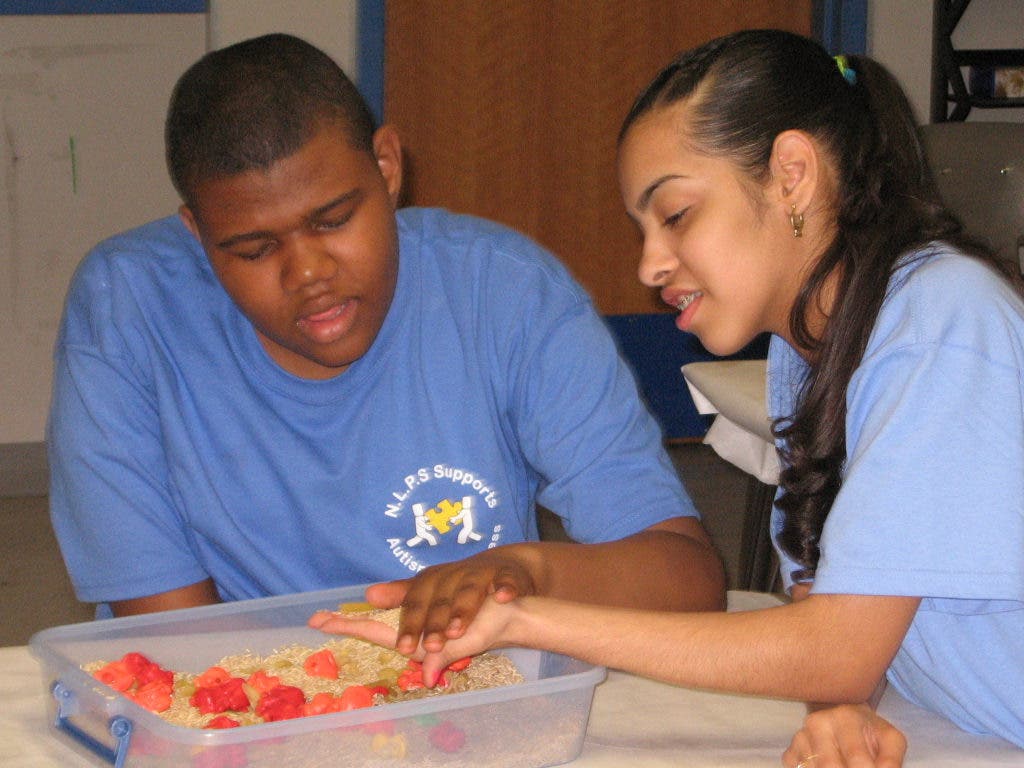
Everyone was feeling pretty blue at Bennie Dover Jackson Middle School on April 29. It was the end of Autism Awareness Week and to mark the occasion, the school joined the Autism Speaks “Light It Up Blue” campaign. Blue light bulbs replaced white ones to “shine a light” on autism and many people came to school wearing blue t-shirts to show their support for the autistic students in their midst.
As a fundraiser for the school’s special education students, the school produced 200 blue t-shirts with the autism puzzle piece logo, which were sold for $10 apiece throughout the school district, along with 200 autism awareness bracelets for $2 apiece, which sold out within 10 days. The $2,400 raised will be used to cover the cost to send all the special education students on the eighth-grade field trip to Lake Compounce Amusement Park.
It wasn’t all fun and games, however. “We put together a group of students to research different facts about autism,” said history teacher Erin Sebastianelli. The students broadcast their findings as part of the school’s morning news. In case you missed it, here are a few facts about autism:
Find out what's happening in New Londonfor free with the latest updates from Patch.
The term autism is used to describe a number of developmental brain disorders (known as Pervasive Developmental Disorders) that include Asperger’s Syndrome, Rett Syndrome, and Childhood Disintegrative Disorder. And a growing number of children are being diagnosed with it. According to the most recent report issued by the U.S. Centers for Disease Control, autism affects one out of 110 children, and one out of 70 boys, yet the causes of the disease remain a mystery.
One thing researchers do know is that autism seems to be becoming more prevalent. In fact, from 2002 to 2006, the numbers of children diagnosed with autism increased by 57 percent. Improved and earlier diagnosis is partly responsible for the startling increase, the organization Autism Speaks reports, but it certainly doesn’t account for all of it, which is why the organization is calling for more research on the subject.
Find out what's happening in New Londonfor free with the latest updates from Patch.
Before participating in Autism Awareness week, eighth-grader Franky Rodriguez Jr. said he really didn’t know anything about autism. “I thought it was like ‘retardedness’ but now I know it’s different,” he says. Spending time with students in the special education classroom on Friday taught him something else too. “I’ve been observing and seeing what they do,” said Rodriguez. “I think they deserve more credit. I’m having fun with them. I think they should stop dividing us and have us all in regular classes.”
The weeklong event certainly helped the special education students gain much wider acknowledgement and acceptance among their peers. Every day, special education teacher Kim Stefanski’s students package and distribute 700 pieces of fruit as part of a federal program spearheaded by First Lady Michelle Obama that aims to ensure students get their daily requirement of fresh fruits and vegetables.
“The general population has seen us doing that but they have become much more familiar with the students,” said Stefanski. “They know them now.”