Arts & Entertainment
Adorable Rare Baby Lemurs Born at National Zoo [VIDEO]
The Small Mammals House welcomed three critically endangered red-ruffed lemurs to the world.


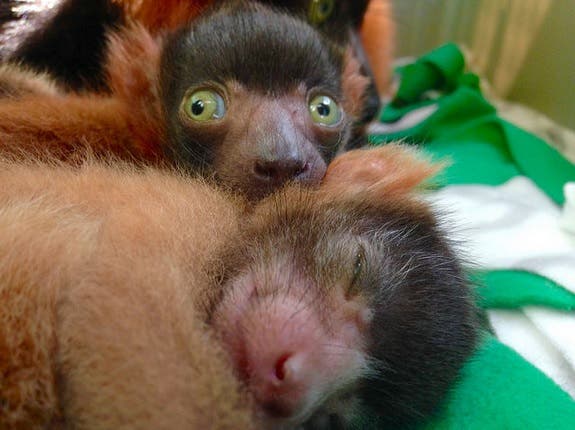
Three critically endangered red-ruffed lemurs have been born at the Smithsonian National Zoo, and the zoo captured video of their antics, which you can watch below.
Their mother, 6-year-old Molly, gave birth to the lemurs April 5 at the Small Mammal House after Molly bred with one of the 7-year-old red-ruffed lemur brothers at the zoo, Coronado and Cortez, according to a Smithsonian statement.
The staff at the zoo has been checking in with Molly and it appears she's acting just like the mother they'd hoped she'd be: she's nursing and carrying the babies, and all three appear to be in good health.
Find out what's happening in Washington DCfor free with the latest updates from Patch.
In the meantime, veterinarians at the zoo will conduct a physical exam on the lemurs to determine if each is male or female.
#Smise! 3 critically-endangered red-ruffed lemurs born @NationalZoo! #WeSaveSpecies pic.twitter.com/5OvFDN29rW
Find out what's happening in Washington DCfor free with the latest updates from Patch.
They are kept in a separate part of the enclosure to help them acclimate to their new environment. But don't worry, you'll be able to see them when you come to the zoo and visited the mixed-species exhibit at the Small Mammal House.
"Red-ruffed lemur females usually give birth to three young, although they can have up to six young in one litter," the statement reads. "Unlike most primates who carry their offspring with them, red-ruffed lemurs typically leave their young in nests while they search for food. Native to the northeastern deciduous forests of Madagascar, red-ruffed lemurs are considered critically endangered by the International Union for Conservation of Nature due to deforestation, hunting and trapping for the pet trade."
There's plenty of lemur action at the Small Mammal House, although the other two lemur species -- ring-tailed and red-fronted lemurs -- live on "Lemur Island" rather than in the house itself.
"The ring-tailed lemurs are often found in the sunny spots on the island first thing in the morning," according to the website. "Occasionally, they will climb to the top of the rock formation to sunbathe. They will sit upright, with their thinner white fur belly toward the sun. By late morning, visitors will find them all huddled together in the huts, in a sort of lemur ball. They do this to keep warm and to reaffirm social bonds. From time to time, visitors see them grooming each other as well. The red-fronted lemurs tend to spent time in the trees toward the back of the island or in the huts."
Image via Smithsonian National Zoo.
Get more local news delivered straight to your inbox. Sign up for free Patch newsletters and alerts.