Community Corner
DC's Cherry Blossoms Are Going To Bloom Earlier And Earlier, Scientists Claim
Think that this year's peak bloom of mid-March is crazy early? Scientists say it will keep starting earlier thanks to climate change.


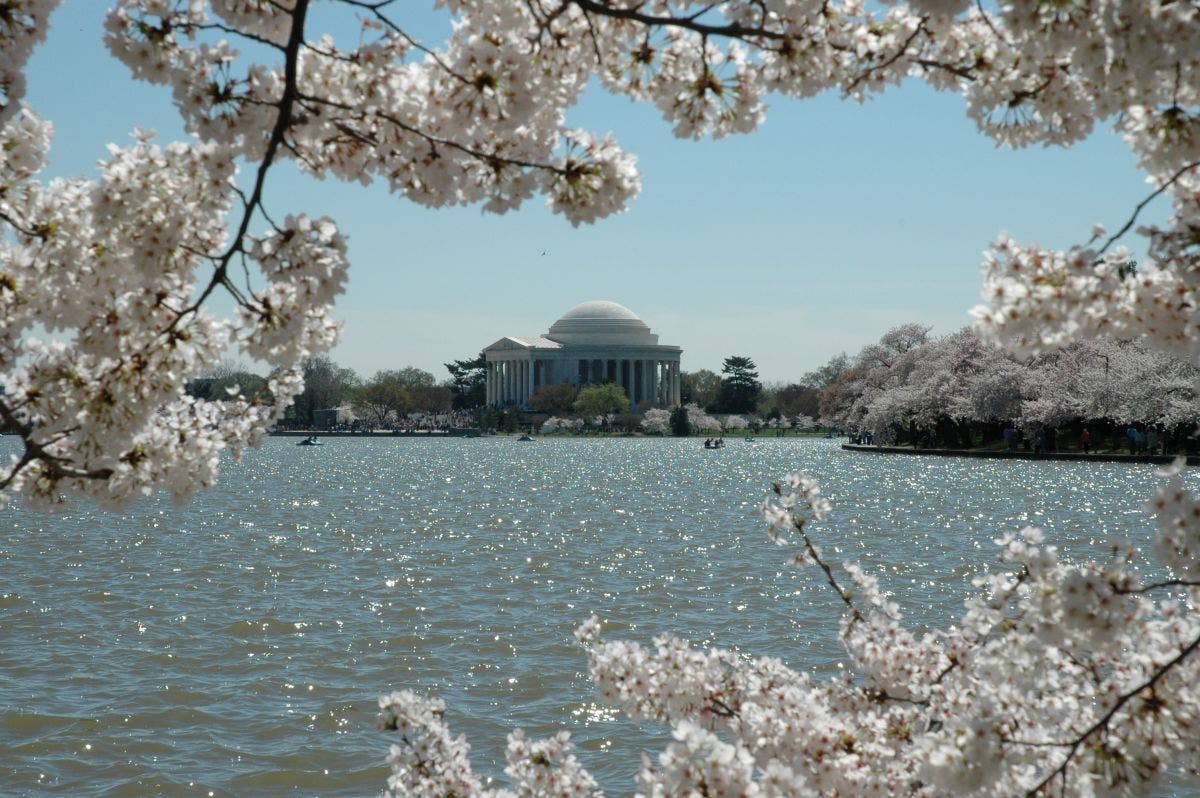
WASHINGTON, DC — The peak cherry blossom dates have been released, and not surprisingly — based on the insanely warm weather we've had in the District so far — they're going to be blooming earlier than ever in modern memory. And one scientific paper published in 2011 says that this trend is only going to continue.
The March 14-17 peak bloom period is earlier than any of the last 14 years of peak bloom dates in the nation's capital, and a full month earlier than it was in 2015, 2014 and 2013. But is global warming to blame for this? One study is predicting that yes, peak bloom dates are going to happen earlier and earlier in the season because of climate change.
Major scientific journal PLOS One published a study by researchers from the University of Washington in November 2011 titled, "Predicting the Timing of Cherry Blossoms in Washington, DC and Mid-Atlantic States in Response to Climate Change." In the study, the authors argue that the cherry blossoms are a harbinger of what's to come for the world's changing climate.
Find out what's happening in Washington DCfor free with the latest updates from Patch.
"Cherry blossoms, an icon of spring, are celebrated in many cultures of the temperate region," the paper's abstract states. "For its sensitivity to winter and early spring temperatures, the timing of cherry blossoms is an ideal indicator of the impacts of climate change on tree phenology."
The paper warns that in the coming decades, the peak bloom dates (PBD) for the cherry blossoms will get earlier and earlier.
Find out what's happening in Washington DCfor free with the latest updates from Patch.
"Our results indicate that PBD at the Tidal Basin are likely to be accelerated by an average of five days by 2050s and 10 days by 2080," the abstract continues. "The acceleration is likely to be much greater (13 days for 2050s and 29 days for 2080s) under a higher (A2) emissions scenario projected by CGCM2 general circulation model.
"Our results demonstrate the potential impacts of climate change on the timing of cherry blossoms and illustrate the utility of a simple process-based phenology model for developing adaptation strategies to climate change in horticulture, conservation planning, restoration and other related disciplines."
Image via National Park Service
Get more local news delivered straight to your inbox. Sign up for free Patch newsletters and alerts.