Community Corner
Gravestones Dumped Along Potomac To Be Repatriated With Remains
Many grave markers from a historic African American cemetery in D.C. were dumped for erosion-control rubble along the Potomac River.


KING GEORGE COUNTY, VA — In 2016, state Sen. Richard Stuart started finding gravestones in the Potomac River along his riverfront farm in King George County.
Stuart (R-District 28) contacted historians to help him figure out why the gravestones ended up near his property along the Potomac River.
In their research, historians traced the headstones back to the Columbian Harmony Cemetery, a historic African American burial ground in Washington, D.C., that was dug up and relocated in 1960 to make way for commercial development, including where the Rhode Island Avenue-Brentwood Metro station currently stands.
Find out what's happening in Washington DCfor free with the latest updates from Patch.
When the cemetery was dug up, the remains of the people buried in the cemetery were moved to a memorial garden in Landover, Maryland.
“But in a dehumanizing act, most of the grave markers and monuments were sold for scrap or dumped for erosion-control rubble along the Potomac River,” Gov. Ralph Northam's office said in a news release Monday.
Find out what's happening in Washington DCfor free with the latest updates from Patch.
Many of the grave markers were deposited along a 2-mile stretch of King George County, an area that includes Caledon State Park and Stuart’s home.
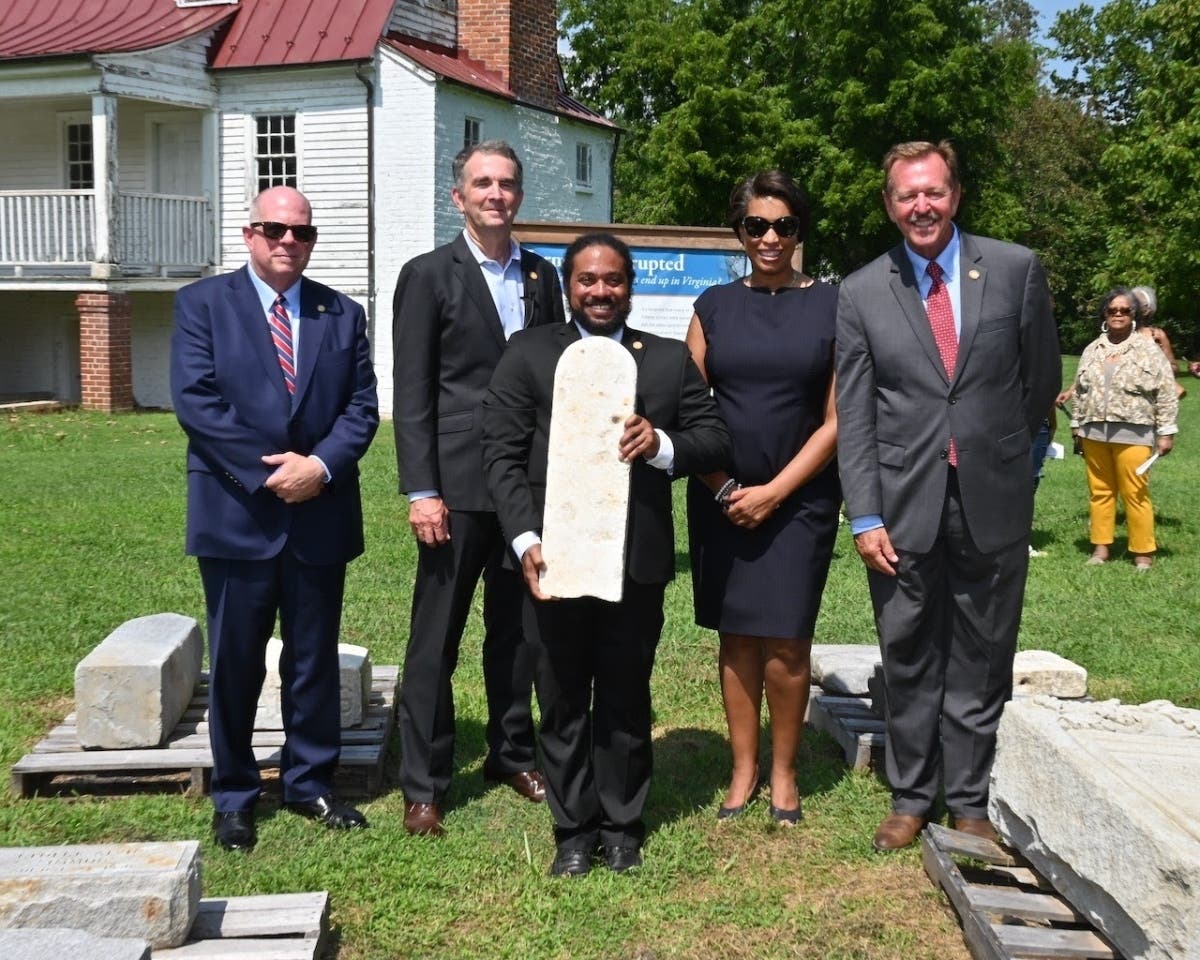
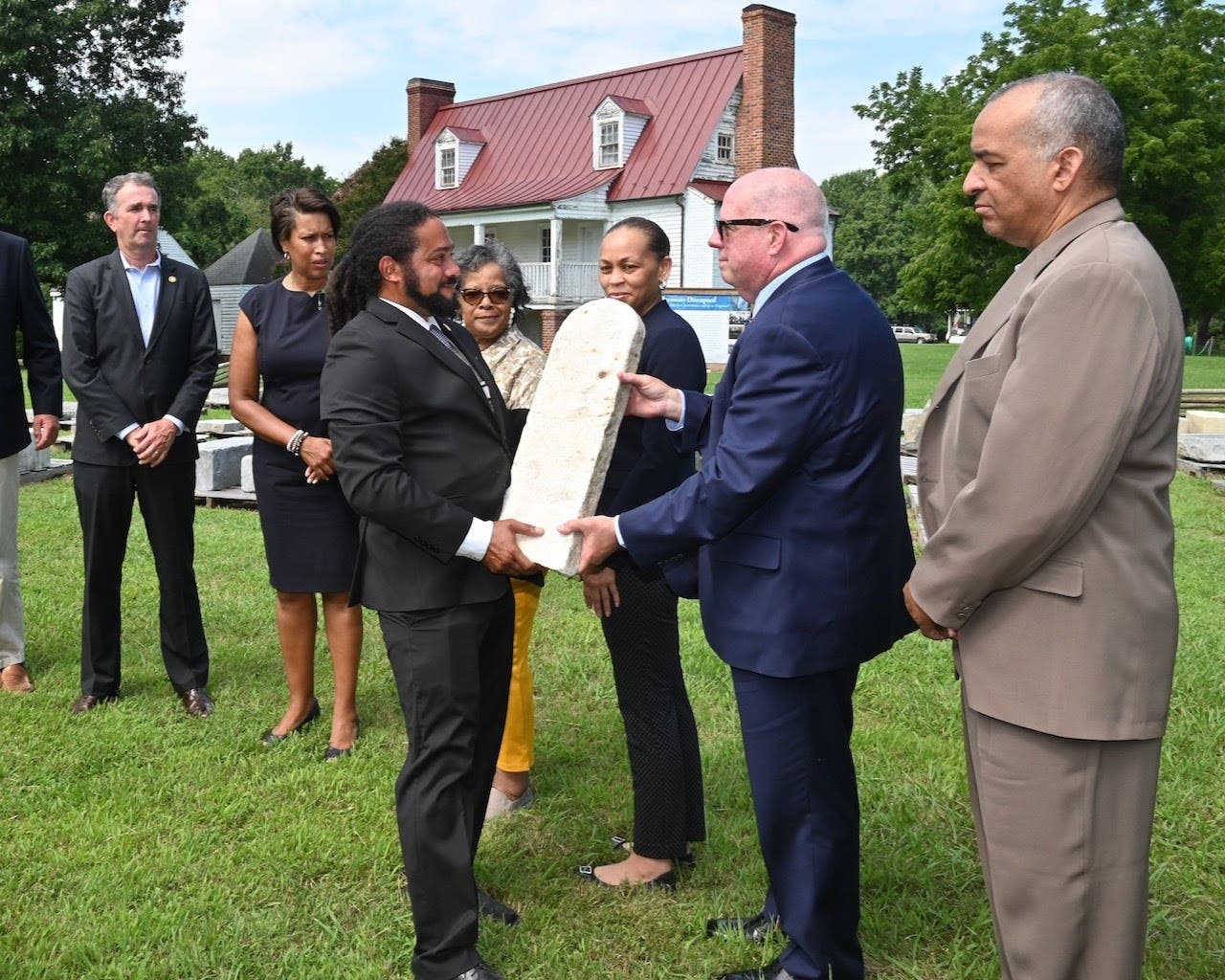
On Monday, Northam, along with Maryland Gov. Larry Hogan and D.C. Mayor Muriel Bowser, attended a ceremony at Caledon State Park for the official transfer of 55 historic African American headstones to National Harmony Memorial Park in Prince George’s County.
"As soon as we learned of the massive undertaking to recover these headstones, we offered the full support of our entire Maryland team," Hogan said in a statement. “We have no greater responsibility as leaders in democracy than preserving for future generations the importance of clearly differentiating between right and wrong.”
The headstones will become part of a 1-acre memorial garden honoring the more than 37,000 people buried in the original cemetery in D.C., which had existed since 1859.
Among the people buried in Columbian Harmony Cemetery were two sons of abolitionist Frederick Douglass; Elizabeth Keckley, a confidante of Mary Todd Lincoln; Philip Reid, who helped create the Statue of Freedom atop the U.S. Capitol; many Black Union Army veterans and one of D.C.’s first Black policemen.
“It’s our duty to make sure these headstones are returned to the graves they were intended to mark and honor,” Northam said in a statement. “As we reckon with the many impacts of systemic racism, we must tell the full and true story of our shared history, including indignities inflicted on people of color even after death.”
Virginia has approved a total of $4 million for moving the headstones and creating the memorial garden in Maryland.
“We know that the 37,000 people who were laid to rest at Columbian Harmony Cemetery were the men, women, and families who helped build Washington, D.C. into the city we are today,” Bowser said in a statement. “They were talented soldiers, civil rights leaders, dressmakers, and so much more — they were moms and dads, grandmothers and grandfathers, friends and neighbors.”
Stuart said if he were the descendants of the people whose headstones were deposited along the shoreline of the river, “I would be angry.”
“The dead are supposed to be revered and respected," Stuart said. "Today we begin the work of righting this wrong and honoring these Americans.”
Officials from Virginia, Maryland and D.C. partnered for the project with the Virginia Department of Conservation and Recreation and the History, Arts, and Science Action Network, a restorative justice nonprofit organization based in Hyattsville, Maryland.
This fall, crews from the National Guard in Maryland and Virginia will seek to unearth and recover additional headstones along a 2-mile stretch of the Potomac near Caledon State Park, where the first ones were found.
The grave markers are illegible from being worn smooth over time and cannot be removed from the water but will become part of a living park-like memorial wall with protective shoreline vegetation. Boaters will be able to learn about the site through historic markers that will be placed at Virginia’s Caledon State Park
“Ensuring these grave markers and the memories of those they recognized are treated with dignity and respect is another victory in our battle for historic justice in the Commonwealth of Virginia,” Virginia Secretary of Natural and Historic Resources Matthew J. Strickler said in a statement.
Get more local news delivered straight to your inbox. Sign up for free Patch newsletters and alerts.