Politics & Government
US Supreme Court Strikes Down Roe V. Wade, Abortion Still Legal But Vulnerable In DC
The U.S. Supreme Court overturned the 1973 Roe v. Wade decision with a 6-3 majority ruling on Friday. Here's what that means in DC.


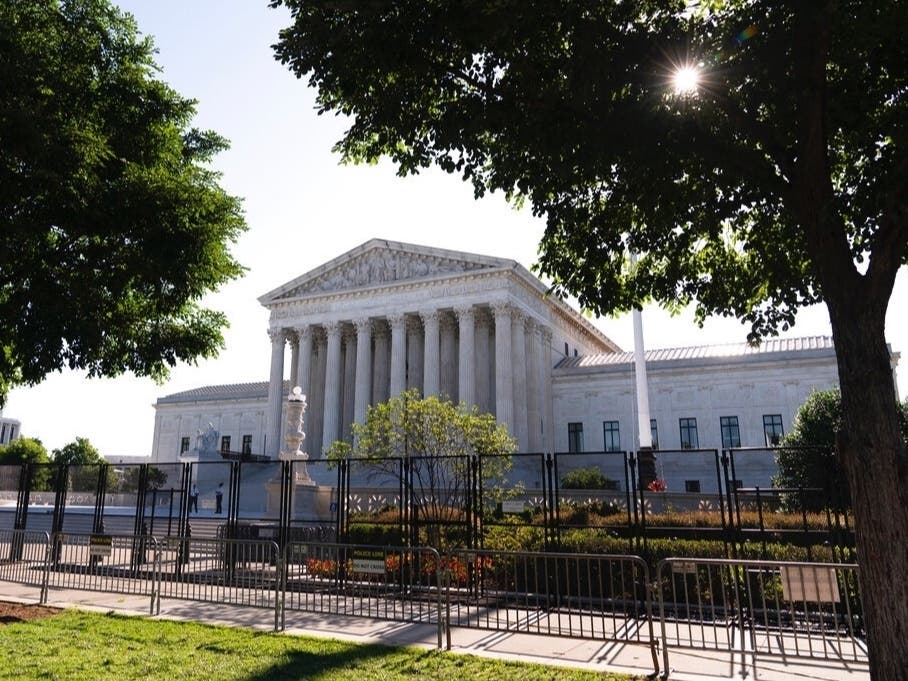
WASHINGTON, DC — U.S. Supreme Court on Friday overturned a decades-long decision that protected a woman's right to obtain an abortion. While abortions will still be legal in the District of Columbia, some local officials are concerned Friday's decision will embolden Republicans in Congress to roll back the District's protections.
The court's 6-3 decision in Dobbs v. Jackson Women's Health Organization is a repudiation of the landmark 1973 Roe v. Wade decision and a subsequent case on fetal liability, Planned Parenthood v. Casey, was expected. In May, Justice Samuel Alito Jr.'s majority opinion draft was leaked to Politico, setting the stage for a seismic shift in abortion rights.
"Washington, DC is a proud pro-choice city and access to abortion is still legal here," D.C. Mayor Muriel Bowser posted to her Twitter account when news of the decision was released. "This is about health care. This is about women’s rights. This is about bodily autonomy. A majority of Americans believe in a woman’s right to choose. This fight is urgent but not over."
Find out what's happening in Washington DCfor free with the latest updates from Patch.
At least 26 states are certain or likely to make it nearly impossible for a woman to get a procedure that was legal for her mother, grandmother or even great-grandmother, according to the Guttmacher Institute, an abortion rights research and policy group.
District law allowing abortion is still in effect. However, local officials expressed concern that Republicans in Congress would be emboldened by the Supreme Court's decision and make overturning the District's abortion-right protections a priority.
Find out what's happening in Washington DCfor free with the latest updates from Patch.
"This decision ... poses a unique risk to the District of Columbia," Congresswoman Eleanor Holmes Norton (D-D.C.) said in May. "It poses a risk to women across the country, but it will be left to the states and 26 states, about half of the country, have banned abortion."
Bowser expanded on Norton's comments, adding that if the courts allowed the states the right to set abortion policy, that right wouldn't apply to the 700,000 people who live in the District.
Related: Roe V. Wade Overturned: Abortion Rights Left To States To Decide
"We have seen before what happens when Congress intervenes in our ability to provide health care," Bowser said in May. "Hundreds of D.C. residents died because of Congress' ban on needle exchange programs in the District. We know this because when that ban was lifted, drug related HIV cases plummeted by 99 percent. That tells us what we already know. The government shouldn't be in the business of blocking access to health care."
The bottom line, according to Bowser, is that women everywhere should have control over their own bodies.
"We know that a majority of Americans support a woman's right to choose, and a majority of Americans believe that women and girls should not be forced to carry a pregnancy," she said. "We also know that we cannot leave our children, our girls, a less free society than the one we were born into. For many of us, that's what this is exactly about."
With the decision, abortion would be illegal or a nearly impossible procedure to get in about half of U.S. states, including large swaths of the South, Midwest and Northern Plains.
Abortion is already illegal or soon will be in 13 states with pre-existing “trigger” laws banning abortion set to take effect with the dismantling of Roe and Casey, and another four are poised to ban it, according to the Guttmcher Institute. Nine have so-called fetal heartbeat laws that make the procedure illegal before many women know they are pregnant.
Related: Abortion In DC: What Happens If Roe V. Wade Is Overturned
Abortion rights were long considered settled law; and even as conservative states pushed at-the-time unconstitutional fetal heartbeat laws and others restricting abortion access to bring the court to this moment, many legal scholars doubted a right that generations of women and men had counted on was in serious jeopardy.
The case that made it to a full hearing before the court, Mississippi’s 15-week ban on abortion, came after former President Donald Trump appointed three conservative judges — Neil Gorsuch, Brett Kavanaugh and, a few months before his term ended, Amy Coney Barrett, who replaced liberal stalwart Ruth Bader Ginsburg, who died in September 2020.
The court heard oral arguments on the Mississippi case in December.
Lawyers for the state of Mississippi had proposed an array of mechanisms to uphold the 15-week abortion ban but said the court ultimately should overturn the "egregiously wrong" Roe and Casey rulings.
If the court "does not impose a substantial obstacle to 'a significant number of women' seeking abortions," the state argued at the time, the justices should reinterpret the "undue burden" standard established in Roe and give the state the authority to "prohibit elective abortions before viability" of the fetus.
Get more local news delivered straight to your inbox. Sign up for free Patch newsletters and alerts.