Politics & Government
FL Senate Passes 'Don't Say Gay' Expansion, Bars Diversity In Colleges
The Parental Rights in Education bill also included a measure that prohibits teachers from referring to someone by their preferred pronouns.


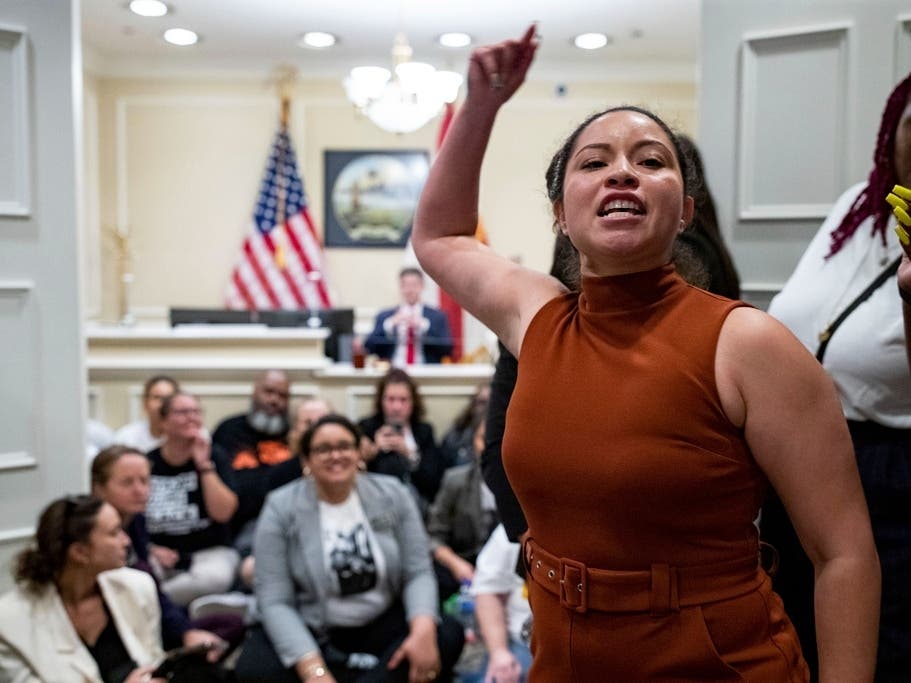
TALLAHASSEE, FL —Florida lawmakers approved a flurry of bills Wednesday targeting diversity programs at colleges and transgender rights, including a measure prohibiting teachers from referring to someone by pronouns not assigned at birth, according to reports.
House Republicans approved a bill banning state funding for diversity, equity, and inclusion programs and restricting teaching about race and gender on college campuses. The bill also prohibits students from majoring or minoring in critical race theory, gender studies or intersectionality.
Such initiatives — sometimes called DEI — have come under increasing criticism from Republicans who argue the programs are racially divisive.
Find out what's happening in Across Floridafor free with the latest updates from Patch.
In a statement provided to the Tallahassee Democrat, the Foundation for Individual Rights and Expression called the DEI bill unconstitutional.
"It denies academic freedom and funding to anyone not in lockstep with Florida Republicans' preferred positions," said Joe Cohn, the group's legislative and policy director. "No ideas are so repugnant that the government may ban students or professors at our public institutions of higher education from discussing them as they see fit."
Find out what's happening in Across Floridafor free with the latest updates from Patch.
The Florida Senate also voted to expand the Parental Rights in Education bill, dubbed by critics as the "Don't Say Gay" bill, which prohibits classroom instruction on sexual orientation or gender identity in all grades. The Florida Board of Education approved a similar expansion last month.
Currently, the bill prohibits classroom instruction on sexual orientation or gender identity in kindergarten through third grade "in a manner that is not age appropriate or developmentally appropriate for students."
The law does not ban the word "gay" in schools, but it does prevent teachers from using lesson plans about gender identity and sexual orientation.
The sweeping bill also included a measure prohibiting school staff and students from referring to people by pronouns that don't correspond to the person's sex at birth.
Additionally, the bill strengthens the system in which people can lodge challenges against school books, another DeSantis initiative that has led to removing material he and his supporters argue is inappropriate for children.
The Senate also passed a separate bill Wednesday prohibiting transgender people from using many bathrooms and changing areas that correspond with their gender identity.
The measure, HB 1521, applies to schools, government buildings, prisons, and detention centers. Those who break the law could be subject to criminal trespassing charges.
"Think about what we're doing, honestly. Think about how this will affect families that don't look like yours," said Sen. Tracie Davis, a Democrat. "They're still families. They're Florida families. But we're treating them like they're outsiders and we're telling them we don't want them here."
The bills now head to Gov. Ron DeSantis, who is expected to sign them into law.
DeSantis, who is expected to announce a presidential campaign in the coming weeks, has driven a hardline conservative agenda to bolster support of Republican primary voters ahead of his White House run.
The state's Legislative session, scheduled to end this week, has been dominated by divisive cultural issues, with Republican allies of DeSantis approving his priority bills on sexual orientation, gender identity, race, and education that are expected to aid the governor in his presidential bid.
Fourteen people were arrested Wednesday protesting the policies outside DeSantis' office, the organization Dream Defenders said in a news release. Florida Department of Law Enforcement spokeswoman Gretl Plessinger confirmed the arrests to the Tallahassee Democrat.
"Once the building closes, unless you have an office in the Capitol, you're not allowed to be here," Plessinger said, citing Department of Management Services policy.
The Associated Press contributed to this report.
Get more local news delivered straight to your inbox. Sign up for free Patch newsletters and alerts.