Weather
Atlantic Hurricane Season 2022 Likely To Be Active: Forecast
Weather analysts estimate the 2022 Atlantic hurricane season will be an active one that produces nine hurricanes and four major hurricanes.


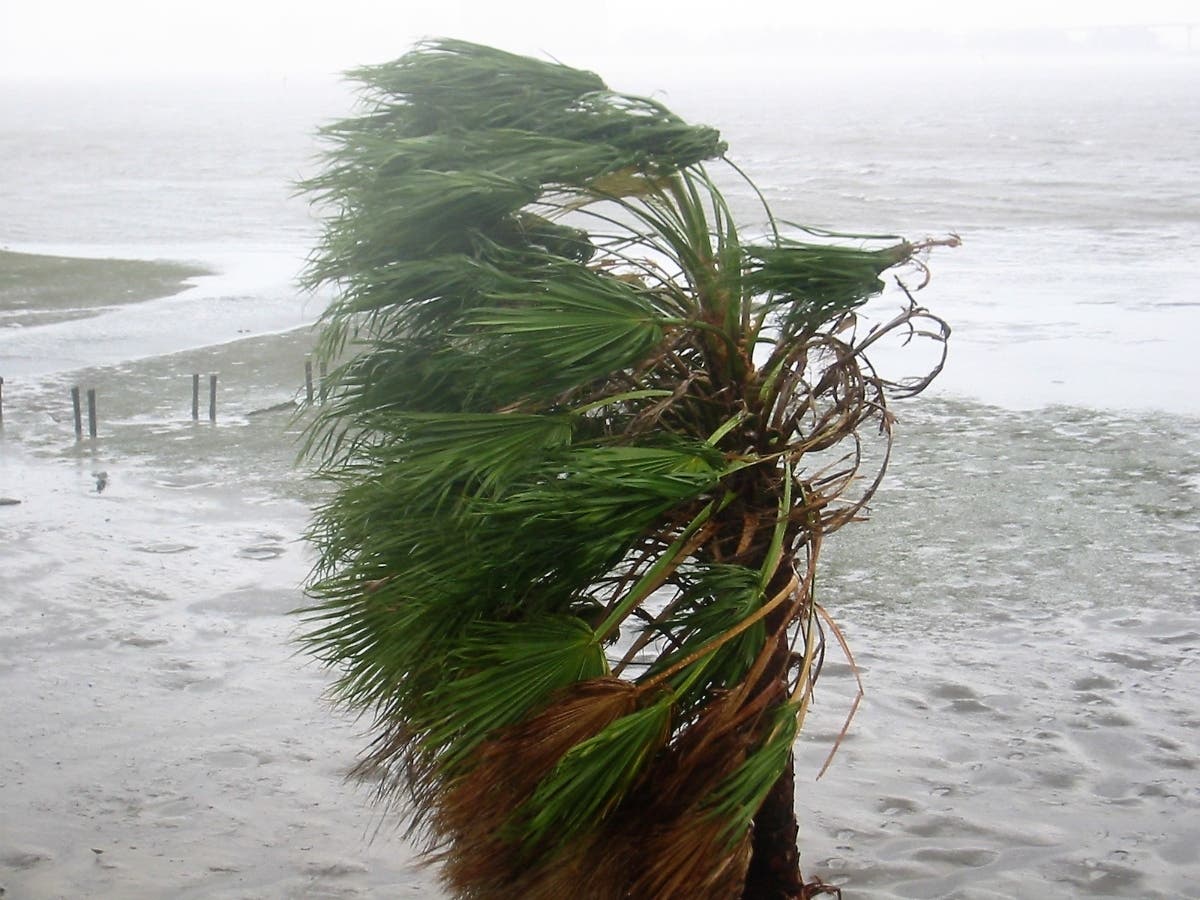
FLORIDA — Florida residents might want to stock up on water, batteries, canned food and plywood to board up windows.
Weather analysts at Colorado State University's Department of Atmospheric Science in Fort Collins estimate that the 2022 Atlantic hurricane season will be an active one that produces 19 named storms, nine hurricanes and four major hurricanes (reaching wind speeds of 111 mph and up).
"If the model goes as predicted, this would be our seventh above-normal hurricane season in a row," said research scientist Dr. Phil Klotzbach at CSU.
Find out what's happening in Tampafor free with the latest updates from Patch.
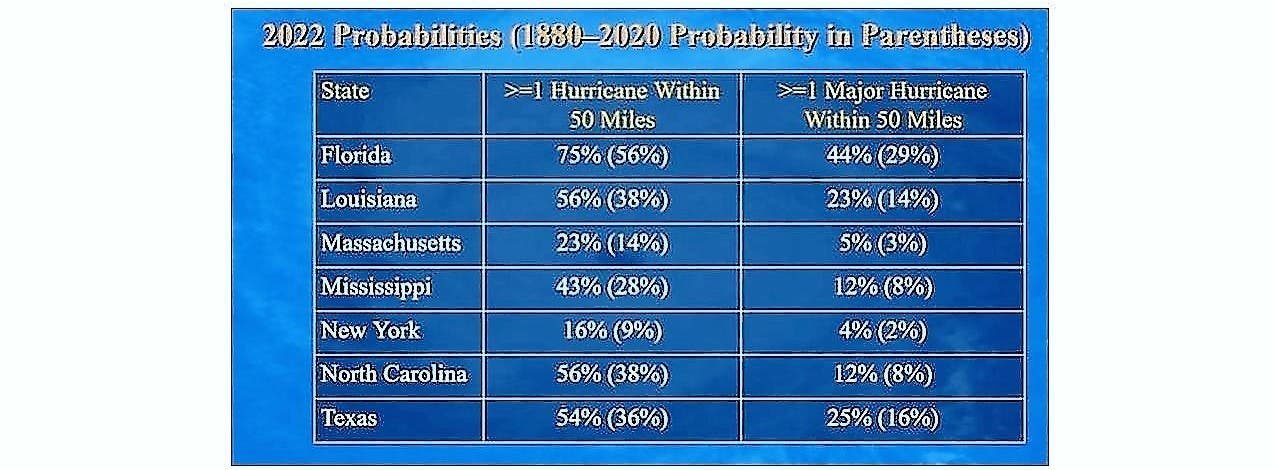
CSU is forecasting a 75 percent chance of a hurricane coming within 50 miles of Florida this season and a 44 percent chance of a major hurricane within 50 miles of Florida's coastline.
The probabilities go down to 56 percent chance of a hurricane coming within 50 miles of Louisiana and North Carolina, and a 54 percent chance of a hurricane getting within 50 miles of Texas (see chart below).
Find out what's happening in Tampafor free with the latest updates from Patch.
The Atlantic had three quiet hurricane seasons from 2013-2015, followed by six above-average seasons in a row from 2016-2021, including hyperactive seasons in 2017, 2020 and 2021.
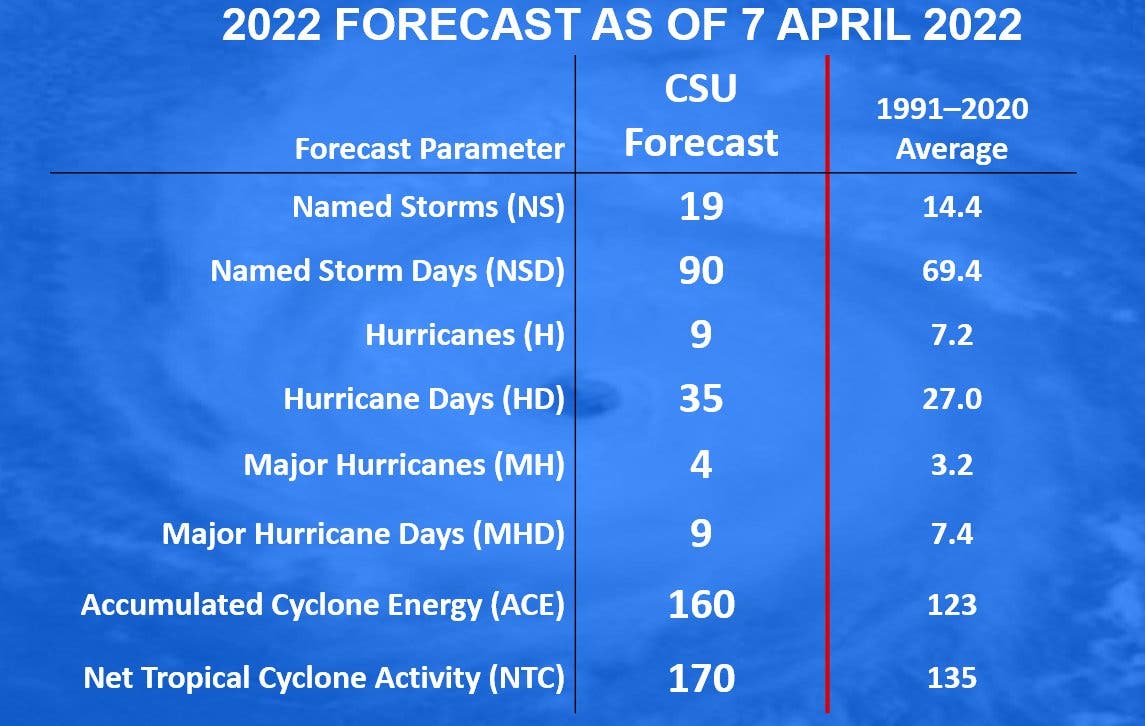
In a tradition that dates back 37 years, Colorado State University makes the first predictions for the upcoming hurricane season each April, a full month ahead of the National Oceanic and Atmospheric Administration.
Jasmine Blackwell, public affairs officer for NOAA's National Weather Service, said NOAA has not yet set a date for a new briefing on its forecast for the 2022 hurricane season, but the National Hurricane Center will host its annual conference April 14 in Miami.
During a live online news conference Thursday, Klotzbach said they don't expect El Niño to play a major role in this year's hurricane season, which runs from June 1 to Nov. 30. This is not the news the Southeast U.S., Central America and South America hoped to hear.
According to the National Oceanic and Atmospheric Administration, El Niño is a climate pattern characterized by unusually warm ocean temperatures in the Equatorial Pacific (as opposed to La Niña, which results in unusually cold ocean temperatures in the Equatorial Pacific).
El Nino reduces hurricane and tropical storm activity by generating increased vertical wind shear. La Niña has the opposite effect.
If La Niña continues to be the dominant weather pattern, as it was in 2021, 2022 could be an active storm season. Last year's hurricane season was the third-highest on record.
In an initial report issued Dec. 10, the Colorado State University Tropical Meteorology Project estimated that there is a 40 percent chance that North Atlantic sea temperatures will be above average with no El Niño impacts in 2022.
"At this point, given model forecasts as well as our statistical analyses, it appears relatively unlikely that El Niño will develop by summer," Klotzbach said.
He said a lot depends on how the current La Niña event will trend over the next few months. There is still "considerable model disagreement as to what the phase of the El Niño – Southern Oscillation will look like for the summer and fall of 2022, although at this point the odds of El Niño appear fairly low."
Seasons with a 40 percent chance that El Niño will not develop can expect 13 to 16 named storms, six to eight hurricanes, and two or three major hurricanes.
However, if there's a 15 percent chance will develop, it drops to nine to 12 named storms, three to five hurricanes and one to two major hurricanes.
Nevertheless, said Klotzbach, although hurricane season begins June 1, 95 percent of hurricane activity occurs after Aug. 1.
"We haven't had an actual hurricane in May since 1970," he said.
Get more local news delivered straight to your inbox. Sign up for free Patch newsletters and alerts.