Community Corner
Chantek, Sign-Language Using Orangutan At Zoo Atlanta, Dies
The 39-year-old great ape spent his early years as part of a language research project and he continued to sign with some of his handlers.


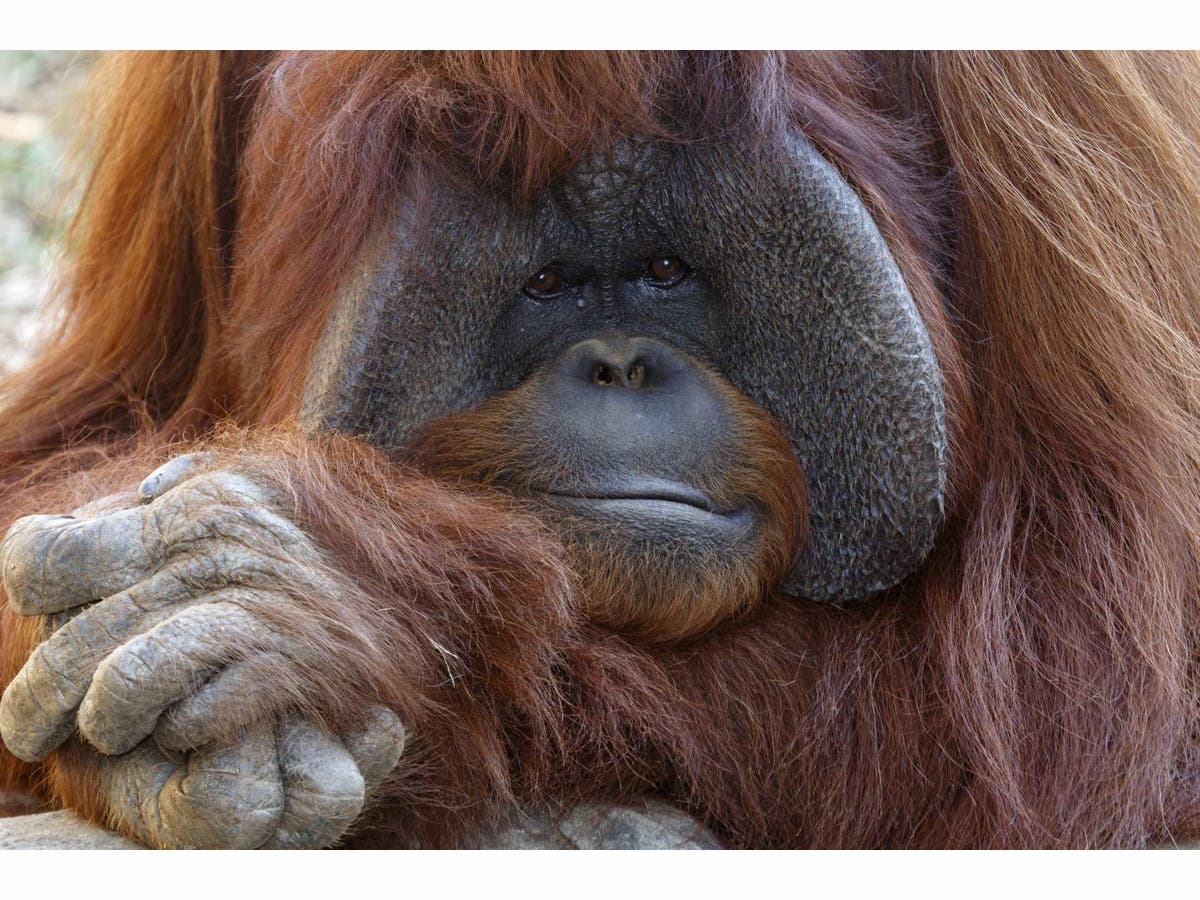
ATLANTA, GA -- Chantek, an orangutan who was raised like a human and learned to speak sign language, has died at Zoo Atlanta. He was 39.
Chantek died at the zoo on Monday, officials there said. While his official cause of death was not immediately known, he had been treated by the zoo's veterinary team for progressive heart disease.
At 39, Chantek was one of the oldest living male orangutans in North America. The primates are considered geriatric around age 35.
Find out what's happening in Douglasvillefor free with the latest updates from Patch.
"Chantek will be deeply missed by his family here at Zoo Atlanta. He had such a unique and engaging personality and special ways of relating to and communicating with those who knew him best," said veterinarian Hayley Murphy, the zoo's vice president of Animal Divisions. "It has been our privilege to have had him with us for 20 years and to have been given the opportunity to offer him a naturalistic environment where he could get to know and live with his orangutan family."
Born December 17, 1977, at the Yerkes Language Research Center, Chantek arrived at Zoo Atlanta in 1997.
Find out what's happening in Douglasvillefor free with the latest updates from Patch.
Featured in a 2014 documentary film, "The Ape Who Went To College," Chantek was part of a language research project and was taught American Sign Language from the time he was about 9 months old. Zoo officials, who say the British documentary contains a great deal of misinformation, say Chantek's living situation had become unsuitable for a healthy, adult orangutan and it became necessary to find a new home for him.
He was well known at the zoo for his use of sign language and he frequently used it to communicate with his caregivers, with whom he developed close personal bonds. He was shy about using it with other people, though, and often chose to communicate with forms more typical of orangutans, such as vocalizations and unique hand gestures, zoo officials said.
"Chantek’s long life is a great testament to the dedication of his care team and to the work of the Great Ape Heart Project, the combined efforts of which made it possible for us to give him the best care and quality of life the zoological community has to offer," Murphy said.
Zoo Atlanta announced in September 2016 that the Animal Care and Veterinary Teams had begun a progressive medical regimen to treat Chantek’s symptoms of heart disease. Chantek participated in the world’s first voluntary echocardiogram (EKG) ever performed with an awake orangutan.
This procedure monitors the heart’s electrical rhythms and was used to aid in the diagnosis of Chantek’s condition. Like other orangutans at Zoo Atlanta, Chantek also participated in voluntary cardiac ultrasounds, blood pressure readings and blood draws, all of which were valuable means of monitoring his health. As is often the case for human cardiac patients, Chantek was on a healthy, low-sodium diet as part of his care regimen.
In addition to forming bonds with his human caregivers, Chantek also formed close relationships with other orangutans at Zoo Atlanta. The other members of his group are 34-year-old female Madu, 2-year-old female Keju and juvenile males Dumadi, 10, and Remy, 6. Chantek particularly enjoyed playing with the younger males, especially Dumadi, who could often be seen with or near him in the group’s Asian Forest habitat, zoo officials sais.
A necropsy, or the animal equivalent of an autopsy, is being performed through the Zoo’s partnership with the University of Georgia Zoo and Exotic Animal Pathology Service in the College of Veterinary Medicine. Preliminary results should be available in several weeks.
Zoo officioals say cardiac disease is a primary cause of mortality among great apes in zoological populations. The Great Ape Heart Project based at Zoo Atlanta is the first coordinated clinical approach to targeting and treating the disease in all four non-human great apes: gorillas, orangutans, chimpanzees and bonobos.
Zoo Atlanta is currently home to 11 orangutans and 21 gorillas. All four types of great apes are endangered or critically endangered. Both Bornean orangutans and Sumatran orangutans are critically endangered in the wild, and both species are experiencing dramatic population declines as a result of habitat loss, overharvesting of timber for palm oil plantations, and human encroachment.
Experts predict that Sumatran orangutans could be extinct within 10 years without targeted conservation efforts.
Photo courtesy Zoo Atlanta
Get more local news delivered straight to your inbox. Sign up for free Patch newsletters and alerts.