Community Corner
History: Douglasville's Saloon Era
Every Now and Then was a column featuring a little piece of Douglas County history Douglasville Patch ran every week, beginning when we launched, more than a year ago. The articles were always well received and we've decided to revive them.
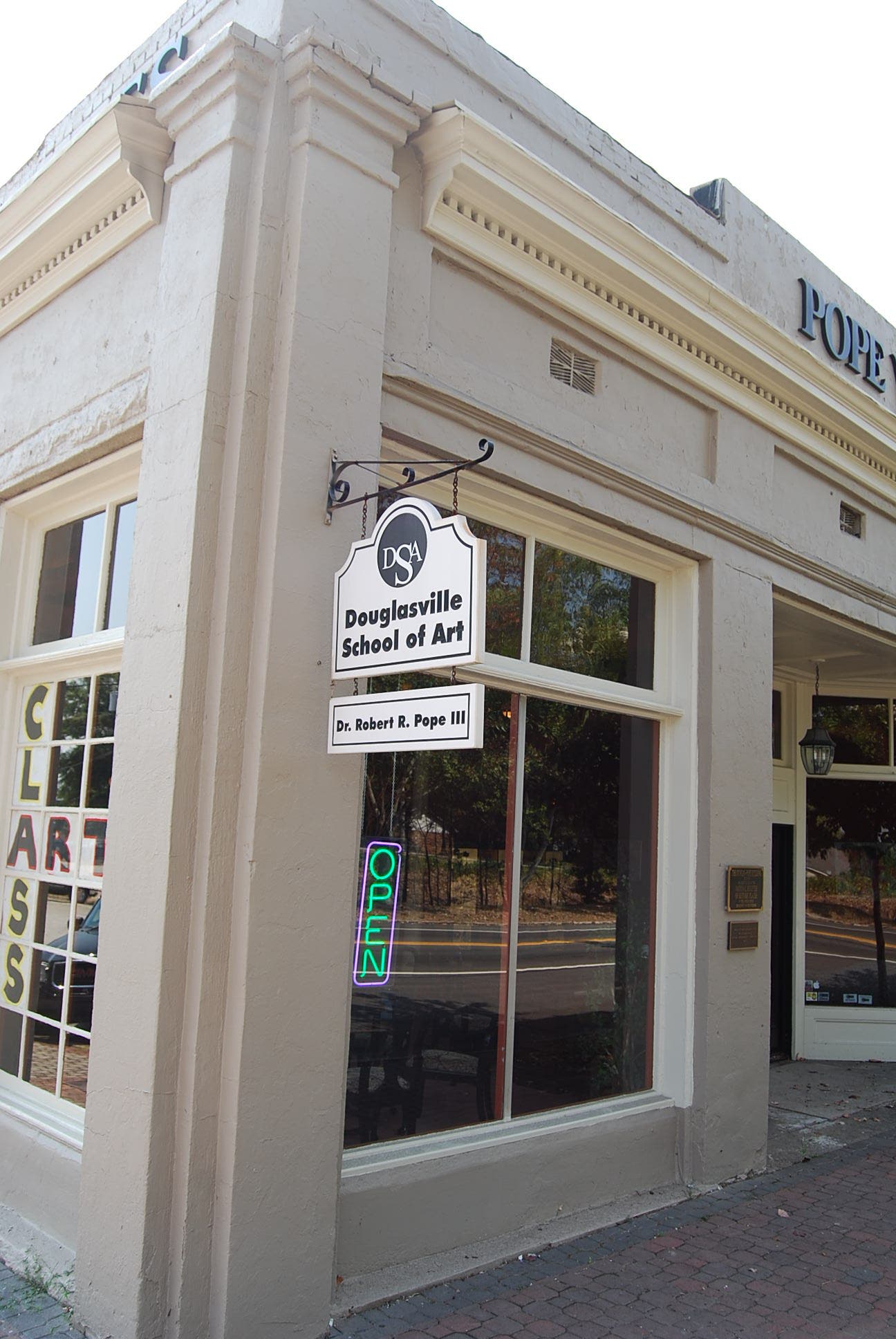
Editor's note: Lisa Cooper's newest work can be found at douglascountyhistory.blogspot.com.
The word saloon conjures up images of the dusty west with gunslingers, cowboys, soldiers, miners and brazen women. There was card playing, lively piano music and fights involving fists and guns a la Wyatt Earp and Doc Holliday.
By January, 1877 Douglasville had her own saloons as well with the passing of an ordinance that ushered in the Saloon Era, and for the next nine years citizens could obtain a drink of whiskey in one of several saloons that advertised regularly in The Weekly Star, the main Douglasville newspaper of the time.
Find out what's happening in Douglasvillefor free with the latest updates from Patch.
Venture over to the west corner of Broad Street and Courthouse Square (known as Pray Street in the 1870s) and you would find yourself in front of the first saloon opened under the new ordinance by Mr. G.R. Turner. Mr. Turner was a member of the city council and also served as the city clerk. The building that housed the saloon was also known as the Old Skint Chestnut store building and was the site of the original skint chestnut tree that gave the area its original name.
Other saloons during the period were the Alligator Saloon, the Magnolia, White's Saloon, and Stewart's Saloon was located on Pray Street before it moved to the corner of Price and Broad.
Find out what's happening in Douglasvillefor free with the latest updates from Patch.
The only difference between the saloons of the Wild West and the Douglasville saloons were the gunfights, as the folks who frequented the Douglasville saloons preferred to fight with knives and their fists. Many a citizen found themselves cut up during a knife fight, but Fannie Mae Davis' book regarding Douglas County history relates there were no murders. A week without a street fight was rare during the saloon heyday, and during election time votes could be bought for a shot of whiskey. By 1881, the citizens of Douglasville and other cities and towns across Georgia had had it with the street fights and bad element the saloons brought in.
This time period also coincided with the beginning of the Progressive Era—a period of time in American history where reforms in social, political, and economic life took place. Areas of reform included women's suffrage, education, labor reforms including child labor laws, and even prohibition. Many of the calls for reform in Georgia did not come from political stars of the time but came from journalists–men President Theodore Roosevelt is given credit for labeling the journalist as "muckrakers" because even though they told the truth they continually "raked the muck."
Douglasville was no different. Our fair town had a muckracker in Charles O. Peavey, the editor of The Weekly Star. Peavey began to speak out on the evils of whiskey as early as 1881 and by 1884 the issue had become an election issue. Mr. Peavey also operated a barbershop at the corner of Broad and Bowden streets.
The call for temperance across the state of Georgia had begun much earlier than 1881. The Georgia State Temperance Society had formed in 1828 and when the state chapter of the Women's Christian Temperance Union was established in 1880 the State Temperance Society also picked up steam. As the debate for Prohibition became stronger in Douglasville whole families split over wanting the saloons to close or keep them open.
Peavy compared the removal of the saloons to Shakespeare's The Tragedy of MacBeth using the popular line "Out, out damned spot" in one of his editorials calling for the saloons to be shut down. He was interested in sending delegates to the State Temperance Convention in Atlanta during June, 1885 and U.S. Senator, Dr. W.H. Felton of Cartersville, a man whose oratory skills were on the same par with the famous William Jennings Bryan, spoke in Douglasville against the ills of whiskey and he railed against "the whiskey men"–those citizens who owned the saloons.
Prohibition was finally voted on and passed in Douglasville on October 28, 1885 passing by 114 votes. At this time there were three saloons remaining in the city. The city council worked with saloon owners who still had inventory to dispose of, but soon the saloon era was a thing of the past in Douglasville.
Editor's Note: Readers can find out more about Doc Holliday's connection with Georgia by reading The Hollidays, the Hamiltons and the Wilkes: A Connection also written by Lisa Cooper, published at her blog, Georgia on My Mind.
Don’t miss any of the local news you care about. Subscribe to Douglasville Patch’s free newsletter, like us on Facebook and follow us on Twitter.