Community Corner
Solar Eclipse 2017: Watch Parties Scheduled, School Dismissal Delayed
The Sequoyah Regional Library system and the city of Woodstock will host events on Monday, Aug. 21 to mark the near-total eclipse.


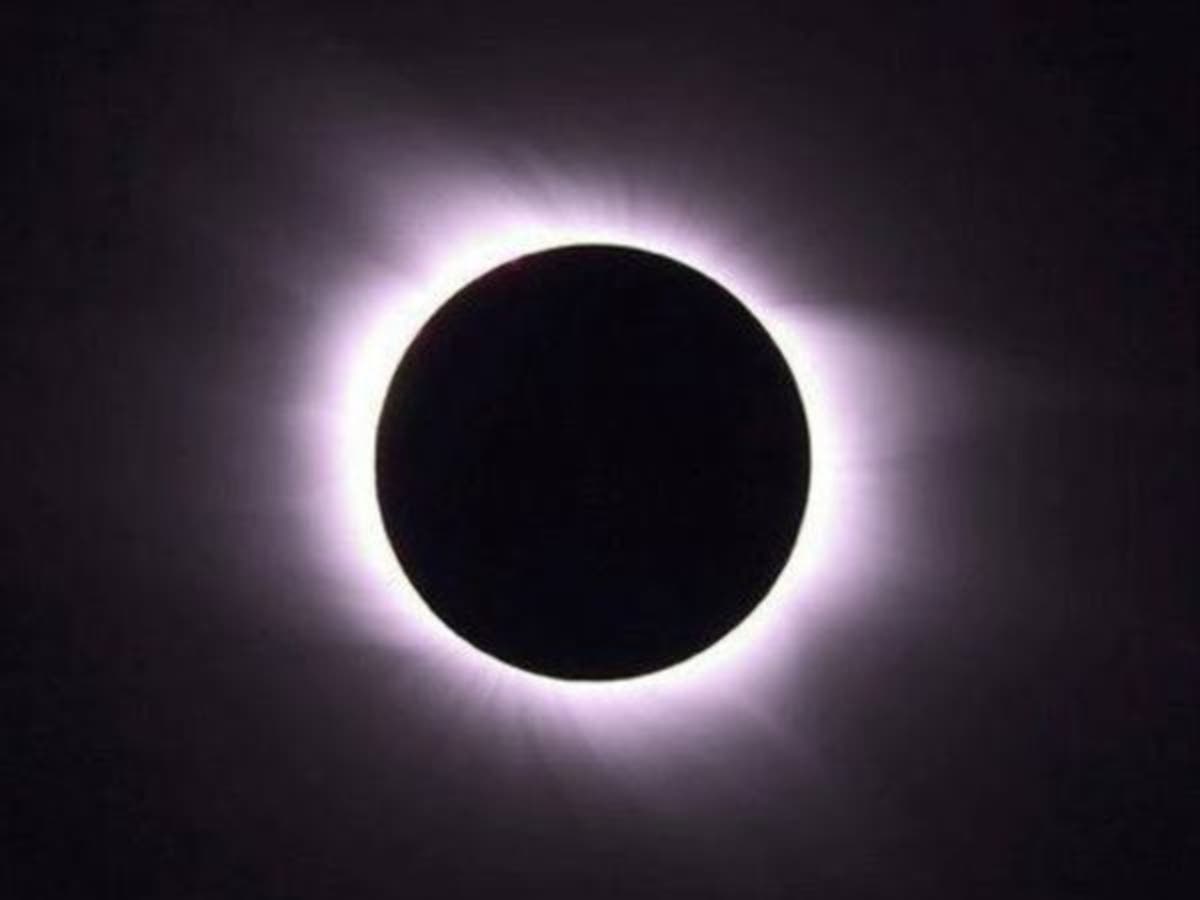
WOODSTOCK, GA -- We are two days and a few hours away from the historic, near-total solar eclipse that will blanket metro Atlanta and Georgia, and there are a few ways you can experience this once-in-a-lifetime occurrence.
The Sequoyah Regional Library System will host three events on Monday, Aug. 21. From 2 p.m. to 3 p.m., Eclipse Selfies will be held at the Woodstock Public Library at 7735 Main Street. Organizers will be making pinhole viewers to watch the eclipse.
They will also create special Georgia-shaped pinhole viewers, which can be used to take a picture of your shadow with the eclipse, the library system said. Registration is required, so call 770-926-5859 to sign up.
Find out what's happening in Woodstock-Towne Lakefor free with the latest updates from Patch.
At Rose Creek Public Library at 4476 Towne Lake Parkway in Woodstock, a Solar Eclipse Spectacular will be hosted from 2:15 p.m. to 3:30 p.m. While watching this near total eclipse make its way across the sky, you will be able to partake in crafts, games and other activities (SIGN UP: Get Patch's Daily Newsletter and Real Time News Alerts. Or, if you have an iPhone, download the free Patch app).
If you are in the northern part of Cherokee County, you can make the short trip to the Pickens County Library at 100 Library Lane in Jasper from 2 p.m. to 3 p.m. for its Eclipse Day event. Along with viewing the eclipse, you will also be treated to a planetary walk (expect the maximum view to occur around 2:30 p.m.).
Find out what's happening in Woodstock-Towne Lakefor free with the latest updates from Patch.
SEE ALSO: Solar Eclipse 2017: Protect Your Eyesight With Proper Glasses
The Rose Creek, Pickens and Gilmer county libraries distributed free solar eclipse viewing glasses this week during scheduled programming on a first-come, first-serve basis, said John Rodgers, community engagement coordinator with the library system.
Hundreds of patrons lined up outside Rose Creek Public Library on Thursday to obtain glasses during one of its dedicated programs, Rogers added. Those attendees received a part of glasses, which the system received through a grant provided by STAR_Net as learning tools to be used in tandem with library programming.
"In accordance with these terms, Sequoyah Regional Libraries are limiting distribution of viewing glasses to eclipse programming participants only," Rodgers added. "Demand for viewing glasses has been very high, and our quantities are limited."
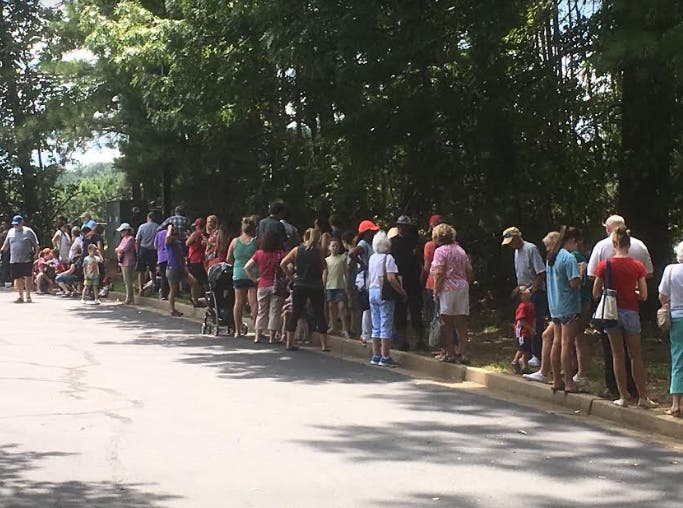
Any remaining glasses that were not collected during eclipse-related programs will be distributed during viewing parties on a first-come, first serve basis.
For its part, the city of Woodstock will be hosting a celebration to commemorate the eclipse. Dark in the Park: A Total Eclipse Viewing Party will be held from 1 p.m. to 4 p.m. Monday, Aug. 21 at the Northside Hospital-Cherokee Amphitheater. The event will include music, activities a moonwalk and moon pies. Woodstock also plans to provide eye protection to the first 200 people who arrive at the amphitheater.
As a reminder, the Cherokee County School District will delay bus dismissal for all students by 30 minutes on Monday, Aug. 21. Additionally, bus routes for kindergarten through 12th-grade special education students will be delayed by 45 minutes. Car riders’ release to the line also will be delayed by 30 minutes; parents who do not want to wait may park and come into the front office to check their children out.
Pleas note middle and high school dismissal is affected because bus drivers have to complete elementary school routes, the system noted.
The last time the U.S. saw a total eclipse was in 1979. During this year’s eclipse, the moon will fully block the sun for two minutes and 40 seconds. Only the northeast corner of Georgia will experience this; the rest of the state will see a partial eclipse. The moon will pass between the Earth and the sun, blocking all or part of the sun, for up to three hours.
During those brief moments -- when the moon completely blocks the sun’s bright face for about two minutes -- day will turn into night, making visible the otherwise hidden solar corona, the sun’s outer atmosphere. Bright stars and planets will become visible as well. Birds will fly to their nighttime roosts. Nocturnal insects such as cicadas and crickets will buzz and chirp.
For NASA, the eclipse provides a unique opportunity to study the sun, Earth, moon and their interaction because of its long path over land from coast to coast.
Eleven NASA and NOAA satellites, the International Space Station, more than 50 high-altitude balloons, and hundreds of ground-based assets will take advantage of this rare event over 90 minutes, sharing the science and the beauty of a total solar eclipse with all.
RELATED: Get Your NASA-Approved Solar Eclipse Glasses Before It's Too Late
NASA’s recommendations for safe eclipse viewing are:
- Stand still, and put on your eclipse glasses before looking up at the eclipse. Turn away to remove your eclipse glasses — do not remove them while looking at the sun.
- Do not look at the eclipse through a camera, a telescope or binoculars while using your eclipse glasses — the sun will damage the filter and your eyes.
- Always inspect your eclipse glasses before use; if they are scratched or damaged, do not use.
- Supervise children viewing the eclipse.
- Remove your eclipse glasses only when the moon completely covers the sun and it gets dark. Then, as soon as the sun begins to reappear, put your eclipse glasses back on.
NASA will bring the Aug. 21 eclipse live to viewers everywhere in the world through live streams and a NASA TV broadcast. You can learn more about safely viewing the solar eclipse on NASA's website.
Image via NASA
Get more local news delivered straight to your inbox. Sign up for free Patch newsletters and alerts.