Politics & Government
Anti-Semitic Incidents Spike In Illinois: Report
There were nearly 2,000 anti-Semitic incidents in the U.S. last year. In Illinois, they're up more than 300 percent.


ILLINOIS — Anti-Semitic incidents increased dramatically across the United States last year, including in Illinois, where incidents have more than tripled since 2015. Experts say that should serve as a "wake-up call" to the Jewish community. The Anti-Defamation League recently released its yearly audit and said actions considered hostile toward or prejudiced against Jews rose 57 percent in 2017 — the largest single-year increase since the group began tracking the statistic in 1979.
There were 1,986 anti-Semitic incidents in 2017, the organization said, referring to harassment, vandalism or assault. That’s the second highest number the group has ever seen. While assaults nationwide dropped by nearly half from 36 in to 19, vandalism nearly doubled from 510 to 952.
In Illinois, there were 47 anti-Semitic incidents, including 25 reports of harassment and 22 incidents of vandalism. No assaults were reported, the ADL said. That's a dramatic increase from two years earlier, when just 14 anti-Semitic incidents were reported. Ten anti-Semitic incidents were reported in 2016.
Find out what's happening in Across Illinoisfor free with the latest updates from Patch.
The surge comes several years after anti-Semitic incidents appeared to be on a downward trend. In 2013, the Anti-Defamation League said the number of incidents had fallen by 14 percent, decreasing for the third consecutive year.
Yael Rabin, an analyst with the ADL’s center on extremism, noted an uptick in 2017 in harassment, such as “white supremacists distributing flyers” with overt or explicit anti-Semitic content on them — “whether it’s demonizing the Jews, dehumanizing Jews, et cetera.”
Find out what's happening in Across Illinoisfor free with the latest updates from Patch.
Verbal harassment, such schoolyard bullying, was also prevalent, she told Patch, such as one child telling another “they should be gassed because they’re Jewish,” or that Adolf Hitler “should’ve killed them all.”
Rabin said the number of incidents reported in schools likely only scratched the surface of the real number.
In February 2017, a Jewish community center in Hyde Park was evacuated after someone called in a bomb threat. The Chicago facility was just one of 11 Jewish centers around the country to receive similar threats on that day. All the threats were determined to be hoaxes.
That same month, a swastika was found carved into a bench inside the Illinois Holocaust Museum and Education Center in Skokie.
Less than a month later, a disgraced former journalist who had worked in Chicago was arrested by federal agents, accused of making threats against at least eight Jewish organizations. He reportedly told authorities he made the threats to intimidate an ex-girlfriend. The ex-reporter, Juan Thompson, eventually admitted to making the threats and was sentenced to prison time.
The threats weren't the only anti-Semitic incidents in Illinois last year. In June, a popular Jewish deli in suburban Naperville was the target of anti-Semitic vandalism. The owner called the incident a "shocking crime" and police investigated it as a hate crime.
More 2017 incidents in Illinois:
- Swastikas, 'Trump' Graffiti Found in Men's Room at Library
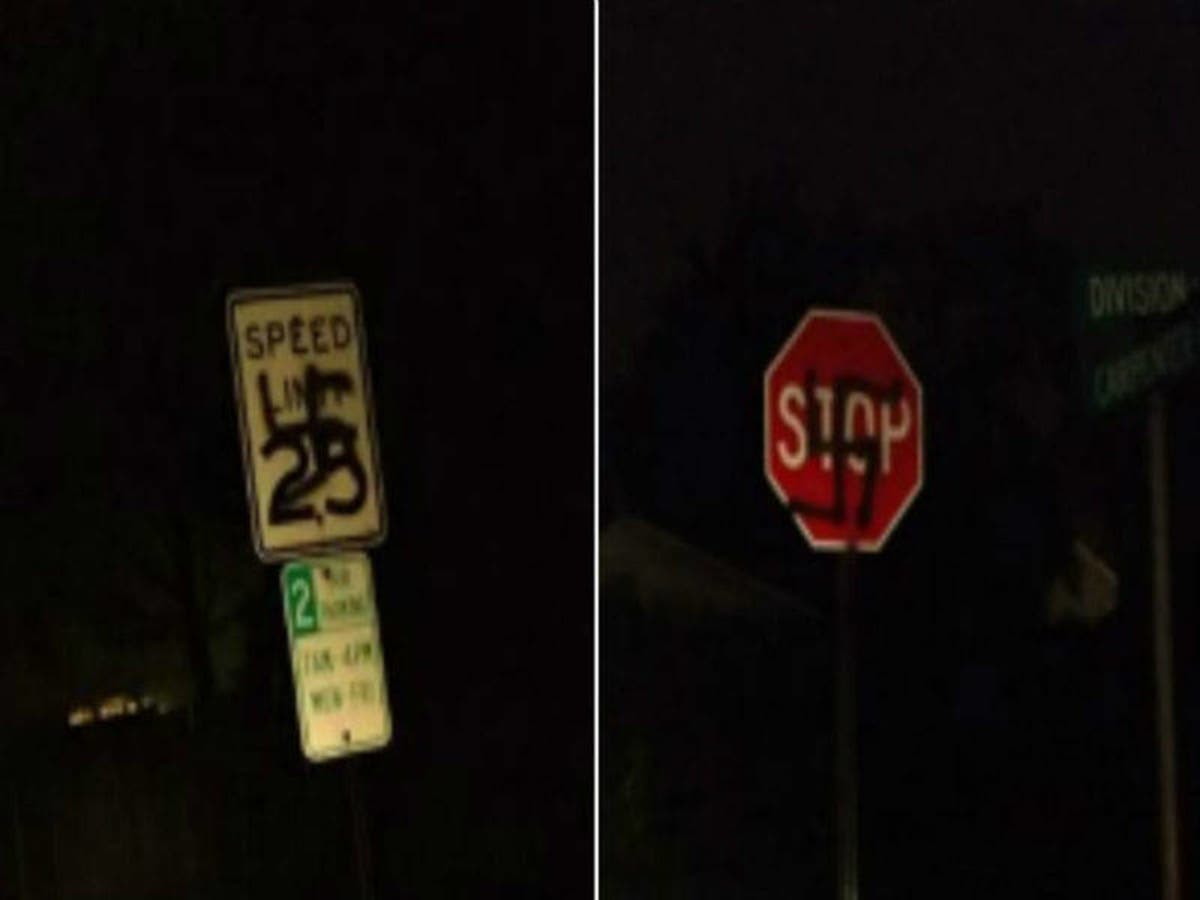
- Swastikas Found On Road Signs In Mokena
- Nazi, Racist Graffitti Found In Lake Bluff
This year is shaping up to be more of the same when it comes to anti-Semitic incidents. In January, a suburban park district board member was accused of using an anti-Semitic slur during a heated exchange with a resident, allegedly calling the man an "(expletive) Russian Jew." The park board member said he "may have called him a name" but that "I didn't attack the guy."
There was at least one anti-Semitic incident such as these in every state last year, the ADL said in its Feb. 26 report. But just six states accounted for more than three-fifths of the country’s total. New York had 380 incidents, California had 268 and New Jersey had 208. Massachusetts saw 177 anti-Semitic incidents, Florida had 98 and Pennsylvania saw 96.
Alaska, Minnesota and South Dakota each saw one such incident.
The Anti-Defamation League’s audit showed 952 instances of anti-Semitic vandalism last year — an 86 percent increase over 2016 and the largest of the three categories.
“The dramatic increase in anti-Semitic acts of vandalism is particularly concerning, because it indicates that the perpetrators feel emboldened enough to break the law,” the audit said.
Anti-Semitic incidents happened at businesses, in private homes and at public places like parks and streets, the organization said. They also occurred at Jewish institutions and schools, as well as colleges and universities.
The audit looked at both criminal and non-criminal incidents against individuals and groups that were reported to the group by victims, law enforcement agencies and media outlets.
Incidents are defined as vandalism, or harassment or assault if the circumstances indicated anti-Jewish animus on the part of the perpetrator or Jews perceived themselves as the victim due to their Jewish identity. Vandalism against Jewish religious institutions and cemeteries was also included.
Rabin said the ADL sees a lot of vandalism accompanied by the word “Jew” or the Swastika symbol. She says some acts of vandalism also incorporate the number 1488, a white supremacist slogan that refers to Hitler, and the 14 words coined by white supremacist leader David Lane that say: "We must secure the existence of our people and a future for white children."
The spike in anti-Semitic incidents could be due to several factors, Rabin said. Better technologies make it easier to find and report such incidents, she said.
Both the media and constituents alert the ADL and law enforcement agencies when anti-Semitic incidents happen, she said, and people are starting to use social media to spread the word about hateful messages.
Rabin said one of her own Facebook friend’s posted an image of a swastika over a celebrity’s face — possibly Sarah Silverman or Jon Stewart — and the word “Jewed.” That image was then reported to appropriate person in that ADL region, she said.
To curb the climb in anti-Semitic incidents this year, Rabin said schools must be diligent about teaching tolerance and fighting hatred. It’s also imperative, she said, that Jewish leaders continue speaking out nationally and locally about anti-Semitism.
But even as anti-Semitic incidents rose in 2017, Rabin said Jewish people in America shouldn’t necessarily worry more this year.
“If anything, these numbers are a wake-up call for the Jewish community that there is still anti-Semitism,” she said.
Written by Dan Hampton of Patch’s national staff.
Swastika graffiti found in Mokena in late 2017/Photos courtesy of Amanda Herman
Get more local news delivered straight to your inbox. Sign up for free Patch newsletters and alerts.