Seasonal & Holidays
Freedom Is Still The Heart Of America's Story For Many, But It’s Complicated
With a mix of pride, concern, and hope, readers described America as a land of liberty and opportunity with promises not yet fully realized.


America’s story didn’t end in 1776. It’s still being written through family histories, civic life, hard-won freedoms and the country’s continuing effort to live up to its founding ideals.
We asked readers what America’s 250th anniversary means to them and where they see themselves in the larger American story. Again and again, their answers to our informal survey returned to freedom — to speak, worship, vote, learn, protest, raise families and build a life.
Their reflections were not all flag-waving and fireworks.
Find out what's happening in Across Americafor free with the latest updates from Patch.
They were proud, worried, grateful, frustrated and hopeful, sometimes all at once. Many described America as both an inheritance and an obligation, a country whose founding promises still require honesty, repair, civic responsibility and a renewed commitment to treating one another with dignity.
America’s Promise

Some readers trace their families to America’s earliest chapters.
Find out what's happening in Across Americafor free with the latest updates from Patch.
“I’m here because of immigrant ancestors, 17 of whom arrived here on the Mayflower, and great-grandparents who came from Italy, Denmark and Germany seeking a more promising future for themselves and their children,” said Wendy, a Connecticut resident who reads Milford Patch and Shelton-Derby Patch. “I share a common heritage with people from around the world, past and present, who have come to this beautiful melting pot of a country seeking a better standard of living.”
Wendy said she is proud her fifth great-grandfather fought with the Continental Army in the Revolutionary War, encamped at Valley Forge with George Washington, and fought in the Battle of Monmouth.
“I hope our country will keep the promise of ‘We the People’ alive and reflect on and honor the many sacrifices our ancestors have made to secure our personal freedoms,” she said. “While this anniversary is a time for reflection and celebration, we need to remember our imperfect past as well.”
While “man’s inhumanity to man is a part of the human condition, we can all do better in treating our fellow citizens with the dignity and respect each of us deserves,” Wendy said.
Still Unfinished
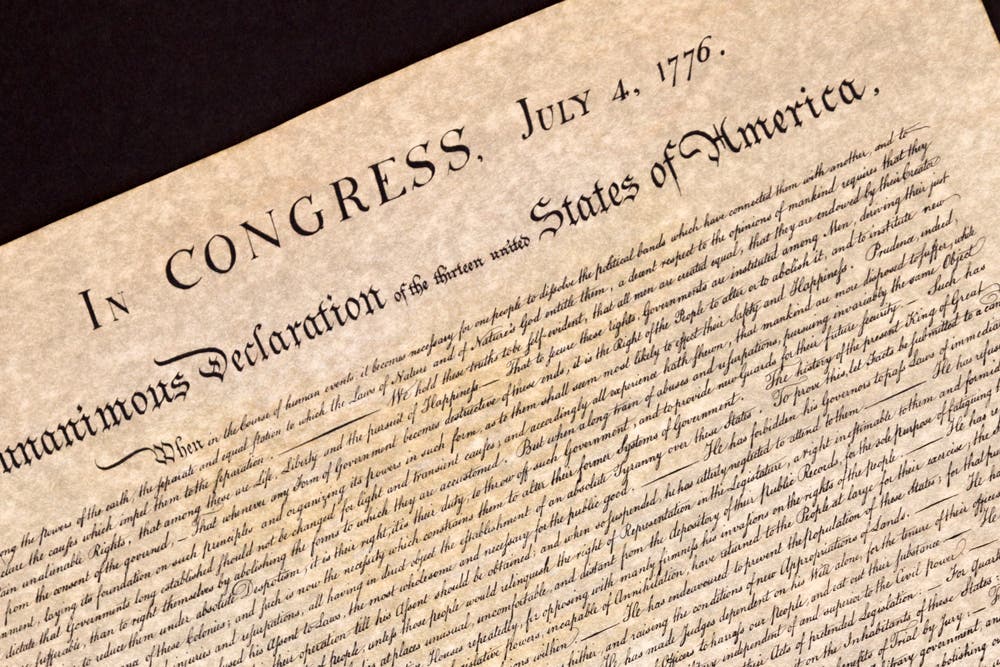
America’s 250th anniversary is a test of whether the country will continue to extend its founding promise, other readers said.
“Being an American means belonging to a country built on a promise that has never been simple, complete, or automatic,” said Brian MacColl, a Pelham (New York) Patch reader.
“The Declaration of Independence gave the nation a language of liberty, equality, consent, and self-government, but every generation has had to decide whether those words would remain ideals on paper or become responsibilities in public life,” he said.
To MacColl, being American means accepting that inheritance honestly — honoring the courage of the founding generation while recognizing those excluded from the promise at the beginning. Citizenship, he said, is both a right and a duty to improve the systems Americans share.
That work of renewal, carried forward by people who have demanded that the country live up to its founding words, is central to the American story, he said.
Ezella Wheeler, a 72-year-old Gaithersburg (Maryland) Patch reader, sees that unfinished promise through her life as an African American woman whose identity is “defined by profound resilience, a living connection to history, and a foundational role in shaping the nation’s democracy and culture.”
Born in 1953, Wheeler’s life has paralleled the modern civil rights movement, giving her a distinct view of America’s promise and its limits.
“My hopes for America center on the creation of a truly just, equitable, and inclusive nation where the contributions of Black women are fully honored, protected, and celebrated,” Wheeler said.
For Wheeler, the 250th anniversary is a time to recognize generations of Black Americans who “insisted the promise of the Declaration of Independence belonged to us too, forcing the nation to slowly bend toward its own stated creed.”
“My hopes build upon the foundational dreams of my ancestors, demanding that America finally live up to its promise of liberty and justice for all,” Wheeler said.
Freedom And Choice
For readers whose families came to the United States more recently, the American promise is measured in choices their parents and grandparents did not always have.
Basking Ridge (New Jersey) Patch reader Maliha Sheikh said her immigrant parents worked hard to achieve their American dream and give her opportunities. The greatest among them?
“Freedom. Pure and simple,” she said. “Freedom to say what I want. Wear what I want. Be who I want. Freedom to be a woman and acquire an education — however I want. Freedom to raise my children however I want.”
Sheikh’s hope is that America returns to “basic principles of civility and respect for each other” and becomes a better example of what a diverse country can be.
“We are a nation of good people, and we have to continue to behave as such,” she said. “Give to others. Kindness doesn’t cost a thing.”
Sindhu Xirasagar, another Basking Ridge Patch reader, arrived in the United States 40 years ago. Her pride in the American story comes from “the generations of rank-and-file Americans” who have demanded that the country correct injustices affecting workers and people across race, ethnicity, religion, gender and sexual orientation.
“My hope for our future is that America recognizes the humanity in every one of us and guarantees that every single human being on American soil has the opportunity to live freely and thrive,” Xirasagar said.
Concord (New Hampshire) Patch reader Becky is a second-generation American whose parents immigrated in the late 20th century. She said, “It amazes me” that, despite the short time since her family became naturalized citizens, “I am able to thrive in this country.”
For Becky, being American means speaking her mind without fear, supporting causes she believes in and living in a country broad enough to offer deserts, beaches, mountains and tropical places without crossing a border.
“Freedom of mind, freedom of experience, freedom of choice — that’s how I interpret ‘the right to life, liberty, and the pursuit of happiness,’” she said.
Her hope is that Americans stop waiting for others to solve the country’s problems.
“Each one of us needs to be part of the future solution, and we need to be active participants, not just bystanders with fists raised,” Becky said.
Diversity In The Mix
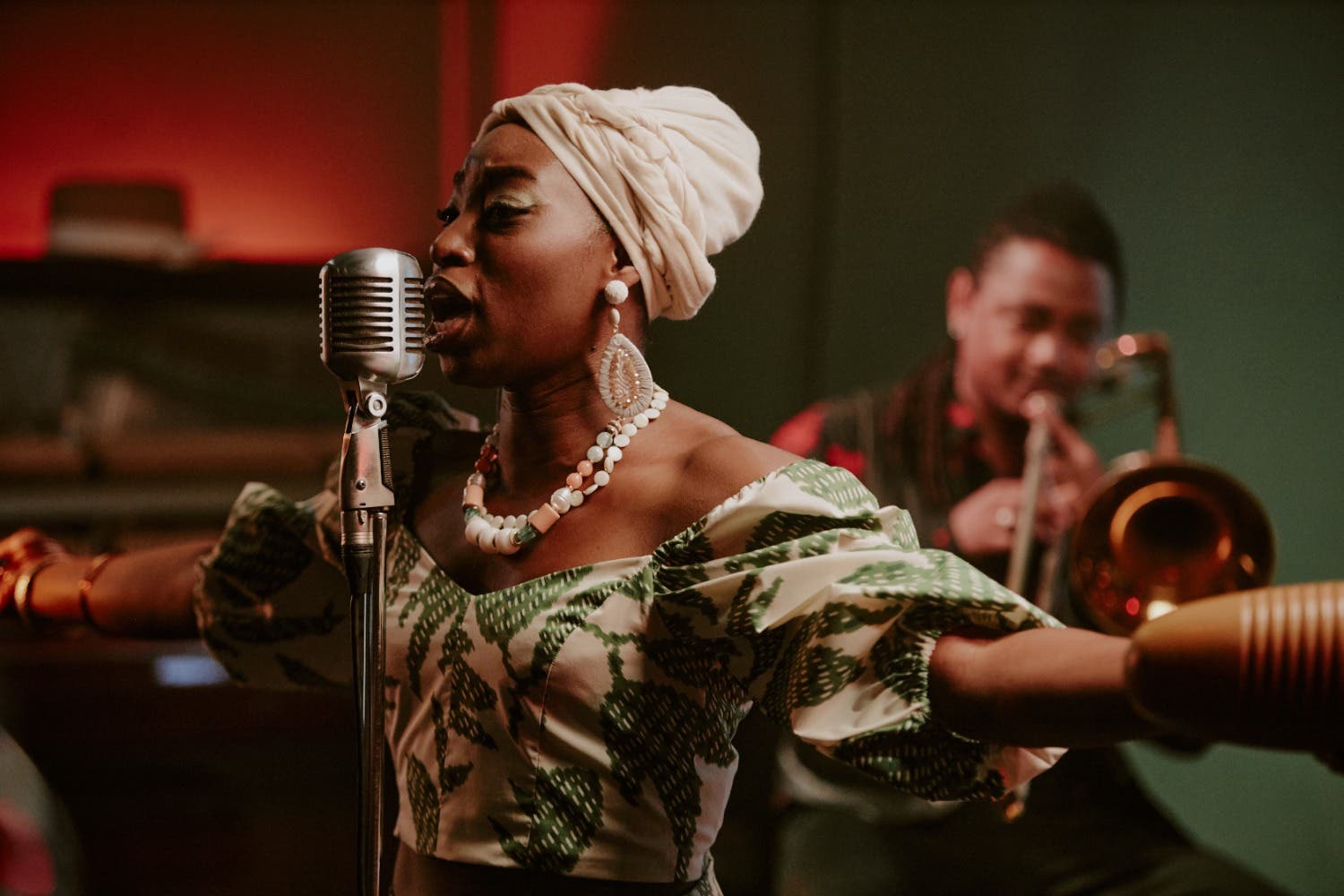
That mix of backgrounds, freedoms and choices is exactly what Patch reader Greg Brady, of Neptune, Florida, likes best about America.
“The diversity is my favorite thing in America,” he said. “The foods, the music, the colors. Christmas’s red and white and Diwali’s bright neons all fit under the red, white and blue banner.”
And then there’s jazz — American music that knows how to make room for the solo without losing the band.
Brady called it “an entirely American invention of individual expression within the framework of band participation.”
Anniversary As Reckoning
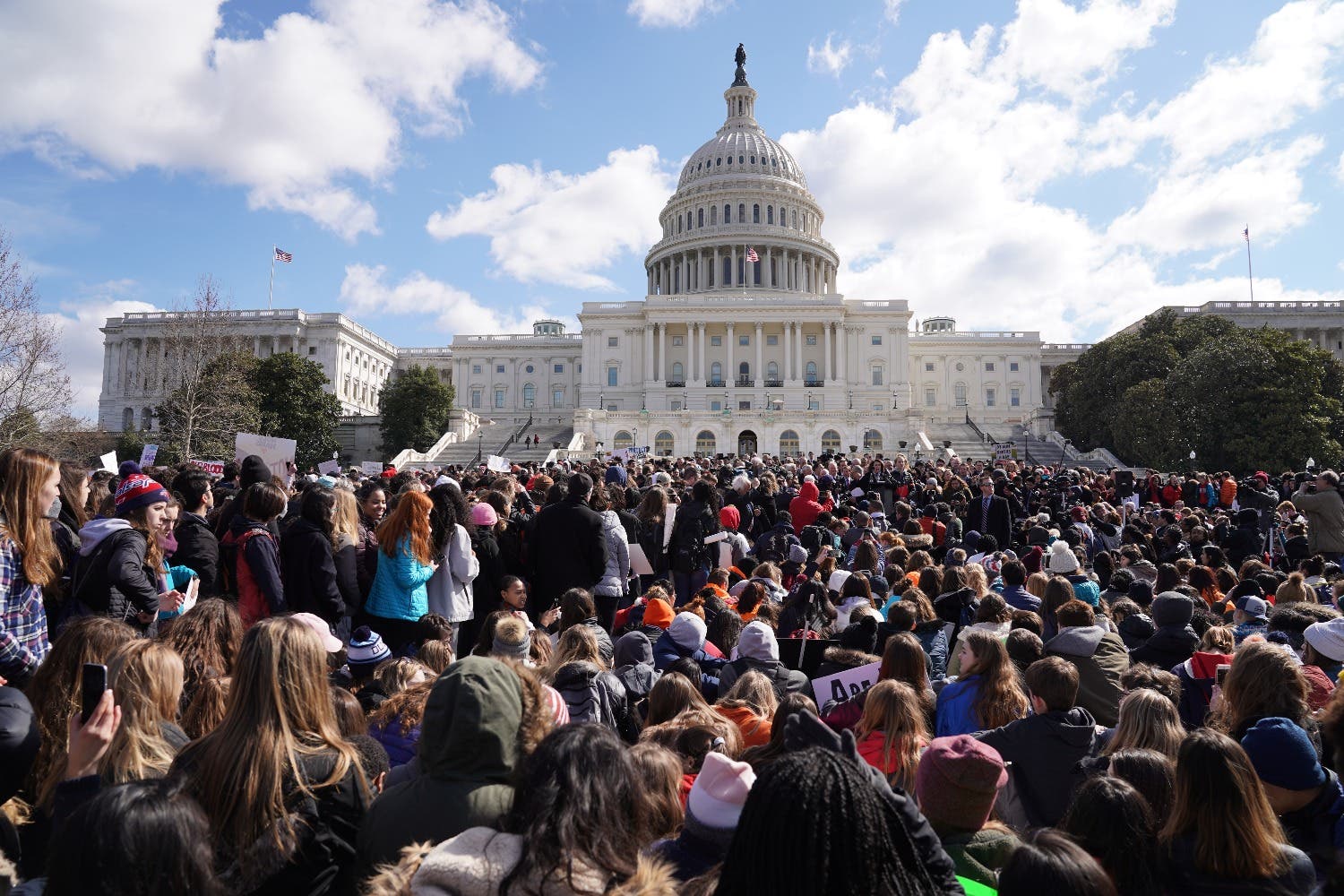
Not every reader saw America’s 250th anniversary as a purely celebratory moment. For some, pride in the country’s founding ideals is shadowed by concern that the nation is falling short of them.
Nancy Krempa, a White Lake-Highland (Michigan) Patch reader, traces her ancestry to colonial days but also to Dutch and German immigrants seeking a better life.
“I understand why people come here and why they want to stay. What I don’t understand is the animosity toward those who, fearing for their own survival, come here by any means possible,” Krempa said.
She fears America has drifted from its founding values, alienated allies and failed to honor virtues such as kindness, fairness, equality, courage and acceptance. Yet she remains hopeful that principled, courageous people will stand up and help restore the country’s moral footing.
“Our founders, my ancestors, would be spinning in their graves if such were possible,” Krempa said. “Our current leadership has shifted so far from the morals, values, and ideals upon which this country was built as to render it nearly unrecognizable.”
For Krempa, the 250th anniversary feels like a missed opportunity for the country to measure itself against the principles it claims to celebrate.
Linda Rose Stahl, the oldest daughter of a World War II veteran and the descendant of immigrants from Budapest, Hungary, wants a reset.
The Evanston (Illinois) Patch reader said she wishes the patriots “could be resurrected and start things again to get us back to our senses.”
“We are not very proud of the craziness going on these days,” Stahl said. “We’re very emotionally defeated and don’t know how to have a better quality of life with the time we have left to us.”
Scott Ezarik, a Fairfield (Connecticut) Patch reader, also sees America as unfinished, but with more room for optimism.
Over time, he said, America has become more inclusive and evolved into a powerful nation that can stand against tyranny. His pride comes from the ability to help make the country better.
“This means peacefully protesting laws that are disliked by the people, caring for others, and showing happiness toward U.S. culture,” Ezarik said. “I am also happy to celebrate patriotism, especially on the Fourth of July, and that I have freedom of speech and freedom of religion, just like the First Amendment guarantees for all U.S. citizens.”
Freedom And Sacrifice
“Being an American means I’m free; I get to make decisions for myself; I have access to education and to multiple schools of thought; and I am empowered to learn, educate others, and advocate for my beliefs,” said Annie John, a Herndon (Virginia) Patch reader.
“It means safety. I have a huge defense department behind me, protecting me physically. It means diversity. America was founded by people of different backgrounds and ethnicities and continues to thrive because of the diversity so prevalent today,” she said.
Her toast to America this weekend is this:
“I’m proud to be part of America because of the superpower we’ve built that my ancestors fought hard to create,” she said. “My hope is that we continue to thrive as a country known for its freedom, its protection and its diversity.”
Fort Myers (Florida) Patch reader Pat hopes that the sacrifices of the past aren’t forgotten in the future.
“As a nation, we have come this far and endured so much to become great,” said Pat, whose ancestors worked in coal mines and whose father and grandfather fought in wars to preserve the freedoms Americans enjoy.
“We as a nation have come this far and endured so much to become great. My wish is that the present and future generations are smart enough to take us further and not forget that the past generations got us to this point,” Pat said.
Linda Bauman, a Sarasota (Florida) Patch reader, sees America as a place where hard work and opportunity made it possible to build a better life, even without college degrees.
She and her husband are proud of their own progress, proud of America’s role in defending freedom abroad, and hopeful the country will continue helping others pursue freedom while keeping alive a spirit of friendship and welcome.
“We, as Americans, take freedom for granted, but in other nations freedom is still elusive,” Bauman said. “Some countries demand that their citizens worship a certain way, dress as they’re told to dress, and speak always in support of the government, whether or not they truly believe in what they’re being forced to do.
“If they want America’s help to achieve freedom, I hope our country can do that for them,” she said.
Fairfield (Connecticut) Patch reader Trevor said the nation’s leaders need to be careful not to meddle in other nations’ conflicts.
As the son of a World War II veteran, Trevor is proud of the country that stood up to Adolf Hitler’s atrocities and Japan’s aggression. He is also proud of the resolve to bring the perpetrators to justice and to take steps to prevent a recurrence.
Still, “my hope for the future is that someday, U.S. casualties of war and other conflicts will become rarer and rarer, and perhaps even nonexistent,” he said, adding, “While I agree that ‘freedom isn’t free,’ in general, America can do a much better job of choosing its battles.”
Democracy’s Fragility
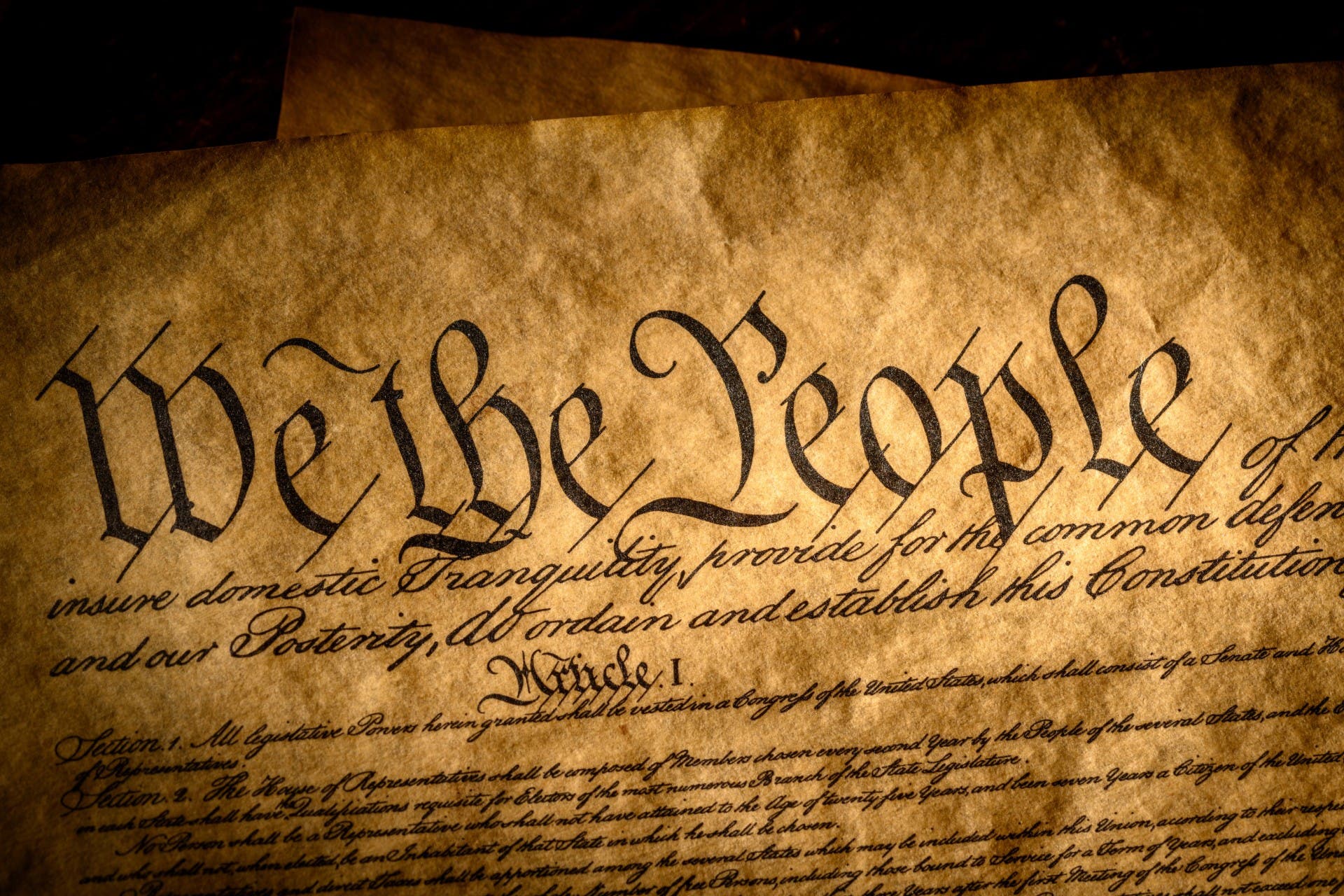
Trevor was among several readers who warned that American democracy is fragile.
“It has been said throughout the years that American democracy is an experiment,” he said. “In my 60 years, I have never seen that experiment come so close to failing as it has in the past decade. Without getting political, all three branches of the federal government need massive ethics reforms in order to preserve what the founding fathers envisioned.”
A Florida Patch reader said the Constitution’s opening words, “We the people,” resonated with her when she wrote a seventh-grade essay on the founding document and still do today.
“Those few words captured the founding fathers’ aspiration for a unified nation, though unfortunately, that sense of unity seems to have slipped away,” the reader said. “I’m proud to live in a country where I can say what I think about our leaders and not go to prison for it. I hope we can all get back to a place of unity.
“I don’t think the founding fathers thought we would end up where we are now,” the reader said. “Let’s hope the next 250 years actually happen, and we remain free.”
That depends on whether Americans will accept “a stronger sense of civic responsibility,” said MacColl, the Pelham Patch reader.
“I hope we can argue honestly without forgetting that we share a country. I hope we teach history with both gratitude and truth,” he said. “And I hope America’s 250th anniversary reminds us that democracy is not something we inherit once. It is something we practice, repair, and pass on.”
The semiquincentennial isn’t just a jubilant birthday celebration, he said.
“It should be a moment of civic reflection,” MacColl said. “The American Revolution was not only a break from Britain. It was the beginning of an experiment in self-government that still depends on institutions, trust, participation, and restraint. The most important question is not only what happened in 1776 but also whether we are willing to do the work required to keep the promise alive in 2026 and beyond.”
Also On Patch
Get more local news delivered straight to your inbox. Sign up for free Patch newsletters and alerts.