Politics & Government
Ted Dabrowski: 2026 Republican Primary Candidate For IL Governor
The former Wirepoints president says among his qualifications for governor is he has studied the state's fiscal problems and has solutions.


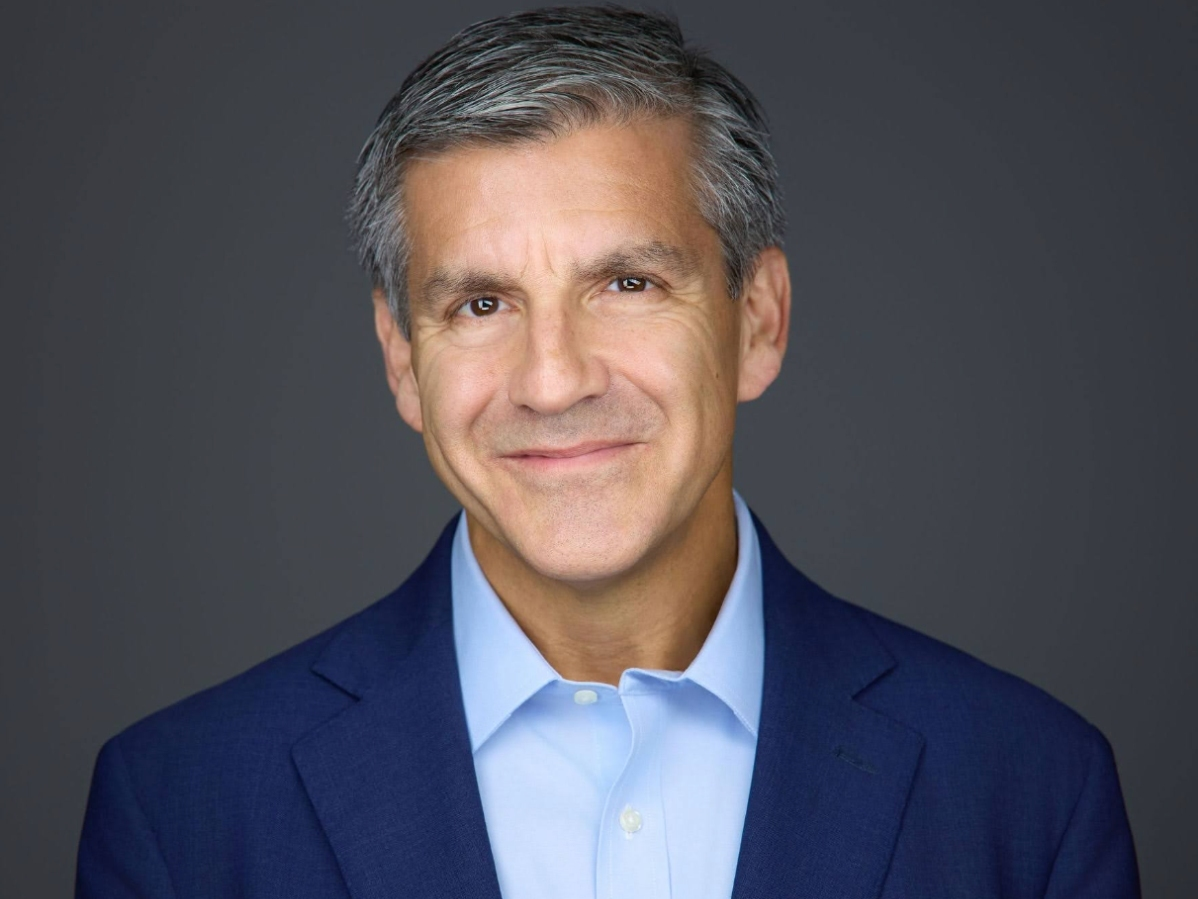
Ahead of the March 17 Illinois primary election, Patch provided questionnaires to all candidates on the ballot. In the race to unseat Gov. JB Pritzker (Democrat), four candidates are on the Republican side: 2022 GOP nominee Darren Bailey, former Wirepoints President Ted Dabrowski, businessman Rick Heidner and DuPage County Sheriff James Mendrick on the ballot.
RELATED: IL Governor's Race Heats Up As 4 Republicans Vie For Chance To Unseat Pritzker
Patch recently sent out election questionnaires to the candidates. We are publishing all responses submitted by candidates verbatim. Here is the one we received back from Dabrowski:
Find out what's happening in Across Illinoisfor free with the latest updates from Patch.
Ted Dabrowski
Town of Residence: Wilmette
Position Sought: Governor of Illinois
Find out what's happening in Across Illinoisfor free with the latest updates from Patch.
Party Affiliation: Republican
Education: University of Chicago. Harris School for Public Policy. Masters. 2007-2009
The Wharton School. MBA in Finance, International Management. 1987-1989
Georgia Institute of Technology. Industrial Management. 1981-1986
Occupation: Former President of Wirepoints
Previous or current elected or appointed office: None
Campaign website: TedForIllinois.com
The single most pressing issue facing our state is _______, and this is what I intend to do about it:
Affordability. Illinois’ lack of affordability is largely a matter of taxes, hostility to job creators, suppressed wages and a spendthrift government. As governor, I will veto any and all tax increases and implement a range of spending cuts to reduce Illinoisans’ tax burdens. That includes terminating welfare benefits for noncitizens, serious consolidation of our massive number of government units and ending unfunded mandates that Springfield imposes on local governments. As a long-term goal, I will push to limit property taxes to one-percent on the assessed value of a home. Most importantly, I will make Illinois affordable by driving wages up through high growth policies, putting workers in the driver’s seat.
What are the critical differences between you and the other candidates seeking this post?
Carrie Mendoza and I are the only candidates building the trifecta of high-dollar donors, powerful endorsements and widespread grassroots support – spread across Chicagoland and downstate – capable of defeating Gov. Pritzker.
Both Carrie and I are from Cook County, and that’s key to getting enough votes in Cook County and the suburbs needed to beat Pritzker. We are both fiscal and social conservatives, but we know how to make our case in the suburbs so that we attract centrists, independents and disenfranchised democrats.
I am also half Polish, half Latino, so I am making sure I reach out to ethnicities throughout the Chicagoland area. I am consistently visiting churches, especially evangelical ones, and getting the support of pastors. I am also reaching out to the freedom-loving Slavic community. They love seeing a fellow-Slav who understands what they went through in their own countries.
Explain your attitudes toward fiscal policy, government spending and how taxpayer dollars should be handled by your office (or board)?
We need an entire culture change in how we budget. The budget is often dumped on legislators in the middle of the night and only a few hours before a vote, preventing both taxpayers and lawmakers from knowing what’s being spent. Most of the time the budget just grows automatically, never mind the actual merits of each line item.
Change starts with determining what the state government should be doing and not be doing. What it shouldn’t be doing must be cut altogether. What it should be doing must be supported wholeheartedly. And waste, fraud and abuse should be rooted out relentlessly.
But fixing the budget process is only part of what’s needed. The state requires a complete overhaul of how it does business. Among the measures I would pursue: end all welfare programs to illegal immigrants; aggressively consolidate units of government; zero out all appropriations to NGOs that are engaged in political activity or fraud; end pensions for new government workers; end subsidies for most renewable energy projects; stop picking winners and losers via corporate welfare; and benchmark our school spending against other states.
Do you think Illinois’s SAFE-T Act/no cash bail has been effective? Do you support the repeal of the SAFE-T Act? Why or why not, and do you think wealthier defendants should have an easier route to release?
Criminals are prioritized over victims under the Democratic Party’s failed policies. Gov. Pritzker’s SAFE-T Act allows repeat felons to roam the streets freely while awaiting trial. As governor I would fight to repeal the SAFE-T Act in its entirety.
Do you believe an inequity exists between funding for wealthy and poor schools? If so, what would you do to address the disparity?
This state does not need to spend more money on education, it needs to spend less. Illinois public education is a broken system. Overall, just a third of Illinois children perform reading and math at grade level. We’re spending more than $24,000 per student – the most in the Midwest – all for dismal results.
In contrast, neighboring Indiana spends just $16,000 per student – $8,000 less than Illinois – and achieves similar or better results.
In both Illinois and Indiana, state-level spending per student is about $9,000. It’s local spending that makes Illinois education so expensive. Illinois’ spending “inequity” only exists because residents in wealthy communities are willing to pay exorbitant property taxes to their schools.
To improve state spending on education, I would return the state’s education funding formula to its pre-Evidence-Based Funding (EBF) form. Illinois politicians promised EBF would “transform” Illinois K-12 education. Nearly a decade and $9 billion-plus in dedicated funding later, the only evidence so far is that EBF has been an expensive flop.
EBF hasn’t “enhanced” student outcomes at all. A number of districts have since reached and exceeded 100% of their funding targets, and yet their student proficiency scores are still dismal, many of them worse-off than before.
What would you do to help constituents struggling with the ever-increasing cost of living, housing and health care?
Illinoisans are struggling with a large number of issues like housing and healthcare costs, but it’s the general lack of affordability, failing schools and lack of jobs that are causing the most damage to this state and its residents.
Making Illinois competitive again – improving the state’s business climate and encouraging opportunity – is the best way to improve affordability for Illinoisans.
Illinoisans’ tax burdens have increased every year under Gov. Pritzker and the laws he’s signed. Our property tax rates are now the nation’s highest. The gas taxes we pay are the 3rd-highest. And Illinoisans’ electricity costs have grown the nation’s 5th-fastest due to Democrat’s quixotic obsession with Green Energy
As governor, I will champion a property tax cap that will limit tax bills to just 1% of a home’s assessed value. I will fight to repeal Illinois’ “zero emissions” energy policy that’s harming residents and businesses alike. And I will veto any and all tax increases the legislature puts on my desk.
Safety-net programs need to be laser-focused on how many people we lift up and out of government dependency. That includes eliminating all benefit programs for illegal migrants. Prevailing-wage laws are restrictive and I would reform them to reduce costs. Likewise, collective bargaining rules are stacked against taxpayers.
Beyond taxes, our energy policy targeting zero emissions is driving up electricity prices and risking blackouts. Those high energy prices pass through to almost everything we buy. We must return to a sensible balance of fossil fuels, nuclear and renewables. That means we must repeal the Climate and Equitable Jobs Act.
I will also seek to eliminate countless burdens the state has placed on employers. Unquestionably, Illinois is unfriendly toward business and I will do all I can to reverse that. A booming economy puts workers in the driver’s seat for higher wages, and higher wages are key to restoring affordability.
If you support tax cuts in Illinois, what spending should be eliminated to offset those cuts? Please be specific.
Illinois taxpayers have suffered for decades. They pay the nation’s highest property taxes. They pay the nation’s 3rd-highest gas taxes after Pritzker doubled the motor fuel tax. They pay the nation’s highest cell phone taxes. And Chicagoans now pay the nation’s highest sales tax rates as a result of the recent CTA bailout.
Illinoisans need tax cuts, not tax hikes.
A property tax cap, an income tax cut, and reforms to major expenses like workers compensation can provide that relief. And we must slash Illinois’ web of 280,000 regulations and rules – the nation’s 4th-most – that burden small businesses and entrepreneurs.
We must repeal Illinois’ “zero emissions” energy policy and return to a sensible balance of fossil fuels, nuclear and renewable sources that will bring energy costs down.
Finally, we must stop the creation of new pension debts. I will call for 401K-style retirement plans for all new government workers which will halt the creation of new debt and help kickstart business confidence in Illinois.
Do you support the Trump administration’s immigration enforcement in the Chicago area and beyond? Why or why not? If not, what changes do you think should be made?
Yes, I believe local and state police agencies should be cooperating with President Trump’s attempts to reduce crime and deport criminal illegal immigrants from the country
Unfortunately, Gov. Pritzker's refusal to directly hand over criminals has resulted in the release of 1,768 criminal illegal aliens in the last year. Worse, the governor continues to engage in unacceptable, incendiary rhetoric that foments violence against federal law enforcement officers.
Under my governorship, direct intervention by federal authorities will be unnecessary as I would work cooperatively with federal law enforcement to remove criminal illegal immigrants from our streets and our jails, restoring the law and order Illinoisans deserve.
What else would you like voters to know about yourself and your positions?
I’m running for Governor for Illinois because for 15 years I have studied the fiscal problems in Illinois, proposed the solutions, and watched as the Democrats ignored all of it and turned this state into a place of stagnant growth and record corruption. It was time to get onto the political battlefield and fight for better policies. Illinois should be a top five state, not the bottom-five state that failed Democratic policies have turned it into.
I value the U.S. Constitution and the principles of individual freedom, the rule of law, property rights, and capitalism that underpin our founding document. And I value my ability to practice my faith and raise my family in accordance with it.
My inspiration to fix Illinois comes from the experiences of my parents, who migrated here when Illinois was a beacon for people across the world. I believe Illinois can become that beacon once again.
Get more local news delivered straight to your inbox. Sign up for free Patch newsletters and alerts.