Community Corner
2 Geneva Sites Make Most Endangered Historic Places List
Landmarks Illinois announced its 2018 Most Endangered Historic Places in Illinois list on Wednesday.


GENEVA, IL – Landmark Illinois announced Wednesday that two early settlement-era buildings in Geneva, the Amasa White House and Mill Race Inn, have made its 2018 Most Endangered Historic Places list, according to a news release. Both sites were built within the first two decades that Geneva was founded. On Wednesday, Landmarks Illinois President & CEO Bonnie McDonald announced the Geneva locales were among more than a dozen historic places that the statewide historic preservation nonprofit has identified as most threatened by demolition, deterioration or improper development.
As for the Amasa White House and Mill Race Inn, Landmark writes in its news release: "these sites represent both commercial and residential development during Geneva’s early settlement years, are humble in nature and exhibit the vernacular architecture being constructed by Geneva’s first Eastern United States and European settlers."
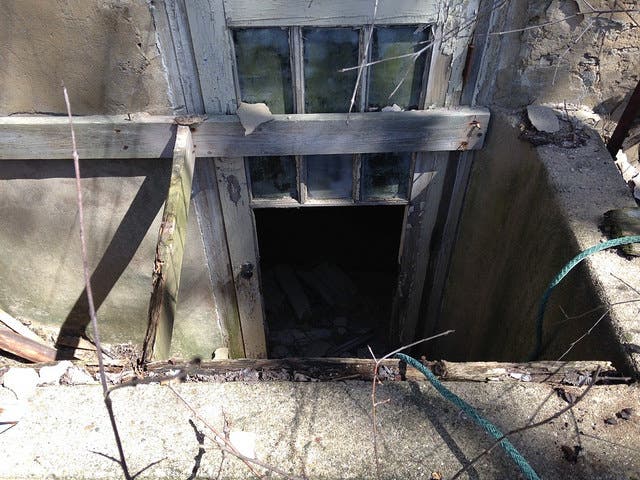
The Mill Race Inn faces demolition and the Amasa White House remains vacant with no use planned for the site.
Find out what's happening in Genevafor free with the latest updates from Patch.
“These endangered places still have value in providing a venue for personal connections, where we can get to know our neighbors and work together to solve problems,” McDonald said. “With some creativity, vision and committed investment, these endangered properties can be preserved and reused. Landmarks Illinois is here to help every step of the way.”
Other buildings to make the 2018 Most Endangered Historic Places in Illinois include:
Find out what's happening in Genevafor free with the latest updates from Patch.
- The Forum, Chicago: A former assembly hall built in 1897 in the Bronzeville neighborhood on Chicago’s South Side attracted musical greats like Nat King Cole and Muddy Watters and served as the site of important civil and labor rights meetings. The Forum today requires significant rehabilitation. Funding has been difficult to secure for this unique historic building on a retail corridor challenged by decades of disinvestment.
- James R. Thompson Center, Chicago: This is Chicago’s best example of grandly-scaled, Postmodern architecture. Designed by Helmut Jahn and built in 1985, the building faces a demolition threat as its current owner, the State of Illinois, pursues a possible sale that may not require reuse of the existing structure. LI listed the Thompson Center in 2017 on our Most Endangered list, and this year, has released renderings to show a reuse concept for the irreplaceable building.
- Second Church of Christ, Scientist, Chicago: This classically inspired church, built in 1898 and part of the National Register-listed Lakeview Historic District, is the oldest continually operating Christian Science church in the city. It was designed by S.S. Beman, perhaps best known as the architect behind the Pullman Company Town in Chicago. The National Register district does not provide landmark protection, unfortunately, and the congregation’s marketing of the building in a desirable real estate area leaves it vulnerable.
- Chautauquas & Tabernacles, Des Plaines, Freeport and Shelbyville: Three structures related to the Chautauqua and Camp Meeting movements in Illinois are included: the Waldorf Tabernacle in Des Plaines, the Oakdale Tabernacle in Freeport, and the Chautauqua Auditorium in Shelbyville. These structures all require maintenance and repairs in order to serve the community once again. They represent a unique part of Illinois’ history in the late 19th and early 20th centuries, with large gathering spaces in natural settings for the public to hear sermons or educational lectures.
- State Fairgrounds, Du Quoin and Springfield: Illinois’ two state fairgrounds, Springfield and Du Quoin, are both home to numerous structures that have suffered from deferred maintenance as the State of Illinois lacks the capital required for such projects. In Springfield, Barn 13 required emergency repairs this year and the Coliseum remains closed due to deterioration, while the Grandstand building in Du Quoin is in need of a new roof. Over a dozen buildings at both fairgrounds need significant repairs and new roofs, but funding sources have not been secured.
- Varsity Theater Block, Evanston: The 1700 block of Sherman Avenue is one of the last remaining historically intact blocks in downtown Evanston and is unprotected. Historic structures on this block, like the 1926, J.E.O Pridmore-designed Varsity Theater, contribute to the city’s downtown character and are vulnerable teardown targets to make way for future new developments.
- The Nite Spot Café, Fairmont City: This former restaurant along Route 66 features an iconic mid-century, neon sign outside that continues to remind passersby of a bygone era when families and tourists hit the “Mother Road” – the historic highway from Chicago to Los Angeles. The Nite Spot Café closed in 1984 and remains vacant. The building is threatened with condemnation and demolition by Fairmont City, despite the owner’s plans to complete the necessary structural repairs this year.
- Central Congregational Church, Galesburg: Built in 1898 and designed by C.E. Gottschalk and Beadle Architects, this historic church is listed on the National Register of Historic Places. It has been host to prominent figures like Galesburg native Carl Sandburg, who celebrated his 75th birthday and the release of his autobiography at the church. Lack of funding, however, has led to deferred maintenance of the structure and an inability to complete significant repairs. The church congregation needs new partners, funding sources or possibly to sell the historic church in order to secure a long-term preservation solution.
- Kincaid Mounds, Massac and Pope Counties: A rare, archeological site built by settlers in the Middle Mississippian period more than a thousand years ago. The site, which spans Massac and Pope Counties, is a National Historic Landmark. However, with no full-time staff dedicated to Kincaid Mounds, a local nonprofit organization is concerned that limited funding, deteriorating interpretation, farming practices and soil erosion threaten the proper care and long-term survival of the mounds. Just nine of the original estimated 19 earthen works exist today.
- Old Nichols Library, Naperville: This building, constructed in 1898 and designed by architect M.E. Bell, was Naperville’s first public library. It features rusticated limestone quarried in Naperville and is locally landmarked and in a National Register district. However, the landmark status only protects the structure’s main façade, and a developer has plans to demolish the remainder of the building for a new development.
- Rock Island County Courthouse, Rock Island: The Spanish Renaissance or Roman-style building was designed by Fredrick C. Gunn and Louis S. Curtis and built in 1897. The courthouse served as the county seat since 1897, but today faces demolition following the completion of a new Justice Center in late 2018. The Public Building Commission has called for the demolition of the historic structure after courthouse operations move to the new center next door. Public support to seek reuse options has been strong, but the final decision resides with the Rock Island County Board.
- Stran-Steel House, Wilmette: This unique home built of steel and baked iron enamel was featured at the “Homes of Tomorrow” exhibit at the 1933 Century of Progress Fair in Chicago. It was designed for the Stran-Steel Corp. to feature modern home design and was relocated to Wilmette after the Fair. It has no landmark protection and faces a demolition threat by its current owner who plans to build two new homes on the site. The owner has offered the home to anyone who can move it from its current location by this summer.
More via the Landmark Illinois website
PHOTO CAPTION: MILL RACE INN/PHOTO CREDIT: LANDMARK ILLINOIS
Get more local news delivered straight to your inbox. Sign up for free Patch newsletters and alerts.