Community Corner
Chic Williams: A Study in Redemption
Chic Williams traveled a long, hard road to become "a great man, and a great role model."
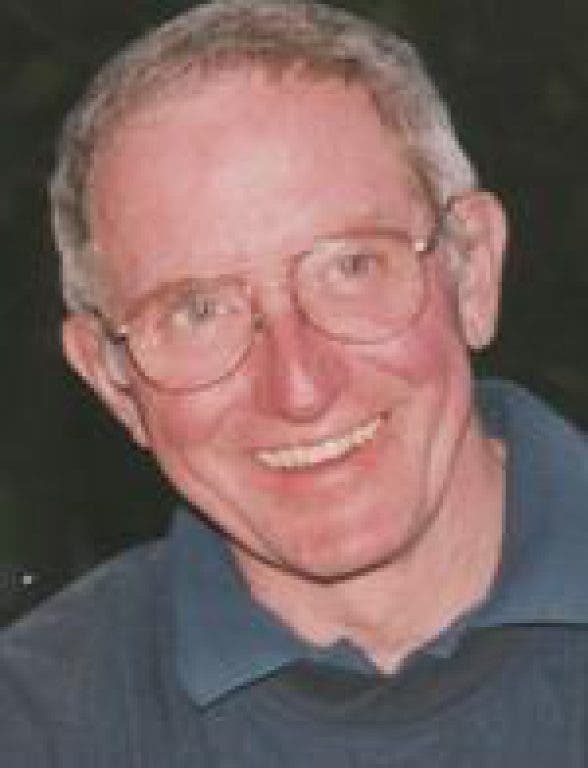
He was an alcoholic who got himself sober; he turned himself from an often sarcastic and gruff man, into a remarkably compassionate, kind, endlessly giving friend. Before this complex man could save hundreds of lives of others, first he had to save his own.
One of the comments following Rick Nagel’s first Tuesday morning Patch story on Chic Williams’ death stopped me short.
Chic was, the commenter said, “a great man, and a great role model.”
Find out what's happening in Genevafor free with the latest updates from Patch.
Certainly true—and one of the reasons it was true, I thought, is because there was a time when he really wasn’t.
For Charles “Chic" Williams wasn’t always the quiet, laconic, rail-thin man with the wispy white hair and words of comfort and guidance, who could and would work patiently for hours with young people at their worst—in the throes of teenage rebellion, or alcohol or drug addiction. That’s how students, and parents, saw him in the last 15 or 20 years of his career.
Find out what's happening in Genevafor free with the latest updates from Patch.
I remember a younger and very different man from the early 1970s at Geneva High—an almost beefy guy, with a headful of bright red hair and a sort of cynical, sardonic grin to go with it ... and with, as it turned out, a powerful addiction of his own. In the latter ’70s, after I’d graduated from GHS, I listened to him slur his words and saw him walk unsteadily out of barrooms. Chic Williams in his late 20s and 30s was an alcoholic, who had plenty of his own problems to deal with before he could deal with anyone else’s.
Indeed, Chic Williams was a study in the power of redemption, of what a person can accomplish after—and only because—he’s stared at himself in the mirror at the bottom of the abyss and vowed that the better part of him would, by God, triumph over the demons.
The first time I encountered Chic closeup was not quite 40 years ago, when I was a student at Geneva High. One of his roles at GHS was that of “activities coordinator,” in which he handled the logistics of student dances, made sure student clubs had meeting rooms available at the appropriate times, etc.
My first impression of the man was that I always had to be sort of walking on eggshells with him; he wasn’t an extremely patient fellow. He was only 28 at the time, but to a high-school junior he seemed much older. I was going to deejay for a Student Council sockhop, a sort of throwback '50s-style event on a Saturday night in February, and I was nervous that afternoon about making sure we had the right microphone, and that the sound system worked correctly and so forth. Some connection was shorting out and I was pestering him to please unlock a closet to look for another cord or something. “In a MINUTE, Kurt; geez louise,” he responded in his reedy Nebraska twang.
By that spring of 1974, in his fifth year teaching at GHS, he’d already become varsity baseball coach; that same spring, at 16, I’d snared a gig as a bylined sportswriter for the Chronicle. I was of course very wet behind the ears, and when I wrote a lead for a story on a Geneva-Oswego baseball game with the fistfight that had occurred at second base in the sixth inning, he tracked me down in the library and lit into me. “What is the matter with you?” he asked me with narrow-eyed irritation. “That is NOT how you write about high school baseball!” He was right, of course. And with the perspective of years, of course, I realize that he’d begun to expect something better out of me by that point, and that I’d disappointed him.
The following fall of ’74, right as our senior year began, Chic let me emcee for a couple of pep rallies, and perhaps a student-council auction—and, seeing this, Coach John Barton approached me about doing public-address announcing for a few Tuesday-night jayvee football games at Burgess Field (this was OLD Burgess Field, just south of the high school building, in its ultra-tiny pressbox). Now THIS is fun, I remember thinking—and I wanted to do more of it. Chic had been Geneva High’s varsity basketball P.A. announcer for the previous two winters, taking the task over from Don Straughn when Don became assistant principal in fall 1972. But by late October, every day in the speech class of Chic’s in which I was enrolled that semester, I was pestering him: “Hey, Mr. Williams, you think I could do just the starting lineups?”
Finally, in December, he relented, with the small grin, and let me try it. By early January, he gave me the go-ahead to work an entire game behind the P.A. microphone. I finished that season, and after four years away at college, I took it up again in 1979 and stayed with it for more than 30 years. It was Chic Williams who’d given me the confidence that I could do it.
Truly, I’ve only thought of it in recent years, and certainly again this week: Chic had to have, that January of ’75, gone to principal Norm Vonesh, and/or AD and head basketball coach Bob Schick—and vouched for me, assuring them that, in his opinion, I could handle the responsibility and not screw it up.
As he was to do many times over the next 25 years or so, certainly in much more difficult situations with kids who were facing addiction or other serious trouble—he went and fought for me; put his reputation on the line at least a little bit, for a teenager.
But in those latter 1970s and early ’80s, before Chic Williams could become what most folks in Geneva remember him for, more recently—the compassionate friend and advocate for kids in trouble, the cheerleader giving parents courage (both individually and in the Parent-to-Parent classes) to get tough enough with their teens to help get them off alcohol and drugs and back on track—he had his own demons with alcohol to wrestle with.
For when we were in high school, and a few years beyond, we witnessed Chic stumble out of the old Derby Lounge, and the old Blue Room a couple blocks east on State Street. Chic Williams always functioned during the school day, but his battle with alcoholism was an open secret in Geneva.
Not that he didn’t have reasons. Like when his wife Mary died of cancer in 1982 and left him as single father to four kids at home.
Later in the ’80s, he found stability with his new wife, Linda, and the fortitude to get himself sober for good. And through the 1990s and into this century—when his responsibilities as Geneva High’s first dean of students morphed into a tireless role as District 304’s drug and alcohol intervention counselor, and more, as a ’round-the-clock anti-addiction mentor to many more—he was simply dedicating himself to helping as many as he could, deal with, and defeat to the extent possible, the same nightmares he’d faced.
In so doing, he made himself a prolific force for good, for salvation, the likes of which this community really hadn’t seen before.
You’ve heard and read the comments of many this week about the scores of young lives that Chic Williams literally saved from addiction. I’ve personally spoken with people older than that this week, my contemporaries, whom he had sponsored in Alcoholics Anonymous, who said to me, earnestly, repeatedly, and without hyperbole: “I honestly wouldn’t be alive talking to you right now if it weren’t for Chic Williams.”
And there are many others who could and would say the same thing. Could there be a finer legacy for any man to leave?
But before Chic could be in a position to leave that legacy—before he could become, in the words of this week’s Patch commenter, “a great man and a great role model”—he had to drag himself from that dark hole of addiction that he’d dug himself in early adulthood ... back in the days when he couldn’t wait to get out of the classroom, or baseball practice, so he could get in the car, light up a cigarette and go get a beer or three. Indeed, it’s only because of having been in that hole, that Chic Williams could be as effective, and as driven, as he was, to leave that legacy.
At just 67, his final rest has come way too soon. But he’s certainly earned his peace, more than most.