Crime & Safety
Destruction Of DNA In Hansen Murder Trial Was 'Inadvertent' & 'Negligent, But Not Willful': Judge
Jon Hansen is accused of being mass murderer Romeo Nance's accomplice in two random shootings, including one fatal shooting.


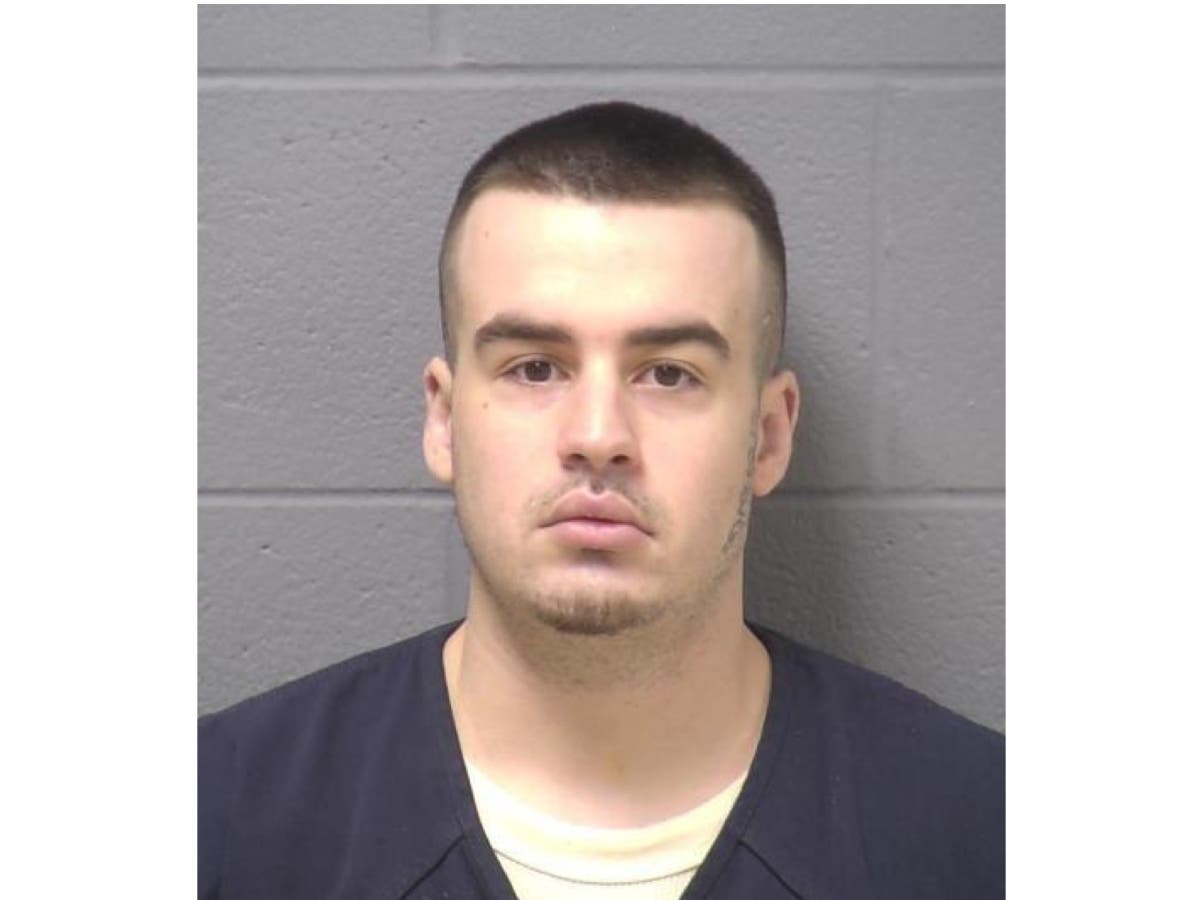
JOLIET, IL — A crime lab's destruction of DNA evidence in the murder trial of accused Romeo Nance accomplice Jon Hansen was 'reckless,' but 'inadvertent' and 'negligent but not willful,' according to a Will County judge's ruling. The DNA, though, was not Hansen's only hope of exoneration, the judge contends.
Hansen, 26, is charged with first-degree murder, accused of helping now-dead accused Joliet mass murderer Romeo Nance commit a Joliet Township killing and a non-fatal shooting of another person in Joliet in January 2024.
Judge Jessica Colon-Sayre said Wednesday that the Joliet crime lab "recklessly" violated her court order that a forensic expert be present for any DNA testing on the gun used in the crimes—an instruction that was not followed, Colon-Sayre said.
Find out what's happening in Jolietfor free with the latest updates from Patch.
On Jan. 21, 2024, officials say Nance killed eight people, including seven members of his family. After killing his family members at two homes on West Acres Road in Joliet, police say Nance shot two additional victims, killing one, while chanting "we're all going to die today" and referring to suicide by cop.
The next day, in a confrontation with U.S. Marshals after fleeing to Texas, police say Nance fatally shot himself.
Find out what's happening in Jolietfor free with the latest updates from Patch.
Detectives later said they determined that Hansen had been with Nance before the fatal shooting of Toyosi Bakare in Joliet Township and the nonfatal shooting of Mario Guerrero on Davis Street in Joliet.
Officials said Hansen told police he'd thrown the gun into the DuPage River near his home, where it was recovered.
After the judge's ruling that the state lab had violated her court order, Bertani and Tomczak filed a motion to dismiss the murder charges, or in the alternative, for sanctions against the state for the violation. The court on June 24 ruled to issue any future potential jurors specific instructions on how to interpret the DNA evidence, but did not dismiss the murder charges.
A copy of the ruling provided by the Will County State's Attorney's Office on Friday detailed Colon-Sayre's decision.
"Whenever a court order is not followed, we all immediately should be very concerned," the ruling reads. "In this case the process of the consumption of one of the DNA samples happened without the defense expert’s presence, which in fact violated this Court’s order."
Colon-Sayre went on to lay out previous cases and how they impacted her decision.
"There was a court order entered for the defense’s expert to be present for any DNA analysis, and I put the State on notice," the ruling reads.
The court order, she said, "puts the State on notice, i.e., the crime lab, that evidence must be preserved until defense expert is present..."
By legal precedent, the defense is not required to prove that the evidence has any "exculpatory value" to show a due process violation, Colon-Sayre said.
"If the State proceeds to destroy the evidence, appropriate sanctions may be imposed, even if the destruction is inadvertent," the ruling states.
In an April 2026 response to a motion to dismiss the case against Hansen, prosecutors laid out how the DNA evidence had been handled. They stated the gun had been swabbed for DNA at its trigger, grip and rear slide. Evidence from the shootings was given to a crime lab for a ballistics analysis. DNA swabs were sent to the Illinois State Police Lab in March 2024, and the item was returned to Joliet Police two months later.
Analysis of one of the swabs was later requested, and the Illinois State Police lab informed the Will County State's Attorney's Office that analysis would mean consumption of the sample.
Prosecutors then filed a required notice of DNA consumption with the court in January 2025. In April 2025, Hansen's attorney filed a motion to appoint an expert.
"If the State anticipates that testing will completely consume a DNA sample, they are legally required to file a motion to consume, which the State did here, and the resulting court order typically mandates that the defense must be given notice, and a defense expert, as in this case, must be allowed to physically witness the testing to verify the chain of custody and protocol accuracy," Colon-Sayre's ruling reads.
The hiccup, according to prosecutors' April 2026 response to a motion to dismiss, was in procedure after the court order that appointed the expert. With the Illinois State Police lab not in possession of the swab, it could not be properly "flagged" within the lab's system to be preserved until an expert could be present, according to the prosecution. Instead, the notation was made in a separate case log within the lab.
The swab was then resubmitted to the Illinois State Police Crime Lab a week after an expert was appointed, according to court documents, and it was placed in a freezer in preparation for DNA analysis.
In May 2025, Hansen's attorney demanded a speedy trial, necessitating the DNA analysis be expedited. The crime lab told prosecutors having the expert present during the analysis "would not be feasible, without disrupting lab operations."
In early June 2025, the sample was run for analysis, "ultimately consuming the DNA swab."
"At no time, between April 9, 2025, and June 2, 2025, was the DNA swab 'flagged' by a member of the Illinois State Police Crime Lab to indicate to other members of the Illinois State Police Crime Lab that the DNA swab shall not be consumed," the April 2026 court document reads.
A forensic expert determined no human DNA had been found in that sample, according to that document.
Joliet Police in March 2026 submitted a second DNA swab collection kit to the crime lab. The appointed expert witnessed the consumption of that swab in April 2026.
Colon-Sayre on Wednesday ruled that the testing of the first sample without the defense expert present "was a direct violation of my order, which represents a breakdown of procedural fairness," her ruling reads.
"This Court takes the position that if the State destroys evidence that has been specifically requested by the defense or is protected by an explicit order, the defense does not need to make an independent showing of bad faith to establish a severe due process violation."
The Court could impose sanctions against the State, Colon-Sayre said, such as suppression of DNA evidence or dismissal of the indictment against Hansen—both of which Colon-Sayre decided against.
The DNA evidence is not a "central point of the prosecution's case," her ruling reads, "and its consumption does not completely deny Mr. Hansen his only hope for exoneration."
The DNA, she said, is "potentially useful and is not essential for establishing the defendant’s guilt or innocence," clarifying why she would not dismiss the case against Hansen.
"Therefore, I am left with a jury instruction," she said. "If the case proceeds to a jury trial, I will issue a specialized instruction. The jury will be told that the State destroyed consumed evidence in violation of a court order, and the jury must presume that the unobserved DNA evidence would have benefited the defendant or been unfavorable to prosecution."
Addressing Hansen's attorney's request to hold the State in indirect criminal contempt, Colon-Sayre called the destruction of the DNA evidence "inadvertent," saying it was "reckless," "negligent but not willful."
Defense counsel on Wednesday issued a response to the ruling.
"This ruling will have a devastating effect on the State's already tenuous prosecution of my client," said defense attorney Anna Rose Bertani. "It is not favorable for any party to be called out in front of the jury for violating the Court's Order. Obviously, we will argue, had the Court's Order been followed, the results would have shown Romeo Nance's DNA on the trigger."
State’s Attorney James W. Glasgow on Thursday issued a comment.
"The State Attorney's Office is currently reviewing the order and its implications," Glasgow said. "We remain committed to ensuring that all evidence presented in court meets the highest legal and scientific standards. Because this matter is still subject to ongoing legal proceedings and potential appellate review, it would be inappropriate to comment further on the specifics of the court's findings at this time."
Tomczak decried the crime lab for its handling of the evidence.
"The crime lab's cavalier response to the court's order in a first-degree murder prosecution involving the murder of a total of nine individuals is beyond inadequate; despite it being a felony to destroy DNA evidence, all the crime lab decided to do was a compliance inquiry," Tomczak said. "No individuals were disciplined, suspended, or terminated for jeopardizing this first-degree murder prosecution. In the interest of justice, it is our hope that the crime lab will improve its procedures and, most importantly, its respect for the court's orders and directives."
Get more local news delivered straight to your inbox. Sign up for free Patch newsletters and alerts.