Community Corner
Adorable Bouncy Bongo, Critically Endangered, Born In New Orleans
There only about 100 bongo left in the wild. The antelope subspecies loosely resembles a deer but with long, vertical white stripes.

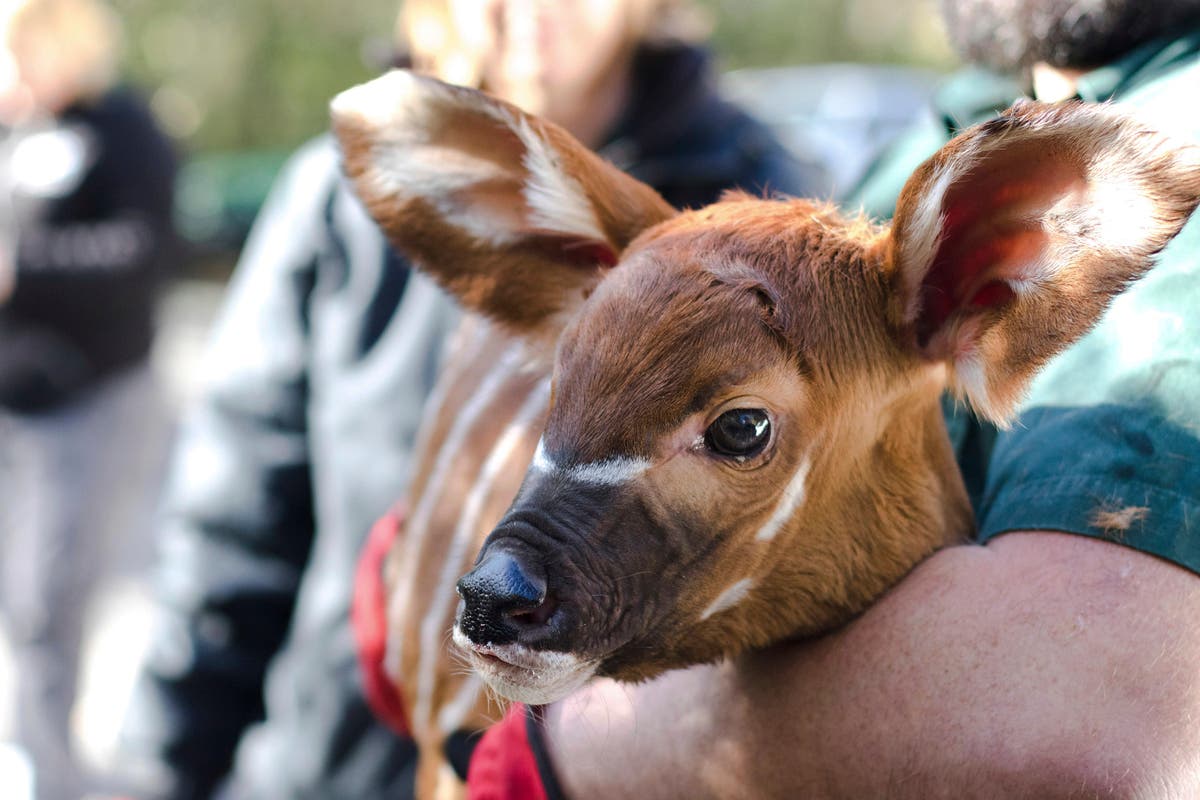


NEW ORLEANS, LA — A bouncing, bright-eyed baby Eastern bongo — with impressively large ears — was born in New Orleans at the Freeport-McMoRan Audubon Species Survival Center, and staffers expect more of the critically endangered antelope species are on the way. The center welcomed the female bongo calf on Dec. 11.
According to a release on the center's website, the bongo is the largest "forest-dwelling antelope species" and also one of the most distinctive. It sports a "glossy chestnut or orange colored coat, large ears, eye-catching vertical white stripes and long horns that spiral as high as three feet."
There are only about 100 bongo left in the wild, the center said. Habitat destruction from unlawful logging, hunting and disease transmission from grazing cattle means the population continues to dwindle.
Find out what's happening in Across Louisianafor free with the latest updates from Patch.
“Zoos may be the last hope for the Eastern bongo,’’ Michelle Hatwood, curator of the center, said in a release.
Watch: Critically Endangered Bongo Born In New Orleans
Find out what's happening in Across Louisianafor free with the latest updates from Patch.
The center's male began acting "frisky" the week he was introduced to five females, Hatwood said in an interview. The 46-pound female was the first calf conceived at the New Orleans center, which was created by the Audubon Nature Institute and San Diego Zoo Global. The calf has yet to be named.
Two or three more Eastern bongo are on the way, Hatwood said on Monday, an excellent sign for a project to create large natural spaces where herds of antelope and giraffe can be comfortable and multiply.
For the first week or so, her mother (identified just as "3'') would leave her hidden, as deer do with fawns. But in the last day or two, Hatwood said, she's been up and around, often with Kibo, the male.
"Our male has really taken to this little girl. He'll go and find her and walk her around the woods," she said. "It's really cute. In a couple of weeks she'll probably be with the herd full-time, bouncing around."
Photo credit: Audubon Nature Institute via AP