Health & Fitness
ECBC fields Light Vehicle Obscuration Smoke System in Germany
U.S. Army lab overcomes time restraints, challenges to advance crowd management defensive system.
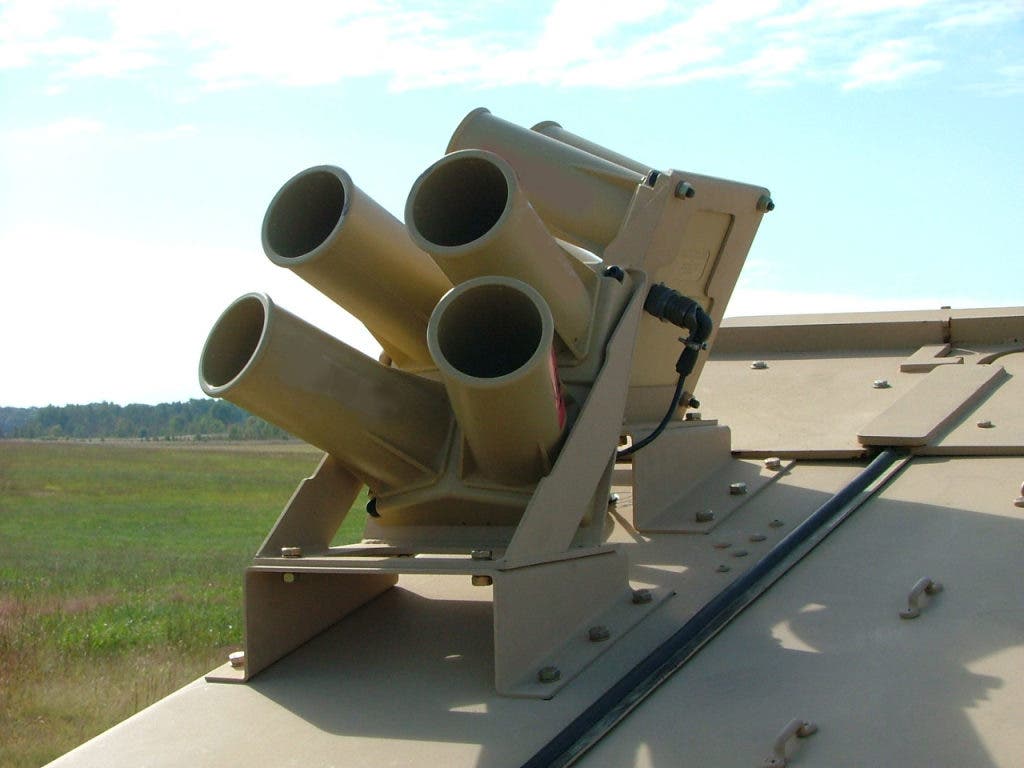
ABERDEEN PROVING GROUND, Md. – The U.S. Army Edgewood Chemical Biological Center (ECBC) is working to advance the Light Vehicle Obscuration Smoke System (LVOSS), a defensive system designed specifically for Military Police (MP) during crowd management. When a military vehicle has an LVOSS installed, it provides four dischargers which can be loaded with different grenades as the situation dictates. One grenade is a smoke round, providing a screen that allows an MP unit to break contact with an enemy and egress from a situation. Another can dispense a riot control agent, such as tear gas.
The LVOSS can also launch flash bang grenades that distract an enemy or launch a blunt trauma grenade which spreads rubber balls over the area. The LVOSS can be used by MPs anywhere for riot control, including current Theaters. The first vehicle was equipped with LVOSS in 1999 – however the latest iteration, the M327, was initiated in 2007.
“The M327 is mounted on the M1151 armored Humvee, which replaces the M1114 Humvee,” said Richard Dixon, ECBC’s LVOSS M327 Program Manager, and General Engineer with the Smoke Systems/Riot Control Team in Rock Island, Ill. Recently, the M327 teams, including a Total Packaging Fielding (TPF) Representative from TACOM, accomplished a new milestone– fielding eight LVOSS kits to the 173rd Airborne Brigade Combat Team in Germany in just two days.
Find out what's happening in Aberdeenfor free with the latest updates from Patch.
“Typically, three days is a comfortable amount of time, especially when working outside of the country,” said Dixon. However, when Dixon and TPF Representative Michelle Boerner arrived onsite at Warner Barracks in Bamberg, Germany, they faced their first challenge. “The Motor Pool Sergeant had other needs for the space,” said Dixon, referring to the motor pool. “So we had two days.”
The first day, Boerner planned to work with supply representatives to issue the LVOSS kits to soldiers. That is when the second challenge arose. “The supply reps weren’t available; soldiers have a lot of other responsibilities,” said Dixon. Eventually, the team was able to secure permission to obtain one LVOSS kit and get started. Later that afternoon, the supply representatives were available to sign out the remaining seven LVOSS kits. And thus installation commenced, with Dixon taking command of the process by demonstrating just how that process should go. The kits are designed to be easy to install, without a need for specialized tools – only those provided in the Army issue general mechanics toolkit. The installations went smoothly.
Find out what's happening in Aberdeenfor free with the latest updates from Patch.
“The person in charge needs to know what they’re doing and be able to organize the installation in a logical manner, so that installation can progress as quickly as possible,” Dixon explains. “A team of four to five soldiers can be working concurrently on a series of specialized tasks: hooking up a battery, drilling mounting holes, and connecting wiring harnesses – all of those tasks can be done simultaneously, you may just need to wait for someone to finish their assigned task. Organization is key to getting this done in an expeditious manner.”
During the installation process, soldiers are frequently called away to attend to their other responsibilities – and both Dixon and Boerner are able to jump in, seamlessly taking over where the task left off.