Health & Fitness
Mobile Response To Opioid Crisis Begins In Anne Arundel
The Governor's Wellmobile Program will help treat one of the areas of Anne Arundel County most affected by the heroin and opioid crisis.

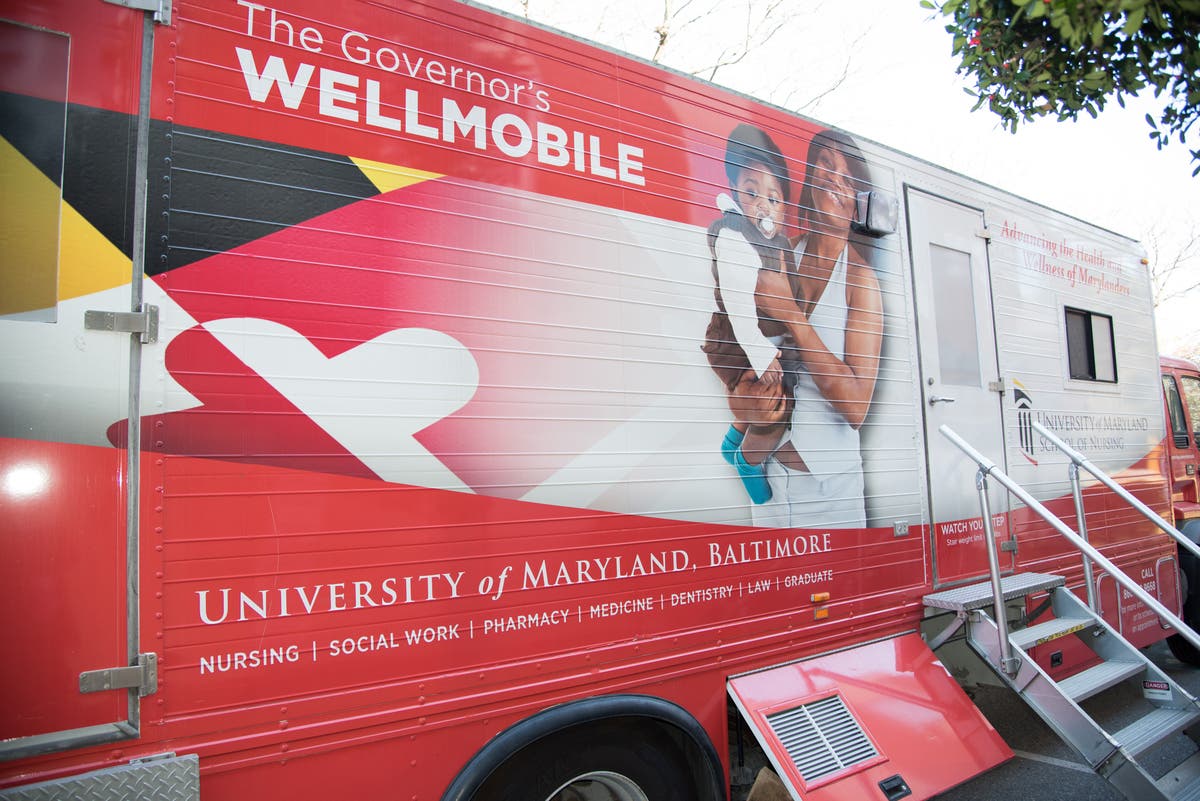
ANNE ARUNDEL, MD - From the University of Maryland: Anne Arundel County has a new tool in its arsenal to combat the heroin and opioid epidemic: the Governor’s Wellmobile Program, administered by the University of Maryland School of Nursing (UMSON).
The Maryland Department of Health and the Opioid Operational Command Center (OOCC) have announced a partnership between UMSON and the Anne Arundel County Department of Health to use the Governor's Wellmobile Program to deliver medication-assisted treatment to one of the areas of Anne Arundel County most affected by the heroin and opioid crisis.
Established in 1994, the Wellmobile provides primary health care to uninsured and underserved residents across Central Maryland while serving as interprofessional clinical education sites for students from the University of Maryland schools of Nursing, Law, Social Work, Medicine, and Pharmacy. Operating through a combination of state and private funding, the program has grown to four 33-foot-long mobile medical vehicles that rotate in and out of service and provides more than 6,000 visits annually.
Find out what's happening in Anne Arundelfor free with the latest updates from Patch.
Deploying the Wellmobile to combat addiction “removes some of the barriers of having to go to a brick-and-mortar place, or a place that is not as convenient,” said UMSON Dean Jane M. Kirschling, PhD, RN, FAAN.
The Wellmobile will treat Anne Arundel County residents two days a week. Anne Arundel County Department of Health officials have not announced an exact location nor a start date. Staffing will be provided by the health department and will include a nurse practitioner, a physician, and a peer-recovery coach. The team will administer naloxone, a drug that reverses the effects of an overdose; treat addiction symptoms; respond to overdoses; and provide peer-recovery support. UMSON students will gain hands-on experience in treating addiction, consistent with a legislative mandate that the Wellmobile provide students from the School of Nursing opportunities to learn about a unique model of delivering services, Kirschling said.
Find out what's happening in Anne Arundelfor free with the latest updates from Patch.
University of Maryland, Baltimore (UMB) President Jay A. Perman, MD said UMB is committed to leveraging its expertise in fighting the addiction crisis.
“I am delighted that our School of Nursing is partnering with Governor (Larry) Hogan and Anne Arundel County to provide health professionals and the Governor's Wellmobile in this critical public health initiative,” he said.
“Since the inception of the Governor’s Wellmobile Program, the University of Maryland School of Nursing has worked closely with stakeholders in Maryland to leverage the Wellmobile to meet the needs of Maryland residents,” added Kathryn Lothschuetz Montgomery, PhD, RN, NEA-BC, chair, UMSON Department of Partnerships, Professional Education, and Practice, which oversees the program. “We are very pleased to partner with the Anne Arundel County Department of Health to pilot substance use treatment and recovery support services to persons struggling with an opioid addiction, while also providing a community-based learning environment for Maryland’s future nursing workforce.”
According to the Anne Arundel County Police Department, as of Jan. 31, 2018, the county has reported 86 total overdoses this year. Of those, 15 were fatal. In 2017, 1,097 overdoses were reported.
“The Wellmobile is an innovative tool that will give us the rapid flexibility needed to effectively address the opioid crisis," said Anne Arundel County Executive Steve Schuh. “We thank Governor Hogan and the School of Nursing for partnering with Anne Arundel County as we seek to turn the tide against addiction.”
The partnership with Anne Arundel County adds to the Wellmobile Program’s list of services, which include clinical care, health screenings, care management, service linkages, referrals and system navigation, and health promotion. The pilot program will be reviewed after 18 months to determine whether the Wellmobile will be deployed to treat opioid and heroin addiction in other areas of the state, Kirschling said.
Eliminating addiction is one of four priority issues supported by UMB’s Catalyst Campaign announced last fall. The capital campaign seeks to promote a world where those who suffer from addiction receive effective treatments, rather than punitive actions, setting them up to live free and healthy lives. Additionally, the campaign looks to make available medications that are designed, developed, and prescribed for minimal risk of addiction and maximum effectiveness for healing, and to diminish crime rates, family violence, homelessness, and health care costs, resulting in fewer people suffering from addiction.
Before It’s Too Late is the state’s effort to bring awareness to the heroin and opioid epidemic — and to mobilize resources for effective prevention, treatment, and recovery. Marylanders grappling with a substance use disorder can find help at BeforeItsTooLateMD.org and 1-800-422-0009, the state crisis hotline.
The University of Maryland School of Nursing, founded in 1889, is one of the oldest and largest nursing schools in the nation and is ranked among the top 10 nursing schools in the United States. Enrolling more than 1,900 students in its baccalaureate, master’s, and doctoral programs, the School develops leaders who shape the profession of nursing and impact the health care environment
Photo courtesy of University of Maryland