Community Corner
Maryland Rallies Against Gun Violence
Thousands marched for gun control and social change in Maryland and Washington, D.C.


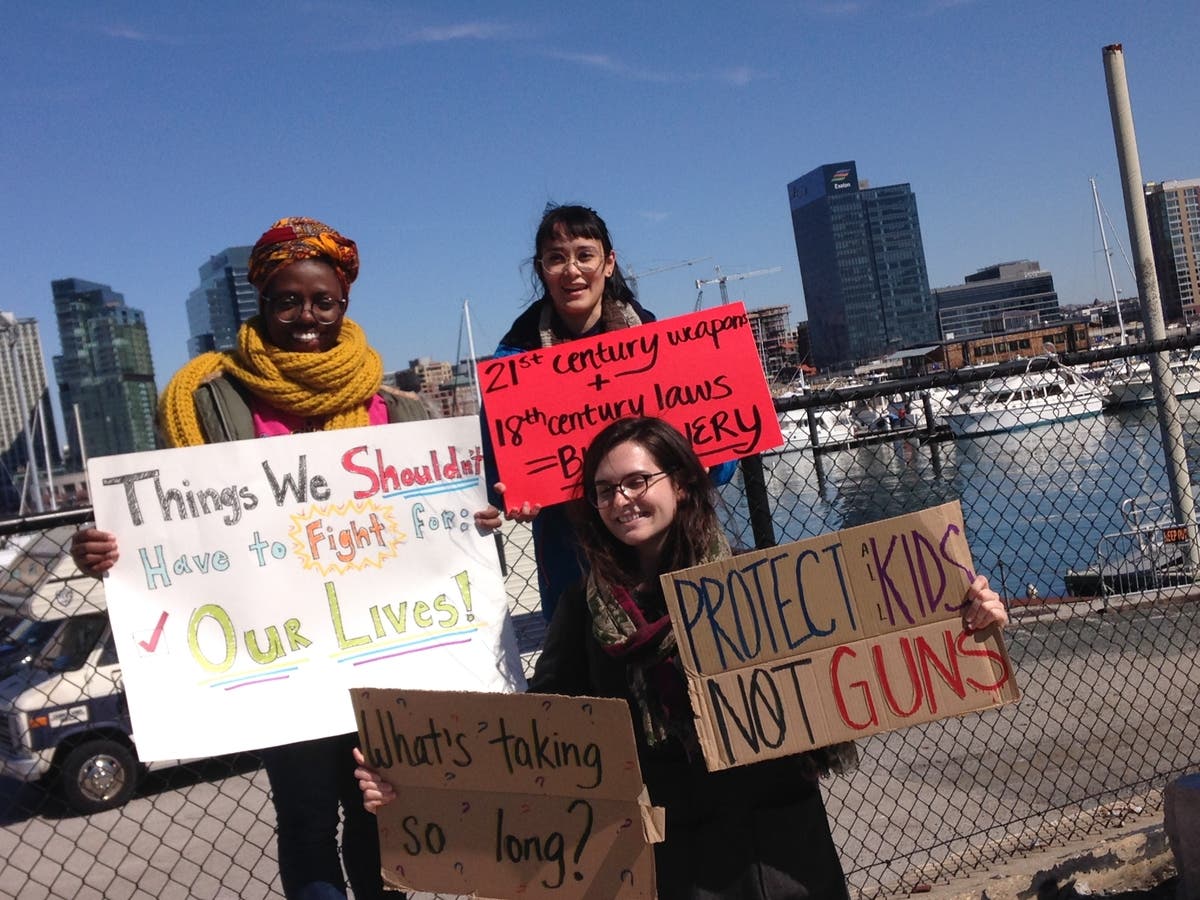


MARYLAND — As people across the country rallied against gun violence on Saturday, Marylanders took to the streets of Baltimore, Annapolis and D.C. to make their voices heard. Students and teachers chanted "enough is enough," among other calls for social change in hopes of reaching lawmakers and neighbors.
"Enough," said Anna Hilger, a freshman at Baltimore Polytechnic Institute who helped organize the March for Our Lives Baltimore. "We go to school to better our futures, not to end them."
The marches came a little more than a month after 17 students and teachers were killed by a gunman armed with an AR-15 at Marjory Stoneman Douglas High School in Parkland, Florida. Survivors there said after the shootings that they would not settle for words of sympathy and hollow promises to make schools safer. They said they would pressure the government to do something real, and so far they have been true to their word and were joined by their counterparts in Baltimore and beyond.
Find out what's happening in Baltimorefor free with the latest updates from Patch.
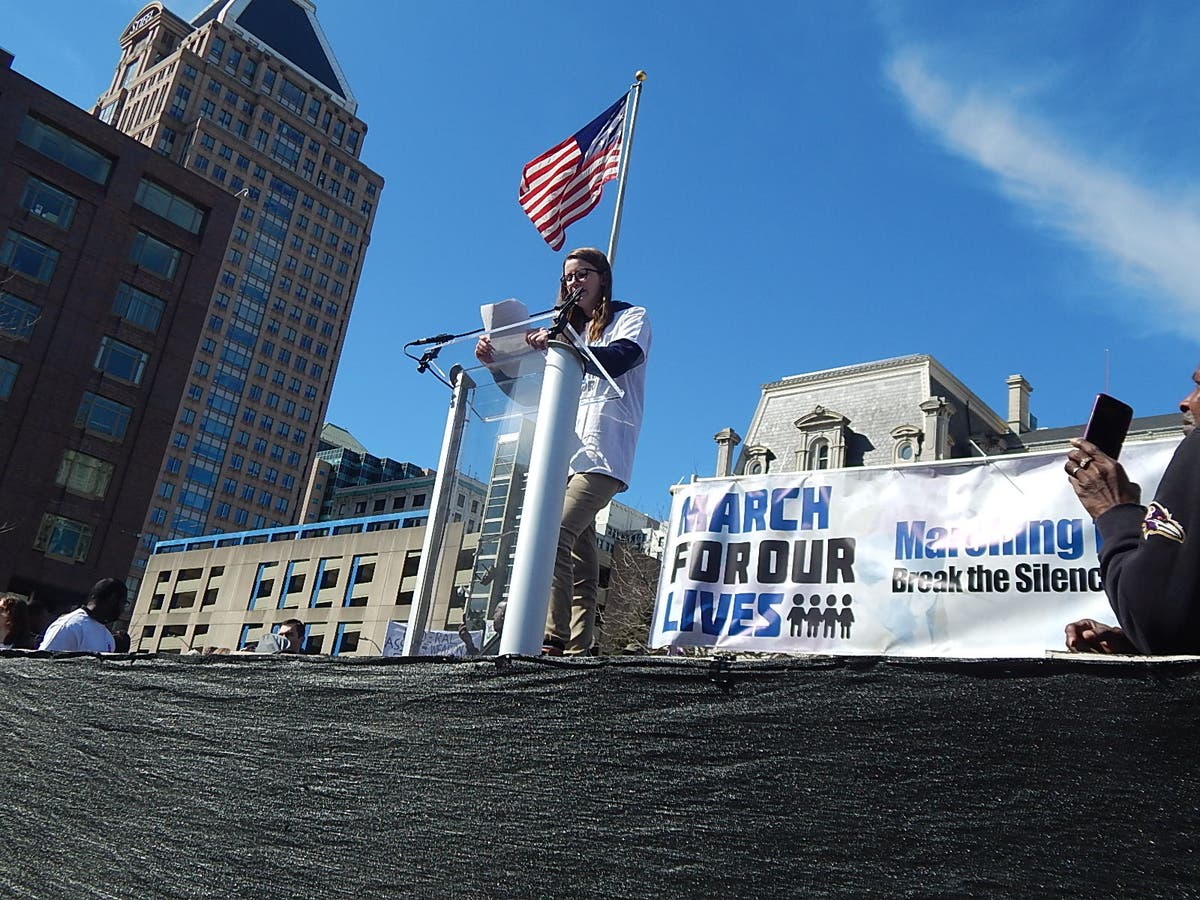
"I've been holding my breath, waiting for something, anything to happen at my school..." said Maddie Jaffe, a freshman at Baltimore Polytechnic Insitute, who helped organized the March for Our Lives Baltimore. "I'm afraid for me, I'm afraid for my friends, I'm afraid for my parents, who are both teachers in Baltimore."
Jaffe said: "...there's one thing that I'm not afraid for...our future."
Find out what's happening in Baltimorefor free with the latest updates from Patch.
Of her peers, known as Generation Z, she said: "After us, life is not going to start back at letter A. We are going to rewrite the alphabet and give ourselves a completely new language, a language not written with so much hate and fear and insincerity but progress and love and acceptance..."
One teacher from a school in north Baltimore shared that after the shooting in Parkland, Florida, she couldn't sleep, worrying how she would protect her sixth grade students if a shooter came into her school.
“I stand here with you all under the guise of ‘never again’ while keeping ‘Black Lives Matter’ close to my heart as one of the principles is to end gun violence,” Roland Park Elementary Middle School teacher Ms. Young said at the rally in Baltimore.
“We stand here today to say never again, not in our schools, not in our homes, not on the streets of Baltimore City and not at the hands of the police,” Young said. “We say, ‘Never again.’"
"When I say never again, I speak for the 17 students of Marjory Stoneman Douglas High School who did not live to see their high school graduation. I speak for my students whose family members have been killed at the hands of others here in Baltimore City. I speak for the countless number of black and brown people who have been killed at the hands of the police with no justice for their lives. I speak for my 14-year-old self who will never see my brother again," Young said in Baltimore. "I speak for my future students and for my current students and hope that they and that you all will not be here again next year protesting the same thing we are here doing today."
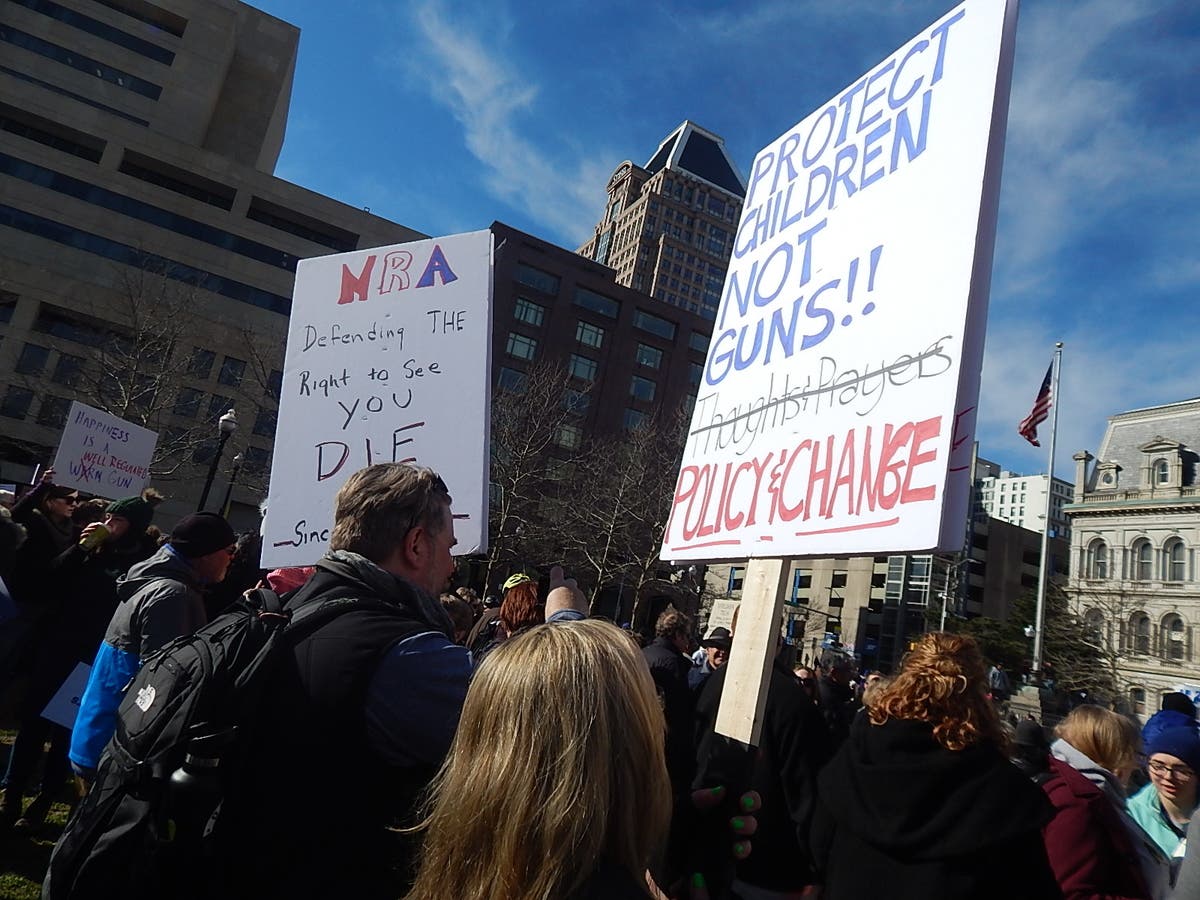
Aubrey, a student from Poolesville, Maryland, was at the Washington, D.C., march and held a poster that said: "Hide and seek shouldn’t be deadly."
Sam Shumaker, an American history teacher at Franklin Middle School in Reisterstown, joined the March for Our Lives in Washington, D.C., because he believes the federal government should standardize gun laws across states.
His school was on lockdown recently with over 200 concerned parents showing up. "I don't want to work in an environment like that," said Shumaker, adding: "I've heard a lot about teachers being armed with guns. If I wanted to do that, I would've joined the military or become a police officer."
Other teachers agreed.
“I don’t want a gun. There’s got to be another way," said Gloria Bennett, a high school teacher from Cumberland County, North Carolina, who joined the 1.6-mile march in Baltimore to end gun violence.
She said her granddaughter was a senior at Howard High School in Ellicott City, Maryland, and she made the six-hour drive to Maryland to support her. During the march, Bennett said she met other teachers from North Carolina who were from Baltimore or visiting family as well.
She held a sign calling for arming teachers with resources not guns.
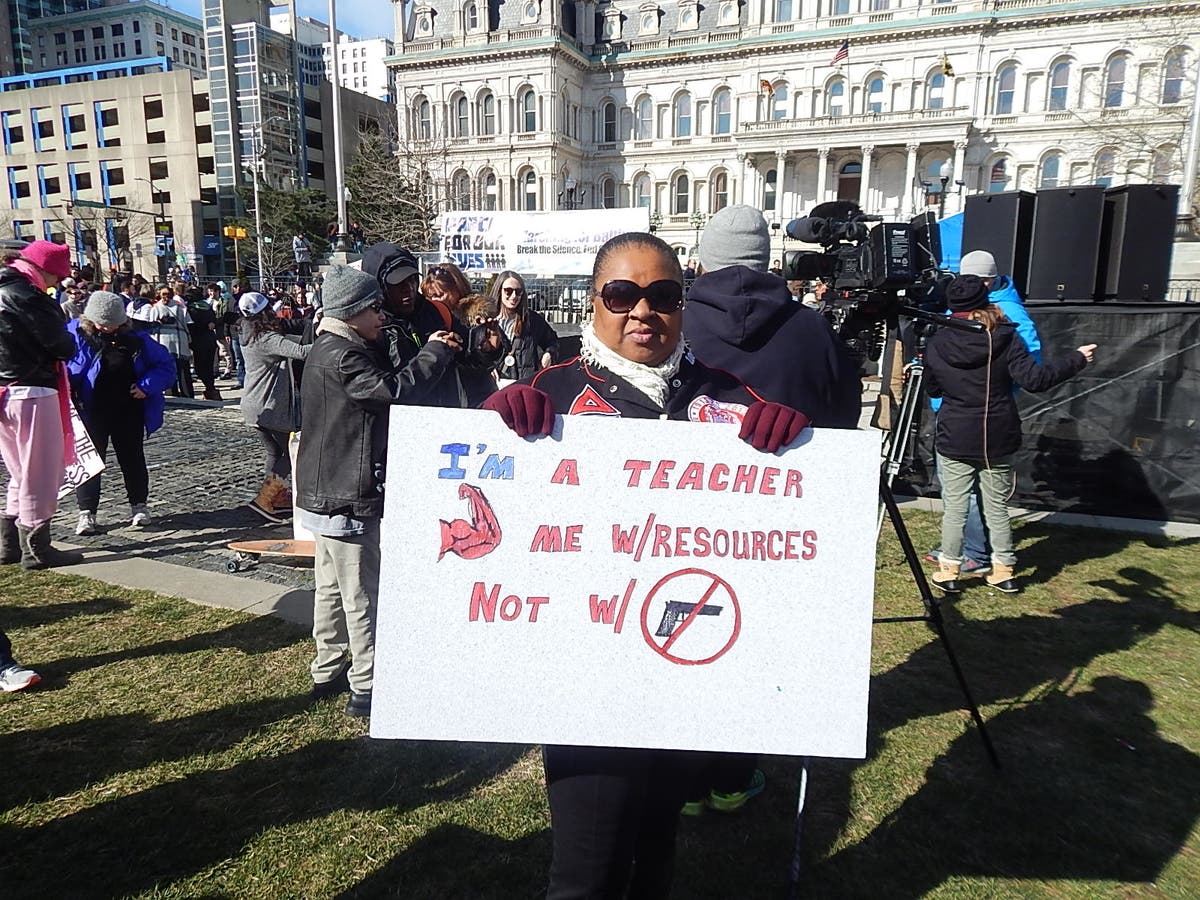
“It’s not just in schools but on the streets and even in church,” said Bennett, whose family visited Emanuel African Methodist Church after the deadly shootings there in Charleston, South Carolina.
“It was surreal,” she said of the experience she had standing outside the house of worship where Dylann Roof killed nine people in 2015. “How do you do that?” she said of the gunman, a white man who was welcomed into the church during Bible study before he opened fire on the African American congregation.
“I hope the people on the Hill are listening,” Bennett said.
Dr. Kaye Whitehead, a radio show host from Morgan State University-based WEAA 88.9 FM, called upon the people of Baltimore in front of City Hall to see that it was not just the school shootings that were of concern.
"It is not America at war that scares me. It is America as war that scares me," said Whitehead. "For three years in a row, Baltimore City has had 300-plus homicides."
She said her sons wrote their phone numbers on their clothing when they protested Freddie Gray's death because they wanted her to be able to identify their bodies if they were killed. She reminded the audience that the work did not begin with the recent school shootings; it was systemic.
"We can change this country," Whitehead said. "We have to remember that we must be the change we need to see, so I say never again with mass shootings. I say never again with homicides in Baltimore City. I say never again to being silent when our voices are demanded. I call on you to join with me, to bend your privilege and to lean into this space because the work did not begin today, the work won't end when we get home tonight, but the work to change this system, which is racist and sexist and classist and homophobic, will not stop until we stop it."
Added Whitehead: "We have to be willing to do the hard work."
Patch editors Emily Leayman and Dan Taylor contributed to this report.
Photos from March for Our Lives Baltimore by Elizabeth
Get more local news delivered straight to your inbox. Sign up for free Patch newsletters and alerts.