Community Corner
In A Crazy World, How to Spark Your Child's Imagination!
Our current times are turbulent, but also exciting! Artemis II has gone farther than any manned spacecraft. Let's explore together!
This is a paid post contributed by a Patch Community Partner. The views expressed in this post are the author's own, and the information presented has not been verified by Patch.
Looking at the night sky on April 1st this year didn’t inspire thoughts of pranks or trickery. It sparked wonder and excitement as we watched four brave astronauts launch into space on the Artemis II mission, returning to orbit the Moon for the first time in over 50 years. Astronauts have long relied on that same sense of childhood amazement to overcome fear and achieve extraordinary outcomes, even in times of uncertainty. What a remarkable lesson for our children. If we lead with curiosity and perseverance, even in times of upheaval, we can accomplish extraordinary things.
Reaching for the stars matters more than ever right now. Gen Z, Gen Alpha, and the generations that follow are growing up in a world of uncertainty, pressure, and rapid change. More than adaptability or competence alone, these circumstances require true resilience. STEM education plays a critical role in building that resilience. Few disciplines center so thoroughly on trial and error, problem-solving, and persistence through failure. Practicing STEM skills is not just an academic exercise. It is the development of essential life skills that children will carry into adulthood.
STEM education creates an ideal environment for raising resilient, curious, and engaged children. Failure is not just a possibility for scientists, engineers, and innovators—it is a necessary step in the process. Hypotheses must be tested, challenged, and constantly refined to understand phenomena. Our children, the next generation of problem-solvers, must develop persistence, independence of thought, and the ability to navigate uncertainty. Research demonstrates that STEM learning builds self-efficacy, self-control, adaptability, and optimism. These qualities not only support academic success but are protective factors in development. You may worry that your child is not a “STEM kid,” but if you have heard endless “why” questions or watched them build, explore, and experiment, your child is already a natural STEM learner.
Research shows that early success in school, along with strong connections between home and learning environments, plays a vital role in developing resilience. While children begin building these skills during the school year, summer camp offers a unique opportunity to strengthen them with less academic pressure, where they are more open to creativity, exploration, and trying new things. In a STEM-focused summer camp, learning becomes active, social, and fun. At Summer at Sandy Spring, campers might build and launch rockets, design and program LEGO robots, or create their own video games through hands-on experimentation. To get there, children practice the vital skills of collaboration, problem-solving, and frustration tolerance, and as a result, gain confidence through the art of discovery.
These are the moments where confidence takes root and children begin to recognize their capabilities.
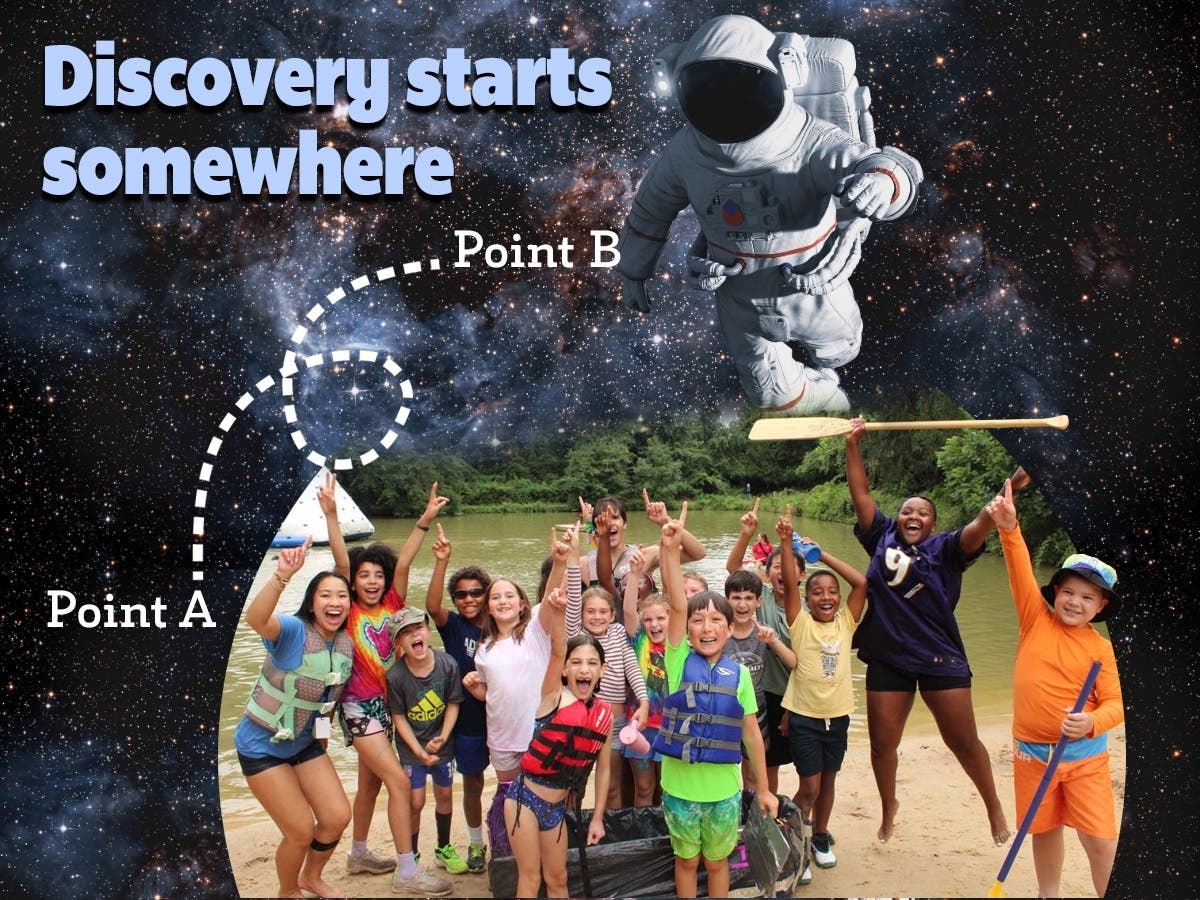
Today’s campers are tomorrow’s explorers. What we witnessed with Artemis II represents the best of human ingenuity, creativity, and resilience. These achievements, and the knowledge they bring, begin with curiosity and joy in childhood. Set your children up for a summer filled with discovery, confidence, and possibility at Summer at Sandy Spring.
This post is an advertorial piece contributed by a Patch Community Partner, a local brand partner. To learn more, click here.