Sports
Japanese Baseball and Softball Players Visit Glen Burnie Area
Teen softball and baseball players visit BASES in Curtis Bay as part of a State Department program.
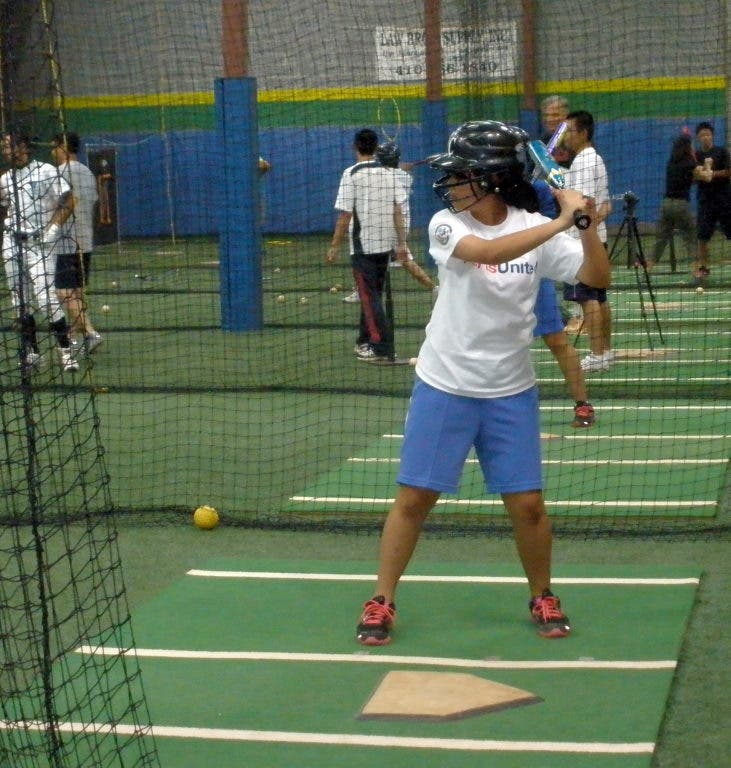


One at a time, the softball players stepped up to the plate, got into their stance and swung at a ball on a tee. After each one, Coach Alan Haddaway stepped forward and offered some advice.
“She’s transferring her weight and losing her balance,” he told Camilla Nieh, an interpreter with the U.S. State Department, and asked her to translate to Mayu Masukura, 17.
After showing Mayu the correct way to form a stance and watching her swing again, he told her, “Good. That was nice.”
Find out what's happening in Glen Burniefor free with the latest updates from Patch.
Mayu was one of 16 Japanese teen softball and baseball players to visit the Baseball and Softball Essential Skills (BASES) Training Facility in Curtis Bay Tuesday as part of the SportsUnited program run by the U.S. State Department.
The teens—eight boys and eight girls, all from areas affected by the earthquake and tsunami that devastated Japan in March, their coaches, teachers and State Department interpreters—have spent the last week touring facilities related to baseball and softball, including Ripken Stadium in Aberdeen, Oriole Park at Camden Yards to watch an Orioles game and played games with high school students.
Find out what's happening in Glen Burniefor free with the latest updates from Patch.
The group connected with the BASES facility through Bonnie Hoffman, a pitcher in the Eastern Women’s Baseball Conference, who knows someone in the State Department and practices at BASES. Last year, when the State Department was looking for facilities for a similar group of teens from Iraq, Hoffman mentioned BASES. The program’s Sports Visitors component brought the teens to America, Hoffman said.
Bob Lubaszewski, owner of BASES, said he was happy to participate in the program. Before the group boarded their bus at the conclusion, he gave everyone a T-shirt with the BASES logo.
“It’s kind of neat to do community-service type of stuff,” he said.
The selected teens are leaders in their school community, Hoffman said.
“It selects kids who are athletes and have demonstrated leadership skills. Some were selected by essay,” she said. “It’s less about learning the sport than bridging the gap and bring them together and showing them what they have in common.”
But several students said they enjoyed learning tips from their American counterparts, especially playing games with the high schoolers.
Kanako Abe, 14, said, with Nieh interpreting, the Americans were better players than the Japanese. The way the two countries approach the game is different, she said, citing the warm-up techniques as an example.
“I’ve had so many valuable experiences. I was nervous when I first came here, but I’m having so much fun. America is a fun place,” said Kanako, a pitcher, through the translator. “We went through a lot of hard times with the disaster in Japan, but I had the opportunity to play softball, which I love. I was scared, but I decided to take part.”
Many of the Japanese teens said being in America was a nice respite from the aftermath of the earthquake and the tsunami. Japan is still trying to recover from the disaster, said Maya Ogurosawa, who teaches at Mangokuura Junior High School in Ishinomaki, which several of the students attend.
Although five months have passed since the disaster, in many ways, it looks as if time has stopped, Ogurosawa said. Only a third of Ishinomaki is left standing, and officials have said the last earthquake on the magnitude of the one that hit in March struck 800 years ago, she said. Officials have not determined how long the recovery will take, she added.
“So many roads are cleared, but on both sides are rubble,” she said, showing photos she brought with her. “It smells. There are many flies around. It’s like a hell. Many people have killed themselves. They lost their livelihoods, their dreams. They built their companies and lost everything.”
Even now, Mangokuura students cannot use the gymnasium because it continues to house evacuees. The school is crowded with students from other schools whose buildings were destroyed. And their meals consist of meat and milk, but they still cannot eat vegetables because of the radiation from the Fukushima Daiichi nuclear plant, Ogurosawa said.
But for at least two weeks, the teens said they are enjoying their respite. Moeko Konno, 13, said she is enjoying being the youngest because she gets to stay with high school students.
What else did she like?
“Famous people. We met several Orioles and went to see several baseball games,” she said through Nieh’s interpretation. “Just watching those games was informative.”