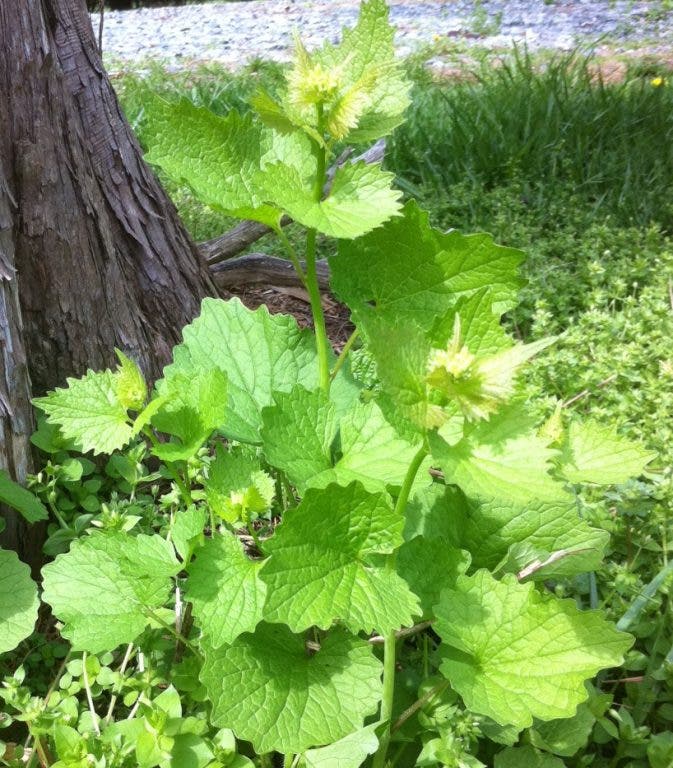
A couple days ago I made our first wild-harvested meal of the year! It was super fresh and springly delicious thanks to this homemade Garlic Mustard Pesto! Preposterously easy and quick to make, it’s good for the local environment too! Try your hand at it!
Before your next meal, head outside and collect up a couple of handfuls of Garlic Mustard; a very common, invasive plant, whose name reveals its spicy taste. If you don’t see it around your house at first, keep looking, it’s almost impossible not to find.
When harvesting the garlic mustard, feel free to pull it up by the roots and then just take the leaves for the recipe below, you’ll be helping rid your neighborhood of quite the invasive species.
Find out what's happening in North Potomac-Darnestownfor free with the latest updates from Patch.
With your freshly harvested leaves, head back to the kitchen to make your Pesto!
Wild Garlic Mustard Pesto
Find out what's happening in North Potomac-Darnestownfor free with the latest updates from Patch.
1. – A couple handfuls of Garlic-Mustard (pictured above)
2. –Equal amounts of Spinach or Lettuce (or other leafy green)
3. –A big splash of Olive Oil
4. –A handful of Pumpkin Seeds (or other seeds)
5. -Grated Parmesan or Romano Cheese to taste
Toss all ingredients in a Cuisinart and “Pulse” until the leaves are all chopped up and everything is mixed well and looks like pesto. Add more olive oil if the mixture needs to be a little more saucy or more leaves if it’s too wet. Enjoy!
A the weather warms up, garlic mustard will become more and more pungent, so throughout the season, you may have to adjust ratios of garlic mustard to spinach to taste.
Delicious on Pasta, spread on sandwiches, mixed with eggs, anything you can think of!
To save extra:
1. -Put in a glass jar in the fridge (Use within a week)
2. -Freeze into Cubes in your freezer (use within 2 months)
Don’t worry, there are no poisonous look-a-likes. But make sure not to harvest the garlic mustard from within 50 feet of a road or dumping site, which often leach heavy metals and toxins into the ground (better to be safe than sorry!).
Let me know how it goes!
To learn more about Garlic Mustard and how to identify it, check out this page from the National Park Service.
Check out more of Kate’s writing at The Integrated Life.