Community Corner
Living Shorelines Along the Magothy River
Living shorelines are an eco-friendly way to reduce shoreline erosion and preserve habitat for wildlife.
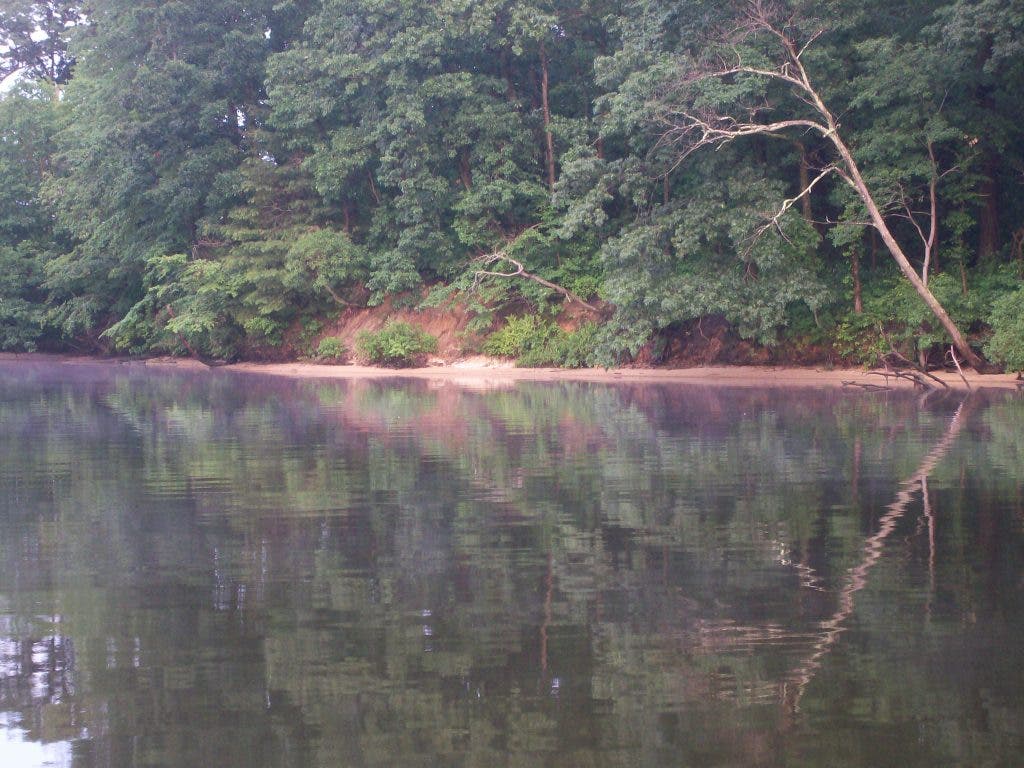


Last week, before the weather became unbearably hot, I took my canoe out several times and paddled around the creeks of the upper Magothy River. I love getting out on the river especially in the morning while the water is calm and the air is cool. Seeing fish jump, hearing ospreys call, and watching herons quietly stalking about the shallows in search of a meal reminds me of how fortunate I am to live in such a beautiful area.
Often, as I paddle about, I try to remember how the waterfront looked in years past. As I looked about the shoreline I realized that nearly all of the shore area has some sort of bulkhead or stone revetment between the land and the water instead of a strip of sandy beach.
Since waterfront property is both desirable as a living space and an investment, I can understand why property owners go to great expense to protect their property from erosion. Wood bulkheads and stone revetments have been, and still are, commonly used to deter shoreline erosion.
Find out what's happening in Severna Parkfor free with the latest updates from Patch.
While these methods are able to slow the effects of shoreline erosion, many species of wildlife are unfortunately denied needed access to the shore when bulkheads are installed.
In its publication “Living Shorelines for the Chesapeake Bay Watershed” (www.cbf.org/Document.Doc?id=60) the Chesapeake Bay Foundation states that access to a natural shoreline is necessary for the survival of turtles, crabs, shorebirds, and other aquatic wildlife. These creatures rely upon an accessible shoreline for food, reproductive habitat, and cover from predators.
Find out what's happening in Severna Parkfor free with the latest updates from Patch.
A living shoreline is an effective and eco-friendly way to reduce the effects of erosion while at the same time providing vital habitat for wildlife. Living shorelines often incorporate stone, grasses, and sand as a part of the solution for erosion control. Breaks are created in the areas of stone to allow animals such as terrapins and horseshoe crabs access to the shore.
Another benefit of a living shoreline is that energy from waves generated by boat wakes is absorbed by the grasses growing along the shore. However, when waves strike a bulkhead that energy is transferred back into the water causing the wave action to continue instead of slowly dissipating among the grasses.
If you own waterfront property and need to replace an existing bulkhead or want to protect your existing shoreline from further erosion, then please consider using a living shoreline as an alternative to traditional hard surface erosion controls.
Organizations such as the Chesapeake Bay Foundation and The South River Federation ( http://southriverfederation.net/index.php/restoration/living-shorelines) are good local sources for information about the benefits of installing living shorelines to reduce erosion along the shores of our rivers and the Bay.
For communities interested in protecting community shoreline property from erosion the Chesapeake Bay Trust (www.cbtrust.org/site/c.miJPKXPCJnH/b.5368633/k.BDEA/Home.htm ) can provide grant assistance to help fund a living shoreline project.