Arts & Entertainment
"Magnificent Minds" Author Signing Books
Pendred "Penny" Noyce will sign copies of her newest book, "Magnificent Minds: 16 Remarkable Women in Science and Medicine," on April 9.
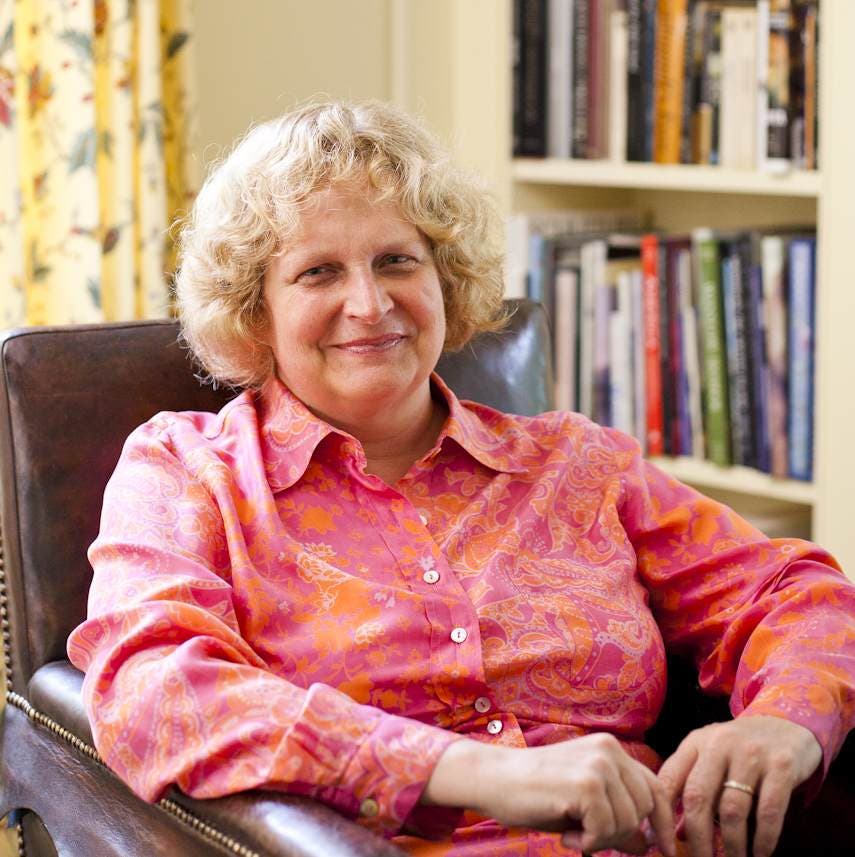
Scientist and author Pendred “Penny” Noyce is celebrating the release of her new book for young readers, “Magnificent Minds,” with a special signing in Andover on April 9.
EVENT DETAILS
April 9, 6:30 p.m.
Book signing featuring scientist, educator and author Pendred “Penny” Noyce (“Magnificent Minds: 16 Remarkable Women in Science and Medicine”)
Andover Bookstore, 89 Main St., #1, Andover
(978) 475-0143
http://hugobookstores.com/andover
ABOUT “MAGNIFICENT MINDS”
Find out what's happening in Andoverfor free with the latest updates from Patch.
Did you know that Florence Nightingale pioneered the use of statistics in public health? That Marie Curie is still the only person to have won the Nobel Prize in both physics and chemistry—and the only winner whose daughter also won a Nobel Prize? That in the 17th century, the most accomplished scholar in mathematical astronomy was a Polish woman, Maria Cunitz? That the first computer compiler was created by a woman, Grace Hopper? That a woman, Lise Meitner, was the first to interpret an experiment showing that an atom could be split in two?
For centuries, women have risen above their traditional roles to pursue new understanding of the natural world. This book, which grows out of an exhibit at the Grolier Club in New York, introduces the lives, sayings, dreams and accomplishments of sixteen women over four centuries, chronicling their contributions to mathematics, physics, chemistry, astronomy, computer science, and medicine. Each entry is accompanied by a timeline and sidebars that place the woman in her social and scientific context. Hardcover, copiously illustrated, with a full-color interior.
Find out what's happening in Andoverfor free with the latest updates from Patch.
Q&A WITH PENDRED “PENNY” NOYCE
How did this book come about?
Through a friend, I was approached by the curators of a Grolier Club exhibition on “Four Centuries of Remarkable Women in Science and Medicine.” The curators had spent two years assembling information and artifacts for thirty-two women, and in the course of giving exhibition tours they had become interested in seeing their labor become a book for young people. Ronald Smeltzer, Paula Rose and Robert Ruben had done a great job selecting and presenting the women. I gave them lots of advice, and in the end they asked me to write the book.
How did you choose what women to write about?
To do justice to the women, yet keep the books affordable, we decided to cover sixteen women in each of two volumes. So Magnificent Minds will be followed within a year by Remarkable Minds, covering the other women. As for which women to present first, we wanted each book to contain a range of four centuries and a variety of scientific fields. A girl may want to read about medicine but become captivated by a story about physics. So each book a selection of women who share some interesting features.
Are there common features among these women’s stories? Any interesting contrasts?
Some of these women married, some didn’t, and some had wild love lives. Some were frugal and ascetic, while others were extravagant. Most of the women had fathers who arranged an education for them equal to any male’s, though there are some exceptions. Almost all the women had good experiences with generous male mentors in the sciences, but trouble with institutions–universities that failed to admit or hire women, scientific societies that were closed to them, or prize committees that overlooked them. Many were displaced by war. One common theme is that when a man and woman worked together on science, the scientific public often assumed that the man provided the brains while the woman served as his loyal assistant.
Do you have a favorite?
In researching these women, I’ve come to like and respect them all in different ways, but one in particular intrigued me. Lise Meitner’s desires were simple: all she needed to be happy was to do physics, and Hitler took that away from her. Then the Nobel Prize Committee ignored her and history threatened to forget her. I became so interested in her story, and especially her decades-long partnership with her collaborator Otto Hahn, that I’ve decided to write a play about it.
What’s next?
I’m hard at work on the second volume, Remarkable Minds. After that, who knows, I may move on to select a few of the remarkable women of Kids will enjoy discovering the historical roots of zombies while Clinton and Mae help save Sam’s mother from the death threatened by the evil S.A.G. organization. science working now.