Community Corner
Mystic River Shows Improvement On Annual Report Card
Overall the river and lakes earned high marks, while officials are working to curb contamination in problem areas.


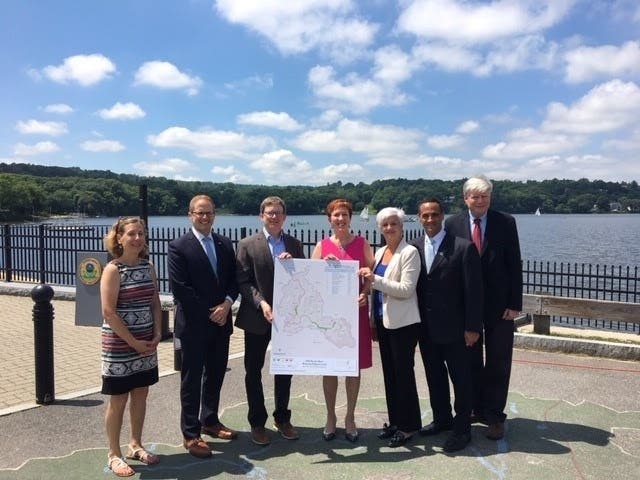
ARLINGTON, MA — The water quality of the Mystic River's main stem is very good on a regular basis and meets quality standards nearly all the time, according to the annual Water Quality report Card released Wednesday by the U.S. Environmental Protection Agency and the Mystic River Watershed Association.
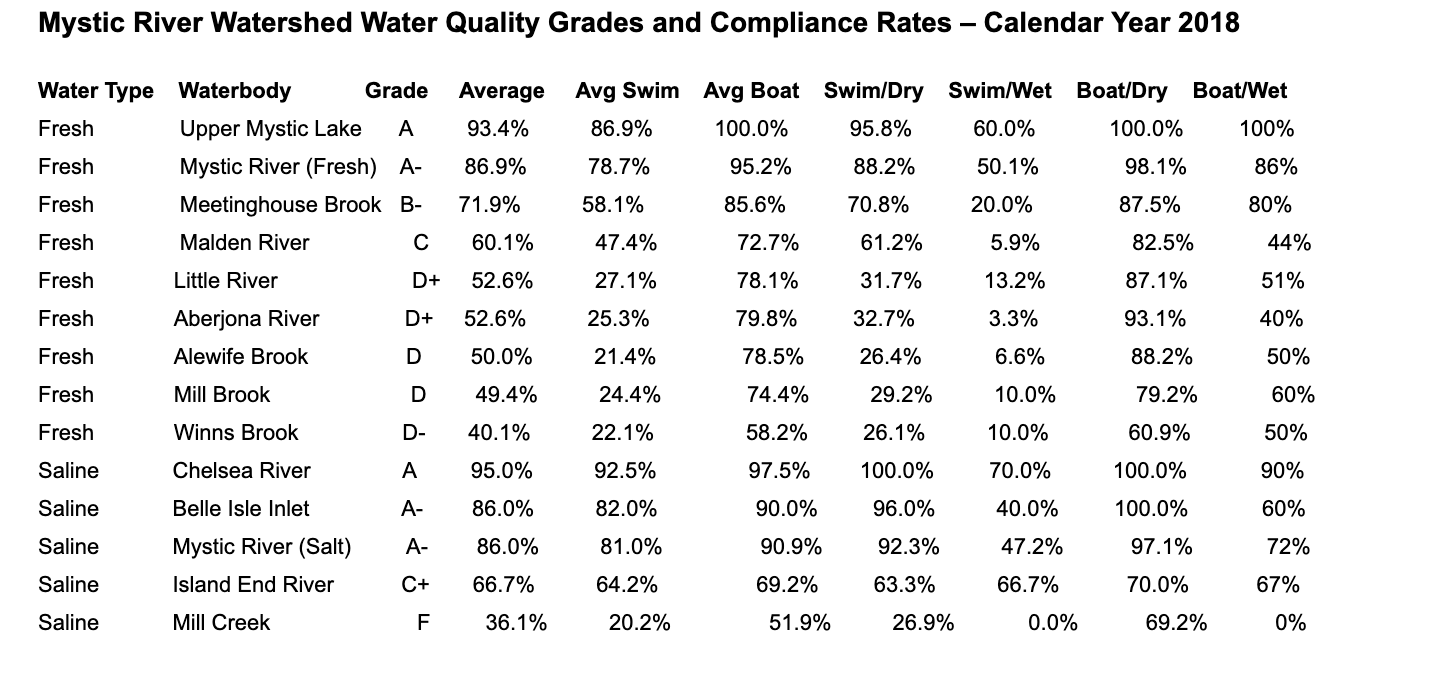
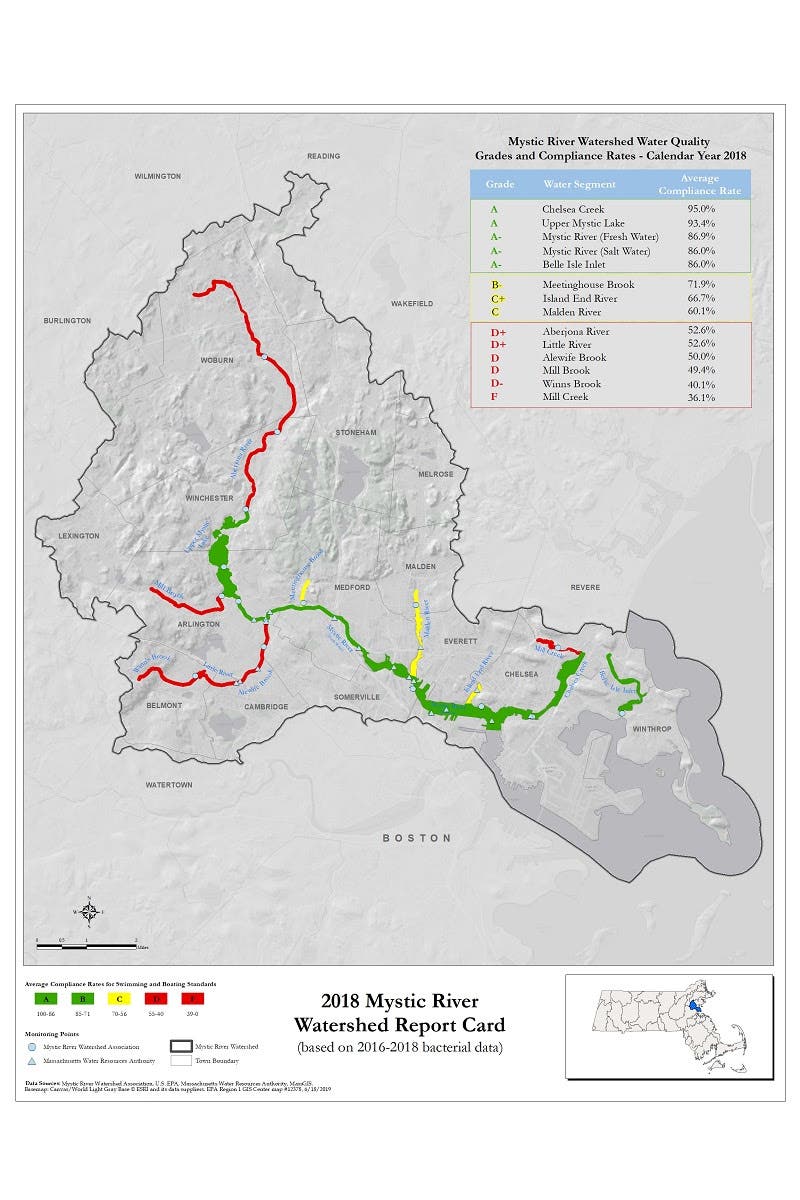
The report card gives grades to 14 segments of the Mystic River Watershed. The main stem, which includes the Upper and Lower Mystic Lakes, earned high marks for the fifth year in a row. This part is safe for swimming and boating; however, bacterial levels in many of the tributary streams feeding the Mystic are high and often do not meet water quality standards.
That may be changing, according to the report. In 2018, some of the problem streams showed signs of improvement, especially Island End River in Everett and Chelsea, the report stated.
Find out what's happening in Arlingtonfor free with the latest updates from Patch.
"The Mystic River is a tremendous urban water resource for towns north and west of Boston," EPA Acting Regional Administrator Deb Szaro said in a statement. "Protecting the watershed is a priority for EPA. We are thrilled to see that the main stem of the Mystic and the lakes are generally in good shape, but we have work to do in the smaller streams that feed the river."
The report card is based on the level of bacterial contamination found in samples collected by volunteers at 15 monitoring sites and other locations throughout the watershed. The grades are calculated using a three-year rolling average, which takes into account weather variability from year to year.
Find out what's happening in Arlingtonfor free with the latest updates from Patch.
Water Quality
What's Next
Environmental officials have been focused on finding sources of bacteria in the Mystic over the past several years. The EPA has been able to identify sources of illicit discharges and require communities to find and fix illegal connections, preventing more than 43,000 gallons of sewage from entering the Mystic River watershed each day.
More work is scheduled for these tributaries, according to the EPA. Many communities are investigating discharges and repairing their sanitary and storm sewer systems, which will prevent further sewage contamination when it rains.
In addition to bacterial contamination, the Mystic River watershed also suffers from excess nutrients, primarily phosphorus, entering the river from stormwater. EPA, MassDEP, MyRWA and several other partner agencies are nearing the completion of a two-year study that will help determine how much phosphorus must be reduced to meet water quality standards and the most cost-effective means of achieving those reductions.
To that end, the EPA launched a water monitoring buoy in front of the Blessing of the Bay Boathouse in Somerville capable of measuring – in real time – a host of water quality parameters including temperature, dissolved oxygen, pH, turbidity, conductance, and chlorophyll and helps the agency track cyanobacteria (blue-green algae) blooms. Data from this buoy – and from the water quality sampling program on the Mystic River that led to the grades in this report card – can be found on the EPA’s Mystic River website at http://www.epa.gov/mysticriver.
Get more local news delivered straight to your inbox. Sign up for free Patch newsletters and alerts.