Arts & Entertainment
Arrival VR: Andrew Shares His Family's Immigration Story
Watch the first interview from Arrival VR, a look at the immigration stories from Brookline and beyond.
Brookline Interactive Group (BIG) and its project, the Public VR Lab, are proud to present the latest interview from Arrival VR. This co-created immersive storytelling project is the first national virtual reality (VR) filmmaking collaborative project curating immigration stories of Americans from pre-1620 through 2018 and incorporating them into a visual XR/VR timeline. The Brookline Community Foundation has awarded a generous grant to BIG to support their efforts to record immigration stories from the Brookline community to contribute to this project.
BIG and the Public VR Lab will be presenting the Boston-only release of the project in a container at HUBweek as part of The HUB, HUBweek’s centralized festival site, from Wednesday, October 10th through Sunday, October 14th, 2018.
Find out what's happening in Brooklinefor free with the latest updates from Patch.
Members of the public are invited to participate in this project and share their family's immigration stories at BIG's studio in Brookline. We'll be holding the next interviews on October 22 and November 19. To learn more, please visit http://immigrationvr.com.
-----------
Find out what's happening in Brooklinefor free with the latest updates from Patch.
Can you start by introducing yourself, and telling us where you and your family migrated from?
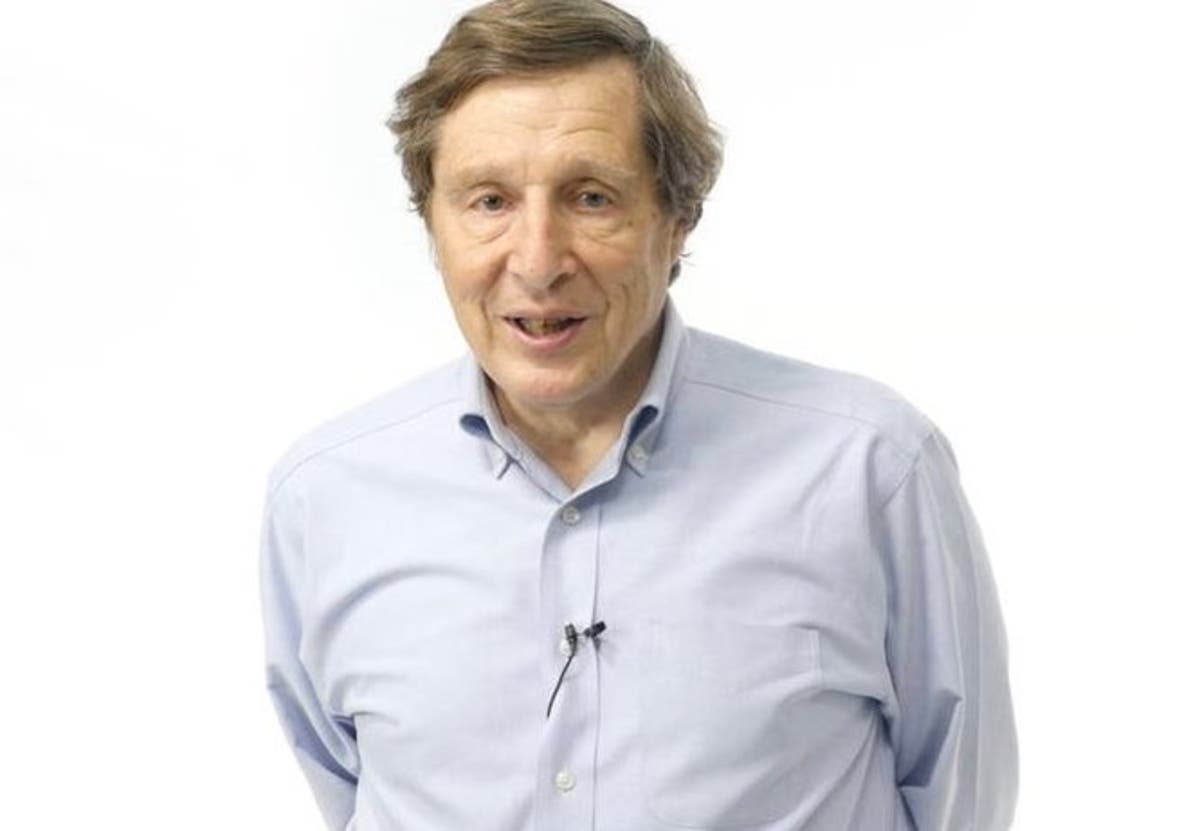
“My name is Andrew Fisher. My parents started their life over again in the United States after being displaced like a lot of other people during World War II in the Shoah. Both my mother and father lost their spouse, my father lost a child, they lost their parents through the Nazi Holocaust and managed to escape thanks to Stalin and the Russians who took them both prisoners and moved them out of Germany. And they both had a long odyssey through being in Russian labor camps and fleeing there, where they were taken as refugees by the British, and they both served in the British Army and ended up in England after the war. [They] were married in 1948, had no family, and my mother wrote to a Christian friend of hers… in Poland and the only answer she got back was, 'Don't come back. There's nothing here, don't come back.’
“My mother got pregnant and they didn't want to travel with her pregnant, so I was born in England and I came to the United States as an infant [in 1950] so they could join the only family they had left, either my mother's family or my father's family.”
Can you tell us about your experience of growing up as a child in the U.S.?
“Growing up, I think I wanted to be an American kid, an American boy. And it was hard because my parents weren't American parents. I wanted my dad to play baseball with me and he didn't know, how didn't want to, and wasn't interested…
“I think growing up, even though I was another white Jewish kid like the all the other kids in the neighborhood, I felt different...
“I think when they came here, it was hard for me to understand. It wasn’t until many years later when I was an adult that I understood what what [my parents] had lost.”
What were your parents’ hopes when they first arrived in the United States, and how did those hopes compare to reality?
“My father was always very grateful to the United States for welcoming him in when when he was not wanted and chased and hunted in so much of the world, he was eager for a chance. I think on some level subconsciously, the loss was so severe that it was hard to have hope, but America was a land of opportunity even given what they had gone through.”
Where do you think your parents found strength in difficult times? Where did you find your strength?
“I don't know how they had the strength to go through what they did. The loss they suffered and the ability to go on with what they had left behind, what was taken from them. The strength to survive is somewhat remarkable and I don't really know how they did it. My father had great faith in man's ability to be kind to his fellow men in spite of what he went through, of man's ability to be reasonable and tolerant and welcoming and sharing and it's difficult to comprehend how he could maintain that given what he went through.”
In your home growing up, were there any traditions from your parents’ home country that you shared at home? Did you grow up bilingual?
“Well, my sister and I always resented that my parents didn't teach us Polish, and they spoke Polish to each other when they didn't want us to know what they were to saying. The family, we spoke Yiddish as well and we kept Jewish traditions, and my mother cooked some traditional Polish foods. She used to make pierogies and stuffed cabbage and things like that.”
Was your family active in the Polish community in the U.S.?
“Well, we were involved in the Jewish community in the U.S., but also the Polish community in the U.S. My parents had very close friends who they had met in the refugee camps in Kazakhstan, in British refugee camps.”
What do you think your family is most proud of having accomplished during their lifetime?
“Well, my father spoke many languages, and that was somewhat his downfall and his saving [grace] in Poland…
“He was accused of being a spy, because he spoke languages and had traveled, because he had studied abroad, and that's how he ended up being [a] Russian prisoner. But in the end, that's what saved him from the Nazi concentration camps where his parents and brother and wife and child and cousins all perished.
“He came here, and one language he didn't know was Arabic. He worked for a publishing company...and this company did a lot of Hebrew and prayer books and Jewish religious texts. I guess they got a big contract to do Arabic letters, and the one language my father didn't know was Arabic, which he learned in order to be able to proofread the books, and he did that for a long time. And then he became a teacher and was the department chairman of the language department, and he ran a language lab, which was a very modern thing in the early 60’s.
“He was a visionary, in a way. He used to say people people in the future would have wristwatches that you could look at, like in Dick Tracy...and he anticipated computers. In a way he was a real visionary, and I think that that's really what he accomplished - his ability to see through to a modern future.”
What do you wish more people knew about immigrants?
“Ask them where their parents came from. We're all immigrants...
“Every one of us has a story of coming to build something new. We should remember…the people who want to close the doors should remember that, and we should remember that what makes America great, what continues to make America great, are the people who come here who want to come here because of the opportunities they have here and they're the people that are the strength of our future.”
------
About Arrival VR
Led by Brookline Interactive Group, and its project the Public VR Lab, Arrival VR is a nationwide collaborative curating immigration stories of Americans from pre-1620 through 2018 in a visual XR timeline. The project has fifteen partners across the United States, and will be shared online, in virtual reality, at film festivals and at arts and cultural organizations nationwide with a curriculum for engaging community dialogue about immigration. The project ponders a shared experience and visual timeline of the commonalities and complexities of American immigration throughout history using XR as a platform for a field-building strategy for emerging media.
About the Public VR Lab
The Public VR Lab is growing a field for Community XR that promotes accessibility, digital inclusion, and diversity. The Lab is disrupting traditional media communications in community-based civic media, journalism and arts, cultural and educational organizations by providing XR Toolkits, equipment, training, cohorts, artists residencies, fellowships and content in the public interest. The Lab is a project of Brookline Interactive Group, a next generation public access community media arts center. www.publicvrlab.com