Arts & Entertainment
Arrival VR: Danute Shares Her Family's Immigration Story
Watch the newest interview from Arrival VR, a project highlighting immigration stories from around Boston/Brookline.
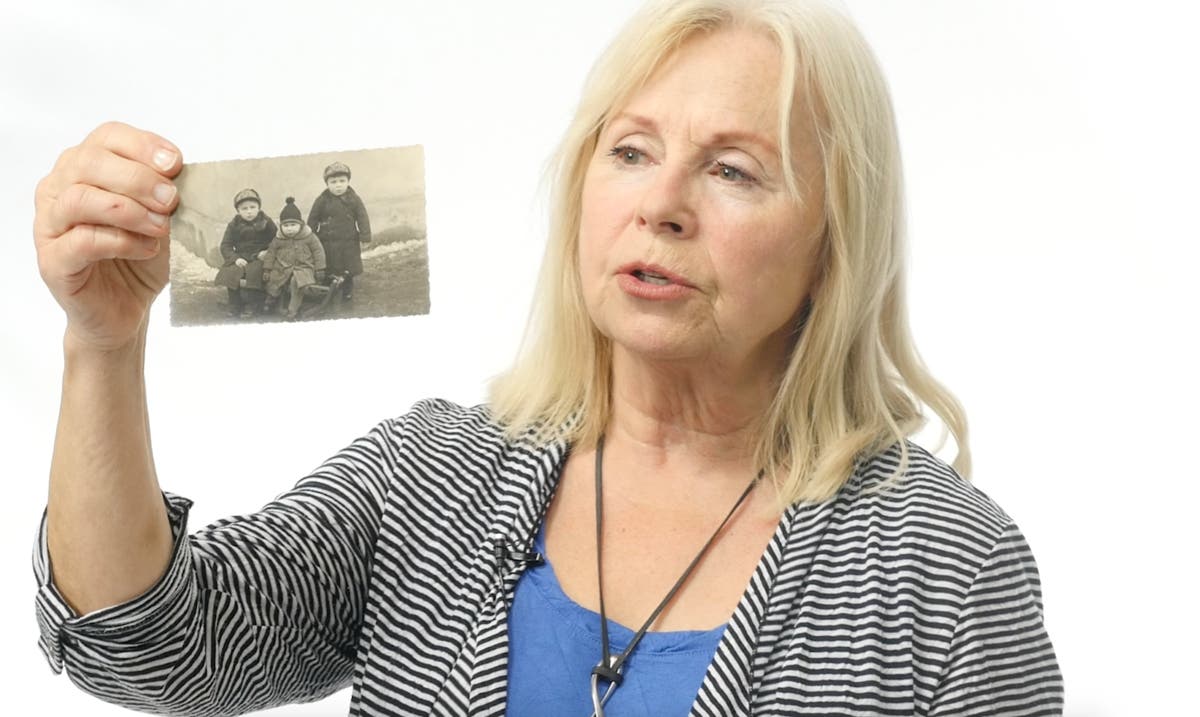
Brookline Interactive Group (BIG) and its project, the Public VR Lab, are proud to present the latest interview from Arrival VR. This co-created immersive storytelling project is the first national virtual reality (VR) filmmaking collaborative project curating immigration stories of Americans from pre-1620 through 2018 and incorporating them into a visual XR/VR timeline. The Brookline Community Foundation has awarded a generous grant to BIG to support their efforts to record immigration stories from the Brookline community to contribute to this project.
Members of the public are invited to participate in this project and share their family's immigration stories at BIG's studio in Brookline. We'll be holding the next interviews on November 19 and December 3. To learn more, please visit http://immigrationvr.com.
-----------
Find out what's happening in Brooklinefor free with the latest updates from Patch.
Please introduce yourself and tell us where your family immigrated from. How old were you, and what were your parents’ hopes when they moved to the U.S.?
“So my name is Danute Wolosenko - they call me Donny - and I immigrated to the United States when I was almost four years old. My parents fled Lithuania during World War II [in 1941] and then they wound up in a refugee camp in British-occupied Germany, which is where I was born, and then we came to America in 1950.
Find out what's happening in Brooklinefor free with the latest updates from Patch.
“My parents did not want to come to America, my parents didn't want to do anything but go back to Lithuania. They were in a refugee camp. They were hoping that World War II would end and that they would be going back. That was their intent when they left Lithuania. They thought they'd be gone for six months, the war would end, Lithuania would be free again. But Lithuania was occupied by the Soviet Union until 1990.”
Who did you move to the U.S. with, and who who did your family leave behind? Did anyone come after you?
“When the Russians came in 1941, my sister was maybe… She was probably 11 or 12 years old at that point. [She] was visiting an aunt in the countryside because she probably had bad asthma. I don't know exactly what she had, she later on developed tuberculosis.
“There were, from what I understand, many many discussions about my father trying to get to my sister because the front was there, so they tried that. Everybody told my father, ‘you’ll be killed and then you’ll leave your wife and these two boys; leave now and you’ll back in six months, she’s fine, she’s with an aunt.’
“So my sister got left and my father never saw her again. She was brought up by what was then called a ‘spinster’ aunt. So my mother saw her when she was like 11 or 12, and the next time she saw her she was about 48, 49. All the rest of the relatives stayed, the only people who got out were my parents and my two brothers. Nobody else got out.”
As time has passed, how has your experience compared with what you or your family expected in coming here?
“So I was really little when I came here, so I had no notion of where I was or what was going on. I was not even four yet... So I can't say that there was a transformation for me. But I lived sort of a schizophrenic life, because I got into school at whatever age - six, I guess - but my whole other life was Lithuania. We didn't speak English at home. None of my parents’ friends were American. So for myself, I can just say that I lived [in] dual cultures.
“There were many immigrants at that time. Many European immigrants, displaced people, millions of people left Europe at the time. So they created Lithuanian culture, they started all sorts of organizations, cultural organizations, artistic organizations…. I went to Saturday school every week, there was a Lithuanian school. But I was the only American in the family.”
Do you have any cultural traditions that were brought from your home country that you still use at home?
“We had certain Christmas things that we did… Christmas Eve is very important, rather than Christmas day. So Christmas Eve is lots of different food that you only eat once a year. Majority of Lithuania is Roman Catholic, so there was a midnight mass that we went to.
“As people got acclimated to living in America, they moved away from the center where everybody was - which was of course poor slums, you know, in Brooklyn. But the church was there and no matter where the people went, whether it was to Long Island or Queens or Brooklyn, they all would come together for church activities. And church activities also meant a huge auditorium where there were concerts and folk dancing.”
Where did you find strength in the difficult times? Were there any connections or communities that helped you get through it?
“You know, that's a very difficult question. You want to be with your own people when you've been forced out of the country. If you immigrate of your own will, because you want to better your life or you have a sister who lives here, somebody's going to take care of it and you make a life here.
“When you're forced out, you eventually have to decide, this is my life. But they did not give up on those memories and experiences that they had in Lithuania, or even the life that they created for themselves in the displaced person camp and the refugee camp...
“For the older people, anybody who came here who were 35 or older, there was many many professions that couldn't be translated into American life. So the respect and admiration they got was in the Lithuanian life, but they had to work to put a roof over their heads. My generation, because we came so young, we didn't have that - we were part of American life. We didn't necessarily find solace in Lithuanian life, but it gave us an identity for sure.”
In what ways do you think your story and your family’s story has made you a stronger person?
“My father came here, he was almost 50 and didn’t speak a word of English, and you're just dumped in this country and you have to figure it out. So as I grew old...when you're little, you don't know what the parents are doing, you have no idea what your parents do, you're little. But as I grew into an adult and then eventually had my son, reflecting back on it - I mean, they were tough. You know, they were really really tough.
“When I grew up and I became a parent myself, I was just eternally grateful of course that my parents were the only ones to leave. Because my life would have been sheer hell over there, as my sister's was. So, it's not a matter of getting tougher in my own personality. I think it just makes you grow bigger knowing the world's history.”
Is there anything you wish people knew more about migrants and refugees?
“Get to know history a little bit. A lot of people don’t know history… If you have a bigger perspective on how things have gotten to this point, I think that you would either decide to make more of a commitment to change yourself, change your policies, change what's going on in the world. And it gives you a better sense of your place, whether it's in your generation, or in your community, or in your country.
“Leaders have to be awake and aware to different dangers, because World War II - people didn’t think that was even going to happen, and they were all kind of friendly towards one another, and then things dramatically changed.
“Get a good book and read up on this, so you know what the world looks like, where people came from, and that it can happen again.”
------
About Arrival VR
Led by Brookline Interactive Group, and its project the Public VR Lab, Arrival VR is a nationwide collaborative curating immigration stories of Americans from pre-1620 through 2018 in a visual XR timeline. The project has fifteen partners across the United States, and will be shared online, in virtual reality, at film festivals and at arts and cultural organizations nationwide with a curriculum for engaging community dialogue about immigration. The project ponders a shared experience and visual timeline of the commonalities and complexities of American immigration throughout history using XR as a platform for a field-building strategy for emerging media.
About the Public VR Lab
The Public VR Lab is growing a field for Community XR that promotes accessibility, digital inclusion, and diversity. The Lab is disrupting traditional media communications in community-based civic media, journalism and arts, cultural and educational organizations by providing XR Toolkits, equipment, training, cohorts, artists residencies, fellowships and content in the public interest. The Lab is a project of Brookline Interactive Group, a next generation public access community media arts center. www.publicvrlab.com