Neighbor News
Falmouth Nuisance Wind Turbines In Offshore Wind Study
Takings Implications of Offshore Wind Energy Development June 2019 - Falmouth Nuisance Wind Turbines Takings Legal Issues
Takings Implications of Offshore Wind Energy Development June 2019
Truncated see link bottom
"This study is a product of the Marine Affairs Institute at Roger Williams University School of Law and the Rhode Island Sea Grant Legal Program. Jourdan Thompson, Rhode Island Sea Grant Law Fellow, conducted research and drafting under the guidance of Read Porter, Senior Staff Attorney. All errors and omissions are the responsibility of the Marine Affairs Institute. This study is provided only for informational and educational purposes and is not legal advice. This study reviews the potential takings liability associated with government development of wind turbine projects in offshore areas."
Find out what's happening in Falmouthfor free with the latest updates from Patch.
Page 7
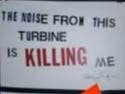
"A wind turbine has been ruled a nuisance in at least one case to date. In Falmouth v. Falmouth Zoning Bd. Of Appeals, the court held that two town-owned wind turbines were a nuisance and ordered them to halt.47 The nuisance claim was raised by the Funfars, neighbors to the town-owned turbines, who alleged harms from turbine noise including stress, anxiety, insomnia, and nausea, and deprivation of the use and enjoyment of their land as they could not stand to be outside for extended periods. 48
The court did not find a reduction in property value, but it nonetheless upheld the decision of the
Zoning Board of Appeals that the “wind turbines and the consequent sound emissions constitute a substantial and unreasonable interference with the Funfars’ enjoyment of their property and
constitute a nuisance.”49
Find out what's happening in Falmouthfor free with the latest updates from Patch.
This case suggests that, at least in cases where turbines are located close to private properties, they can meet the legal standard to be considered a private nuisance."
"Circumstances similar to the Falmouth case could potentially satisfy the Richards test for takings claims if they were considered “direct and peculiar and substantial.”50
The court in Falmouth accepted that the harm was directly caused by the turbine, and it was peculiar to their particular property rather than being shared by the public as a whole. On the other hand, it is not clear that the harm was sufficiently substantial to satisfy a takings analysis, given that the property values were unaffected by the noise and the threshold for harm in a takings case is likely to be higher than in a tort action for nuisance. Thus, while turbine claims could potentially satisfy a takings/nuisance analysis in certain cases, those cases are likely to involve substantial fact-finding and require particularized showing of individual impacts to the plaintiff’s property."
Note 47 Town of Falmouth v. Falmouth Zoning Board of Appeals, 34 Mass. L. Rptr. 408 (Mass. Super. Ct. 2017).