Community Corner
Landmarks of Falmouth: St. Barnabas Episcopal Church
A brief history of a a significant Falmouth landmark.
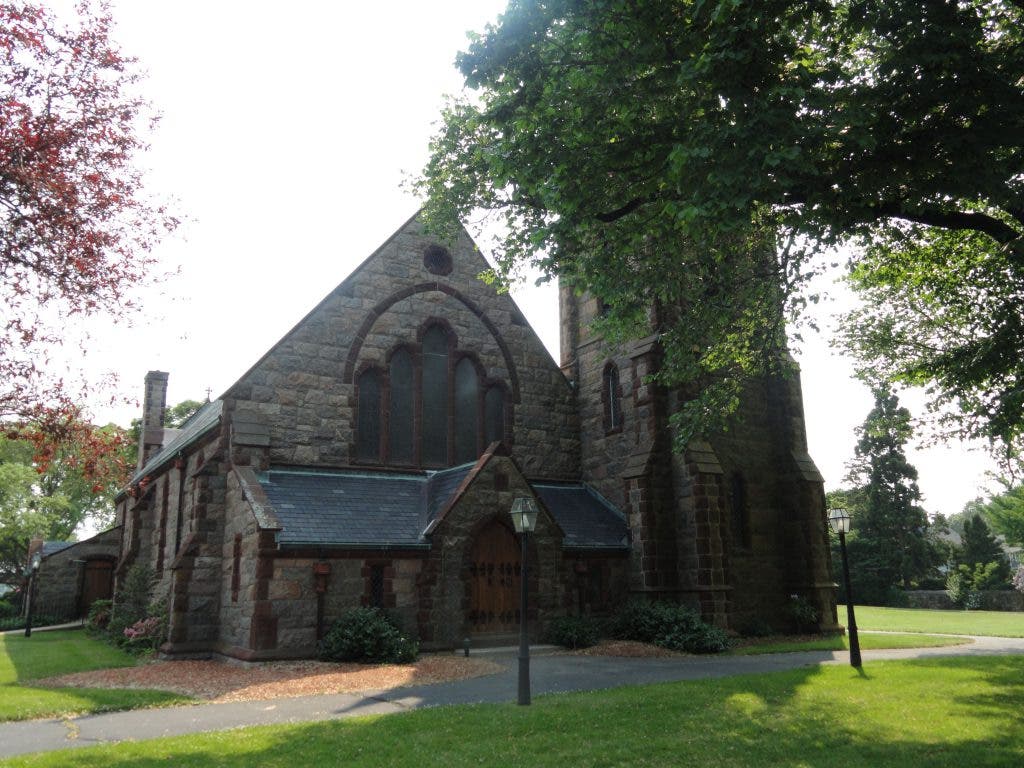
When it comes to the most eye-catching buildings in Falmouth, is very high up on the list. What also makes this church a landmark for the town of Falmouth (besides the religious services it provides) is that it plays host to a number of major summertime events, such as the annual Strawberry Festival. But its past is equally captivating as its present.
Episcopalians in the village of Falmouth did not always have access to a center of their faith; for many years, they had to attend the located in Woods Hole. This state of affairs continued until 1886, when the Reverend Henry H. Neales, who was the rector of the Church of the Messiah, began to hold services at Town Hall. This provided a opening for Episcopalian services in Falmouth. Members of the Beebe family, who had been regularly attending the Church of the Messiah, were of a mind to expand.
As there was a demand for church services for Episcopalians in the town, the Beebes sought help in their enterprise from Charles H. Perry, the assistant reactor at the Church of the Messiah, and from the Reverend Phillips Brooks, who held a post on the Diocesan Standing Committee.
Find out what's happening in Falmouthfor free with the latest updates from Patch.
With these two personages on their side, the Beebes dispelled the objections from the Woods Hole parishioners with such success that in 1888, the Diocesan Standing Committee approved the new Falmouth parish. The original plan for the church was to have it located on Shore Street, but again the Beebes intervened.
The Beebes purchased a 3 ½ acre plot of land in the vicinity of the Village Green and Siders Pond. The church was planned to be a memorial for their parents, James M. and Esther E. Beebe. Built of granite and shaped in the English style both in the interior and exterior, the church was eventually completed in 1890.
Find out what's happening in Falmouthfor free with the latest updates from Patch.
The consecration ceremony for the new church took place on July 11, 1890, which was, handily, St. Barnabas Day. But the planning of the church wasn't the only contribution the Beebes made to the endeavor, as they would also supply several valuable church necessities such as the bell, the stained glass windows, the baptismal font and other items.
The complex of St. Barnabas today has six buildings, the second of which was the St. Barnabas House, which was built in the 1890s, after which came the carriage shed in 1894. The advent of the automobile saw an end to the carriage house's usefulness, and it was reborn as a garden chapel.
This collection of buildings were rounded out by a cloister, St. Barnabas Hall, the Rectory and the Creighton House. The Rectory was originally the Bodfish house, which was originally found between the church and where the Plymouth Savings Bank is now, whereas the Creighton House was the final building built for the church in 1965 and is used by the curate and his family.