Crime & Safety
2003 Victim: Prosecutors Partly At Fault In North Andover Murder
Prosecutors in Brian Chevalier's 2003 kidnapping case "dropped balls," allowing him to be paroled and allegedly kill Wendi Davidson.


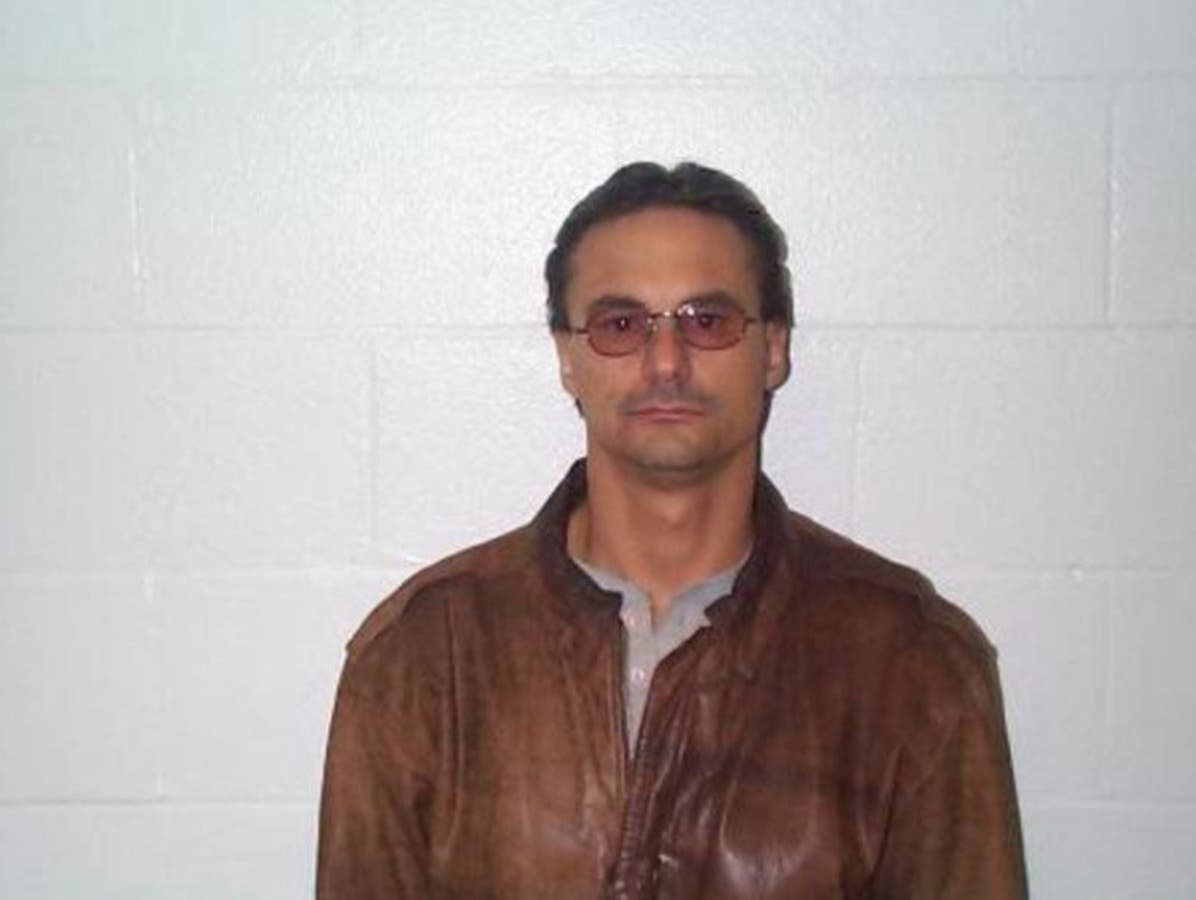
NORTH ANDOVER, MA -- The woman who was held captive in her own home for 21 hours by Brian Chevalier in 2003 as he beat, raped and threatened to kill her told Patch that prosecutors in that case "dropped balls" and "slut shamed" her. While prosecutors were able to get a conviction on one charge of kidnapping, he was acquitted on 10 other charges in his 2004 trial. Those acquittals were factored in a decision to grant Chevalier parole last year, and now he stands accused of the April 21 murder of 49-year-old Wendi Davidson in North Andover.
"I mean honestly - to convict of kidnapping but not any of the things done while kidnapped?" she said. "To not pursue attempted murder for the strangulation -- even though photos were taken of the extensive bruising to my neck -- because proving that without a genuine weapon is difficult?"
Like Davidson, his 2003 victim met Chevalier on a dating Website. And like Davidson, she broke off the relationship after a violent incident. Less than two weeks later, Chevalier broke into her home and beat her. He repeatedly sexually assaulted her and threatened to kill her. He choked her to the point where she passed out.
Find out what's happening in North Andoverfor free with the latest updates from Patch.
Chevalier and Davidson started dating shortly after he was paroled in December. The relationship turned rocky in late March or early April when Davidson broke off their February 14 engagement. Investigators believe Chevalier strangled Davidson and then fled to Mexico, where he was captured last week. At his parole hearing last year, Chevalier used his acquittal on 10 of the 11 charges to suggest he had been wrongly convicted.
Chevalier told the parole board that his attorneys had "proved all her lies" at trial and maintained that the encounter that started on Dec. 29, 2003 was consensual. "I did not hold her against her will, I did not rape her, or anything," he said.
Find out what's happening in North Andoverfor free with the latest updates from Patch.
John Healy, a New Hampshire private investigator, wrote letters to the parole board saying he had reviewed the victim's statement and found that it contained "obvious signs of deception." Healy made those statements after using a technique called "Scientific Content Analysis," or SCAN, which proponents say allows investigators to formulaically determine when someone is concealing information, and whether or not information provided is true or false.
""Here is why I did it. He was not polygraphed by the police in the Jaffrey case," Healy said when contacted by Patch earlier this week. "I received info that he was not guilty. I paid to have him polygraphed in prison, about the Jaffrey case. He passed easily."
Healy declined further comment and did not discuss his use of SCAN to analyze the victim's statement. Nor would he say where he had received the information that led him to believe Chevalier was not guilty. But SCAN has plenty of critics in law enforcement, as most studies of the technique's effectiveness have not established a ground truth that would help measure its effectiveness. Other critics say the technique encourages investigators to prejudge whether or not a suspect is telling the truth.
Or, in this case, to prejudge the victim. While primarily used on suspect's statements, there are studies showing that when used on victim's statements, a SCAN analysis can influence the direction of an investigation.
Chevalier's 2003 victim believes that is what happened in her case, and as a result, she often felt that she was on trial as much as her attacker. Defense attorneys wanted access to her computer to see if she had visited pornographic bondage Web sites, as Chevalier maintained. During the trial a boudoir photo was distributed to the jury.
Prosecutors, she said, did not do enough to stop the attack on her and her credibility, which ultimately led to the acquittals. For example, the defense suggested when she had accused Chevalier of rape and holding her hostage, she had done so to hide the relationship from her ex-husband, who she still shared a house with for financial reasons. Prosecutors, however, never introduced phone records that would have made that theory less plausible.
"No calls or contact with him for 10+ days but this was an arranged consensual rendezvous in a place where my estranged (and newly engaged) husband still resided and we were to keep it secret from him? Is it too late to sue over revenge porn for the boudoir photo distributed to the jury?" she said in an email. "They successfully slut shamed a squeaky-clean, boring housewife."
As Chevalier was awaiting trial in 2004, the woman he terrorized got word that Chevalier was conspiring with other inmates to "finish the job" of killing her. He had fashioned handcuff keys and reportedly threw himself down a flight of stairs to be taken to the jail's infirmary as part of an escape attempt. The threats on the woman's life were deemed credible enough that Jaffrey Police visited her home to warn her and stationed extra security at her daughter's school during Chevalier's trial.
But no charges were filed as a result of those threats.
"There were inmates found who he told MY version of events to while being held before trial, and some of them were even out of the system by the time the trial came around, and could have been witnesses," she said. "There were inmates still in the system that they did not want to use because it could be argued that they were making up tales for leverage on their own cases."
Even after Chevalier was sentenced to 10 to 30 years in prison, the woman felt unsafe. She moved to the southwestern United States, where she still lives. She is remarried, but did not publish an engagement announcement for fear of Chevalier finding out where she lived. She has never had a social media account, and was concerned when a reporter found a phone number to call her.
While she submitted a letter to be read into the record at last year's hearing, the woman was never notified after Davidson's body was found and Chevalier jumped parole. She was only contacted by victim's services and learned of Chevalier's flight when they called to pass along the contact information of the different media outlets that were trying to get in touch with her.
She said she has been reluctant to talk to the media in the days following Davidson's death, partly because of a bad experience with the way she was portrayed in articles by a Keene Sentinel reporter when Chevalier's case came up on appeal in 2010, and partly because she's still trying to move on with her life.
"Kind of tired of being victimized again and having my words slanted," she said. "Not sure what can really be added to any of it, beyond looking back to 2004 and the farce perpetrated by the prosecution."
- Victim Offered Harrowing Account Of Night With Accused Killer(5/2/2018)
- Meet The Men Who Tried To Free The Accused North Andover Killer (5/1/2018)
- Accused Killer Still On West Coast, DA Seeks Gov.'s Warrant(4/30/2018)
- Accused Killer's Record Of Violence Against Women Started In 1990 (4/29/2018)
- North Andover Victim Met Alleged Killer On Dating Site(4/28/2018)
- Ex-Fiance Charged With North Andover Woman's Murder(4/27/2018)
- Murder Victim's Fiance Kidnapped Ex-Girlfriend In 2003(4/24/2018)
- North Andover Murder Victim Was "Kind, Caring" (4/23/2018)
- North Andover Homicide Victim Was Strangled (4/22/2018)
- Police Investigating Homicide In North Andover (4/21/2018)
Never miss another local news story: Get free local news alerts right to your inbox.
2003 booking photo of Brian Chevalier by Jaffrey, NH Police Department.
Dave Copeland can be reached at dave.copeland@patch.com or by calling 617-433-7851. Follow him on Twitter (@CopeWrites) and Facebook (/copewrites).
Get more local news delivered straight to your inbox. Sign up for free Patch newsletters and alerts.