Politics & Government
Native Americans Want Say In Quincy's Long Island Bridge Lawsuit
Native American tribes said Long Island and the nearby islands are sacred burial grounds for ancestors that died in King Philip's War.


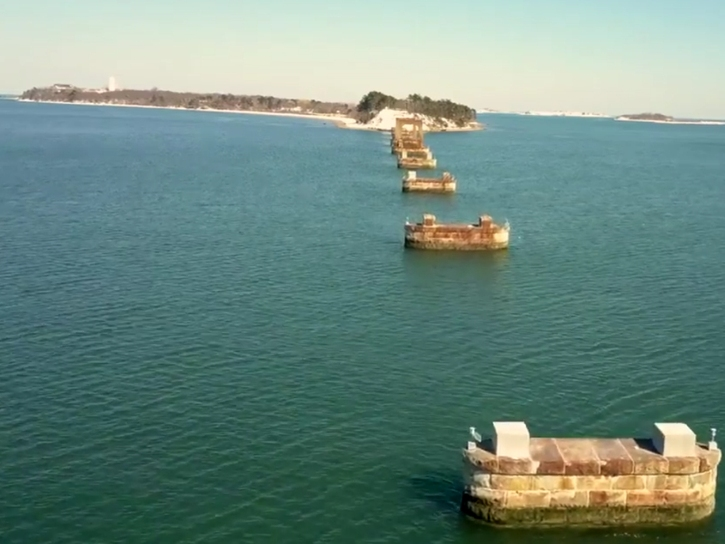
QUINCY, MA — Native American tribes have asked a Suffolk Superior Court judge to allow them to testify in Quincy's lawsuit against the state over the construction of the Long Island Bridge. A group of local tribes, represented by the Muhheconneuk Intertribal Committee on Deer Island, said their ancestors were buried on Long Island and called for an environmental review to examine the potential displacement and damage to the tribes' history, the Patriot Ledger reported.
Last month, The Massachusetts Department of Environmental Protection (MassDEP) approved Boston's three -year $92 million proposal to rebuild the bridge to Long Island. The former bridge used to serve as a way to provide better access to Long Island Hospital. The hospital has since closed, but Long Island still has a homeless shelter and programs for people with substance abuse. Mayor Marty Walsh had the bridge closed in 2014 because of safety issues, but has called for its reconstruction to better serve transportation to a future long-term recovery campus, as well as the existing programs.
Quincy has since filed a lawsuit against the state, arguing that the Bridge will create traffic in the Squantum neighborhood. Last year, the Quincy Conservation Commission's Order of Conditions denied Boston's application to rebuild the bridge. And when Boston Conservation Commission's granted the permit, Quincy appealed, according to the city. The lawsuit argues the Executive Office of Energy and Environmental Affairs allowed Boston to avoid a state-mandated review of potential environmental impacts, a review Native American tribes have also called for.
Find out what's happening in Quincyfor free with the latest updates from Patch.
Gary McCann, a policy adviser for both the Muhheconneuk Intertribal Committee on Deer Island told the Patriot Ledger, Long Island and several nearby Boston Harbor Islands are the the site of the three-year King Philip’s War between Native American tribes and English colonists. The war began in 1675, and the islands were used as internment camps, where thousands of Native Americans died from disease and starvation.
"Those islands are now considered sacred burial grounds by the tribes whose ancestors died there," McCann told the Patriot Ledger.
Find out what's happening in Quincyfor free with the latest updates from Patch.
So far, no action was taken on the tribes' motion, but both the City of Quincy and the Executive Office of Energy and Environmental Affairs were given until Aug. 5 to respond to the motion.
Get more local news delivered straight to your inbox. Sign up for free Patch newsletters and alerts.