Crime & Safety
Flock of Turkeys Invades Islington
The birds were seen at the intersection of Washington Street and Clapboardtree Street this week.


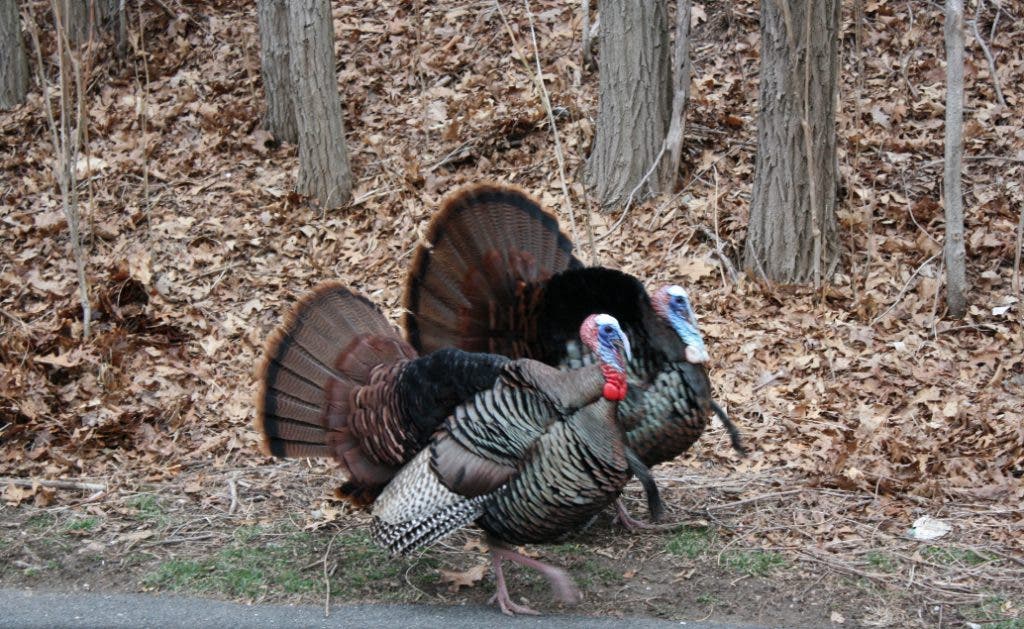


Passersby on Washington Street in Islington may have noticed a small disturbance in traffic on Wednesday. The cause? A flock of turkeys.
A reader submitted a handful of photos of the turkeys to Westwood Patch on Wednesday. And while turkeys have been known to scatter around certain parts of town——the area of Washington and Clapboardtree Streets is not one at which turkeys spend much of their time.
"I don't know why they would be there," said Westwood Animal Control Officer Paul Jolicoeur. "It's just a dangerous area for them."
Jolicoeur said that the turkeys may have come across the border from Norwood, but that Islington intersection is a rare spot for them.
Most, he added, are usually spotted in the area of Canton Street or Everett Street, while others have been reported at the other end of Clapboardtree, on Old Carriage Road.
"By the other end, there's a group that lives down there," Jolicoeur said. "Last year, I counted 33 of them on this woman's front lawn, and they're always in that area. It's a dead-end street, off Clapboardtree."
Looking back, Jolicoeur said he took in 15 reports of turkeys in 2010. Thirteen of those were either injured or needed to be put down and one of them was a report of turkeys in the road near Canton and Everett Streets.
The birds are attracted to shiny objects, Jolicoeur said, such as the chrome bumpers or windows on vehicles. But residents shouldn't fear the turkeys, he added, as they aren't harmful.
"Don't let turkeys intimidate you at all," he said. "Swat them with a broom, spray them with water. Don't hesitate to scare them. A lot of people do, especially around this time of year, because they're breeding right now."
Because of it being mating season, some of the turkeys may appear to be irritable, Jolicoeur said. However he said he expects that to last no more than a month. The turkeys tend to lay 12-15 eggs at a time.
"They dig a shallow little nest, and they'll do it right on the side of a driveway," he said. "You'd never even know; it's no big giant thing."
Male turkeys, meanwhile, can be identified by a clump of hair that sticks out from their chests, known as the turkey's beard.
And although they are harmless, Jolicoeur has one firm word of advice to residents who may spot the birds in their back yards.
"Don't feed them," he said. "That's the worst thing you can do, because they're going to depend on you and they're not going to want to leave. Leave them alone. There's plenty of food out in the woods for them."
Get more local news delivered straight to your inbox. Sign up for free Patch newsletters and alerts.