Politics & Government
Bernie or Hillary?
How soon can we get the change we need, and how much should we ask for? If you don't ask for revolution, can you really get reform?

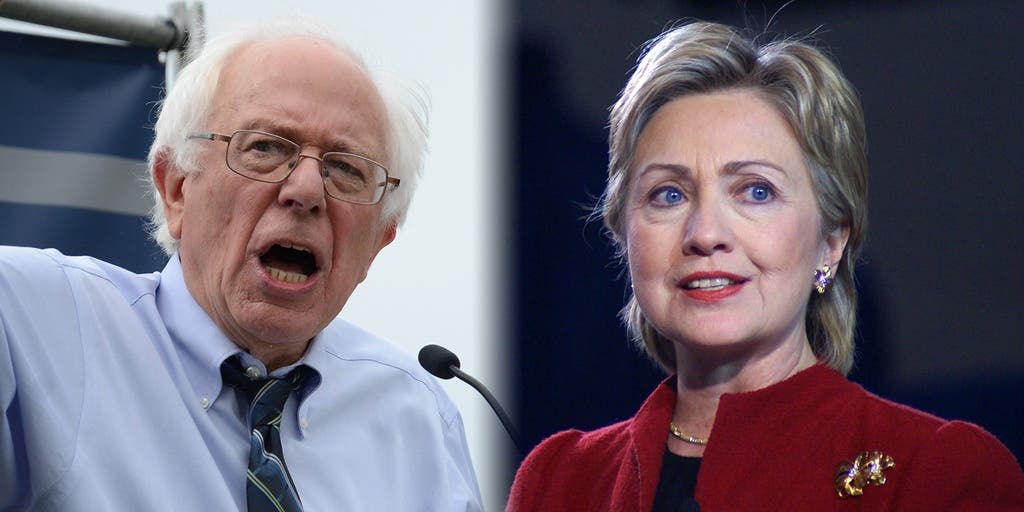
“I am a progressive who gets things done,” Hillary Clinton said in a recent debate. “The root of that word, ‘progressive,’ is progress.”
Which begs the questions: What things must you “get done” to achieve progress? And when must you do them? What is the route of progress?
For centuries, in Europe and then in America and elsewhere, political progress has meant the slow, painful march towards universal rights, toward a civilization in which every adult - regardless of birth, wealth, or power - has the right to a vote that counts, the right to an equal say in the choices government makes.
But here in the United States that progress was halted, made irrelevant, perhaps reversed, by the Supreme Court’s “Citizens United” decision in 2010. When those with the most money were allowed to buy candidates and to buy public opinion, 800 years of progress began to evaporate.
In Britain, the march toward political progress goes back at least to the Magna Carta in 1215, when barons won rights and protections from the king. Some men won more progress in the fifteenth century, when certain landholders were given the right to vote. But it was not until 1832 that even 20 percent of British men were granted the franchise, and it was not until after World War I that all British men could vote. Women over 30 were granted the vote at the same time. Women over 21 could vote by 1928 in Britain. Thus, it took Britons 700 years from the signing of Magna Carta to get universal suffrage.
In the early days of the United States, male property owners could vote, as could women in New Jersey and freed male slaves in four states. By the beginning of the Civil War, all white males could vote, regardless of wealth. Black men got the right in 1870. Black and white women could vote as of 1920. However, the rights of blacks were quickly curtailed by various laws in the South, and they didn’t truly get the full franchise until the Voting Rights act of 1965, almost 200 years after the Declaration of Independence. Today, conservatives are still attempting to roll back those voting rights, and succeeding in some states.
At each step of the way on the road to progress, the people who pushed for it were considered radicals, while conservatives of the era opposed it. Centrists tended to think that it was unwise for people to ask for quite so much just now. But, with pressure, progress was eventually made, and in some cases conservatives even switched sides and led the way. This conservative-centrist-radical dynamic took place in every one of the extensions of the franchise in Britain and the United States since the 19th century. (I can’t vouch for the middle ages.)
It was also at work in the battle to abolish slavery in America. Back then, the conservatives on the issue were the Democrats, but the dynamic was the same. Radicals wanted to abolish slavery now. Centrists temporized. Conservatives objected strongly. These lines were not immovable. Even the great Frederick Douglas, an escaped slave and an early champion of women’s rights, argued that black men should get the franchise first.
II
Belief itself is never enough to get what you want; you must have tactics. And sometimes the best tactic is to survive to fight another day. But, it is easier to sit tight and hold your horses when you are fighting for someone else’s freedom rather than your own. And it is easier to keep hope alive when you can see that you are making progress.
It’s not like anyone’s going to hand it to you. It took a Civil War for black men to gain even a partial right to vote in America. It took World War I for the ruling classes to finally realize that poor Britons, many of whom had been gassed in the trenches or sent home in pieces, were perhaps suitable enough citizens to be allowed to vote. It took Martin Luther King Jr. and thousands of peaceful black and white Americans putting their lives on the line to finally win universal suffrage for blacks.
Today in America, we’re not making that kind of progress anymore. The world has changed, and the power of wealth has spread beyond national borders. We can’t just send a posse of knights out to arrest the king. Multinational corporations trump our power, steal our resources, avoid our taxes, and send our jobs to wherever workers make the least money and work the longest hours with the fewest protections. These corporations are codifying their new power into binding trade agreements like the TransPacific Partnership (TPP <http://www.citizen.org/TPP.>), a reverse Magna Carta.
At the same time, the corporate wealth of the energy industry has purchased something never seen before in history: a movement that denies the existence of an immediate threat to human survival; a movement so powerful that it stalemates any solution. The civilized world has never faced such a threat as climate change before. And if it had, no one could have bought off so many politicians, media hacks, TV weathermen and gullible conservatives. But Exxon Mobil and the rest of the energy industry got it done.
On top of this sits Citizens United, allowing unlimited corporate spending in elections. As Mitt Romney famously said, “Corporations are people, my friend.”
No, they’re not. Nor are they magical: there is no divine wisdom of the “free market” that leads it to rational action. Corporations are run by people, so they are fallible. They don’t always act in their own self-interest or in the interest of their own survival. Today, the largest public corporations generally act in the perceived short-term interest of whichever nearsighted CEO holds the reins.
We non-corporate people have hearts, minds, families, and values that extend beyond mollifying shareholders and enriching top management. But we find ourselves in an existential crisis - not the kind of crisis that Jean Paul Sartre has when he can’t find his cigarettes, a crisis that threatens the existence of the human race. As we see the corporate world spin out of control, we have no choice but to fight back. Now.
The only question is how.