Schools
State Data Reports Majority of High School Graduates Not 'College Ready'
The Michigan Department of Education recently released statistics showing less than 20 percent of local high school students are ready for higher education post-graduation.

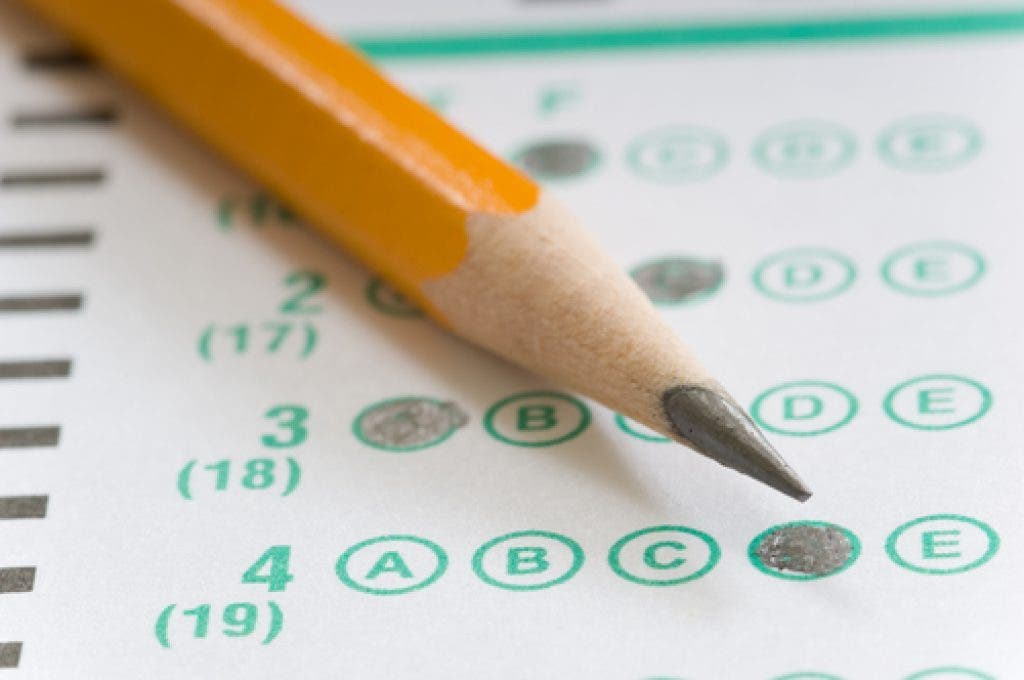

Thousands of high school juniors from the Chippewa Valley, L’Anse Creuse and Utica districts took the Michigan Merit Exam last week.
Many will use the ACT portion of this exam to apply for college, but according to recent statistics released by the Michigan Department of Education, less than 20 percent of these students are “college ready.”
In Michigan, all public high school students are required to take the MME, but according to 2010 results, only about 19 percent of these students posted scores the MDE defines as “college ready.”
Find out what's happening in Macomb Townshipfor free with the latest updates from Patch.
“What we were trying to draw a connection with is districts are graduating students in high numbers but very few are college ready and that’s important because diplomas need to mean something,” said Jan Ellis, MDE spokesperson.
“College ready,” by MDE definition, is the percentage of students that meet the following minimum scores on the ACT: 18 on English, 22 on math, 21 on reading and 24 on science.
Find out what's happening in Macomb Townshipfor free with the latest updates from Patch.
Using this definition, while is graduating 98 percent of its students, less than 15 percent are academically prepared for college. For , which graduates 94 percent of its students, this number is 16 percent. At Utica High School, with a graduation rate of 98 percent, less than 17 percent of students were deemed college ready. Eisenhower High School, which scored the highest in the Utica district with a 29.5 percent college readiness rate and a 99 percent graduation rate, was No. 20 in Michigan.
International Academy In Bloomfield Hills is No. 1 in the state with 73.4 percent of its students college ready.
While Ellis said this data is not intended to be the only factor used to determine how a school is doing, she said it is important in that it is the only data the MDE has to compare Michigan students across the board.
“The way ACT comes up with that school’s score is based on individual student’s ACT scores in all four subjects,” Ellis said. “They also look at when students move into higher education, what kind of grades they are getting in individual subjects. Is that important? Of course that’s important. Parents have to pay for remedial or basic classes that students have to take because they are graduating without those skills.”
Chippewa Valley Interim Superintendent Ron Roberts said while he believes the ACT is a significant meter to measure a school’s success, it is not the only way.
“I think it’s an important indicator and we use the ACT to develop our curriculum,” Roberts said. “But you have to subscribe to the ACT being the end all and be all of assessment and predictor of success to believe that this is what indicates if kids are college ready or not.”
Roberts added his belief that not all students will excel in all subject areas measured by the ACT and to judge Chippewa Valley or any district in this manner is “a bit of a stretch.”
“It is important data to look at, but to judge our schools and say that 70 percent of our students are not college ready, I find that to be a ridiculous statistic,” Roberts said.
He added that according to the Michigan auditor general’s 2009 assessment of the district's "college readiness," only 22 percent of Chippewa students needed remedial courses at a community college level.
“Only 22 percent in 2009,” Roberts said. “And the MDE announces that we have 70 percent who not college ready (in 2010). That’s difficult to believe.”
UCS Superintendent Christine Johns said she also takes the results seriously, but said that she is cautious not to judge students solely on ACT scores.
“I think it’s important to put it into context," she said. "Our students are performing overall at higher levels than ever before and they are making positive choices to challenge themselves and experiencing more academic rigor."
Robert Van Camp, assistant UCS superintendent, added that the district has always promoted a college culture, and next year UCS will launch a new initiative that will allow juniors who want to study health sciences to split their time between the high school and Macomb Community College. By the time the students graduate from high school, they will have simultaneously earned an associates degree.
“We (UCS) are promoting a college culture and we are seeing students embrace this challenge by taking college courses and putting forward their best efforts,” Johns added.
Out of the 28 high schools in Macomb County, four UCS high schools snagged the top six spots based on ACT test scores.
L'Anse Creuse Schools released this statement in response to MDE's findings:
"College readiness is a hot topic with all the discussions related to school reform. Various entities have studied student readiness for post-secondary education and the data varies from group to group, ranging from 80 percent "college ready" to 20 percent. The data provided by the State of Michigan is based on ACT scores, a measurement that was designed approximately 40 years ago and which has seen little change over that period of time.
"In addition to the variety of data answering the question: What constitutes the ability to succeed in college? Michigan is in a unique situation when considering this issue. One of only six states in the nation, Michigan assesses all students with the ACT. Prior to this mandate, only students who were planning to pursue a college education took the ACT. And, prior to the test date spent hours and personal resources in preparation to score as high as possible. The changing dynamics in which ALL students are mandated to take this prescribed test has impacted the data currently posted by the State of Michigan."
Since the full MME curriculum was only adopted in 2006, the class of 2011 will be the first graduating class to have taken all four years of MME-influenced courses.
Ellis said she believes the number of "college ready" students in Michigan high schools will increase as more classes graduate having taken this full curriculum.
“This will be the first class of youngsters that will graduate with the requirements class. More kids taking and passing algebra and taking advanced placement course than ever before,” said John.
To view these statistics, visit the MDE website.
Get more local news delivered straight to your inbox. Sign up for free Patch newsletters and alerts.