Schools
Musson Students Strive to be Solution to Pollution
At elementary school's Science Fair Expo, kids show off recycling and clean water experiments.



Two groups of students had experiments at Thursday’s Science Fair Expo that focused on teaching others about the environment, such as clean water and recycling.
Girl Scouts learn about recycling
Among the dozens of science fair experiments on display at Musson was a project created by fifth-grade girls involved in Girl Scouts Troop No. 43250. The project focused on three concepts: reduce, reuse and recycle. To earn their bronze award, troop members came up with the project and sought out ways to conserve energy, repurpose objects and learned the best methods for recycling.
"They were very eager and excited to be able to show off what they've been looking into," troop leader Sharon Ostrander said of the girls participating in the science fair. "They are now taking responsibility and holding their parents accountable for what they've learned. Knowledge is power."
Find out what's happening in Oakland Township-Lake Orionfor free with the latest updates from Patch.
Many of the girls who participated in the project said their favorite thing was transforming empty Capri Sun drink packages into purses. Girl Scout Mackenzy Meshefski said the bracelets made out of pop can tabs were pretty interesting as well.
"We got to learn how to recycle and how it's better for our environment," Meshefski said.
Find out what's happening in Oakland Township-Lake Orionfor free with the latest updates from Patch.
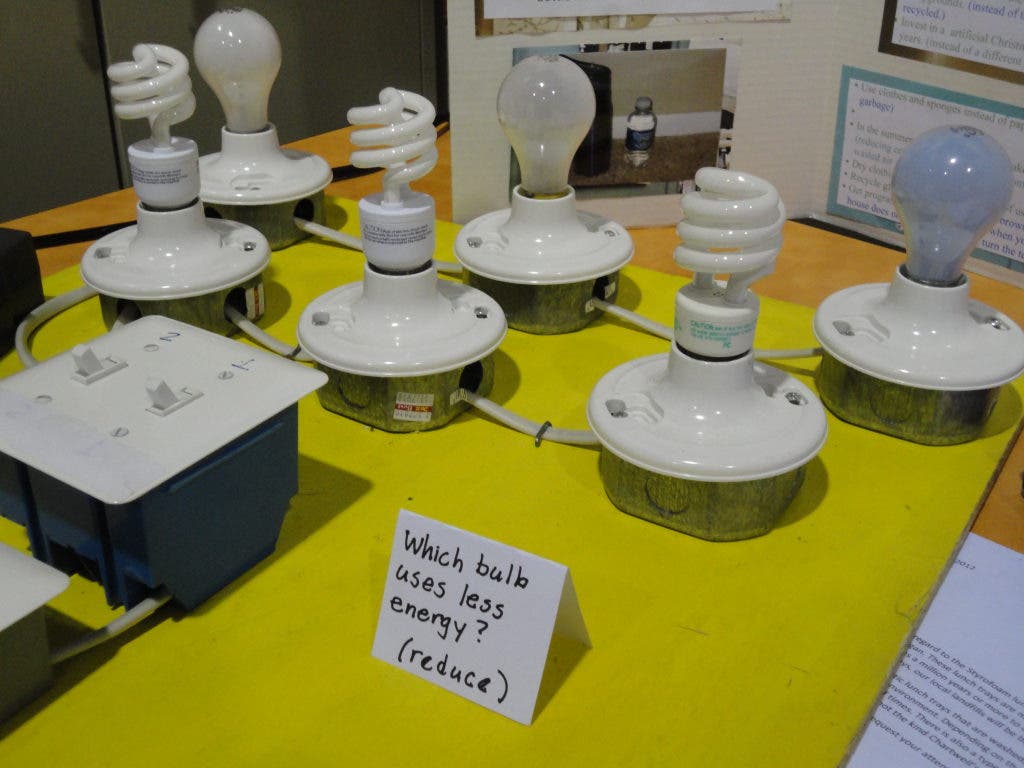
As part of the "reduce" portion of the experiment, a light bulb display was set up with different kinds of lights.
"We're showing how new light bulbs work better than the old," Girl Scout Rosemary Jordan said, explaining how there are new, energy-efficient light bulbs on the market.
In addition to presenting their project, the Girl Scouts were collecting signatures at the Science Fair Expo in protest of the Styrofoam lunch trays used at the school. They are petitioning for the school to purchase plastic trays that can "save both money and the environment."
Water quality experiment leads to raising funds
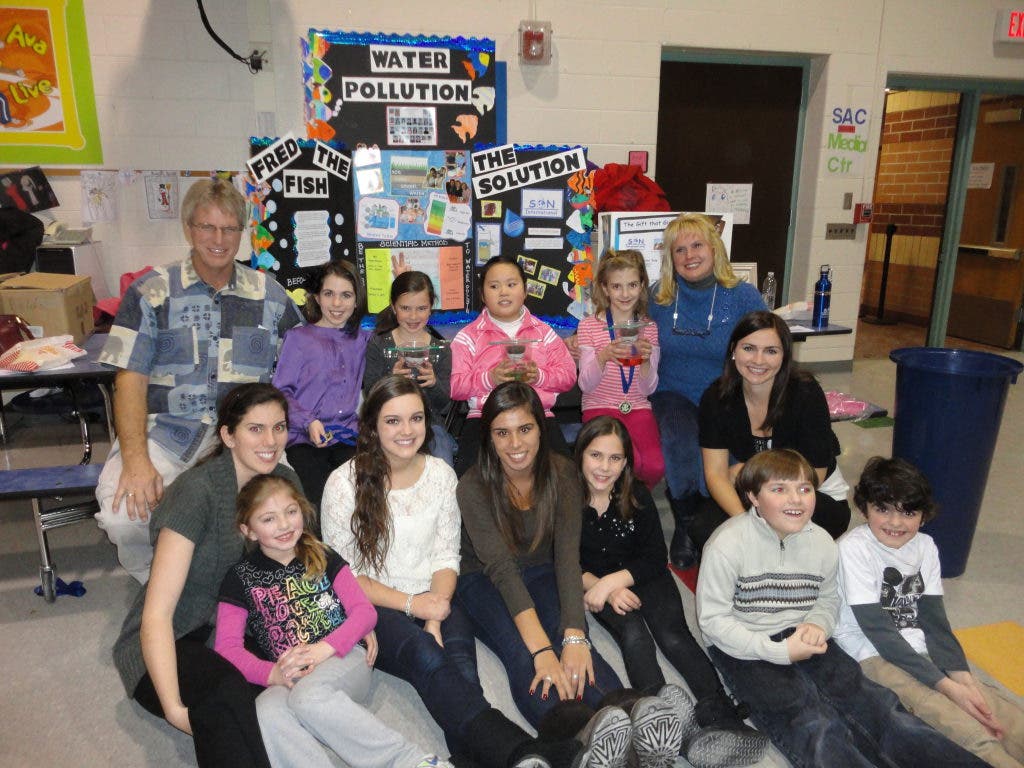
For the second year in a row, conducted an experiment involving pH levels in water to educate students on the importance of clean water. Student teacher Rachel Sylver, who came up with the project last year, helped the students with it again this year.
Students built individual water tables with gravel, sand and soil. They then added common pollutants and water to form an aquifer, according to Sylver. Based on the amount of pollutants, students were able to see a colorful reaction when they tested the water with pH drops.
Last year Holdren’s students took the experiment a step further by collecting $600 for clean water bio-sand filters for the Serving Our Neighbor (SON) International nonprofit based out of Davison providing people in Tanzania with clean water. This year, the kids are doing the same, and started collecting funds at Thursday’s Science Fair Expo. In addition to staff members, parents and students attending the science fair, Todd Ziems, president of SON International made an appearance to show his gratitude.
“It’s great; we appreciate it and it’s good to see the kids learning that not everything is like it is at their house,” Ziems said in reference to clean water from the faucet.
Ziems noted that his company helps provide 700-1,000 water filters in Tanzania annually. Tests show that the bio-sand filters take out about 96 percent of the bacteria, Ziems said. According to Ziems the filters last a lifetime and each costs about $80 to manufacture.
“I love science and wanted to come up with an experiment last year that would teach them about water pollution. My partner (other student teacher) had a connection to SON International,” Sylver said. “It’s kind of advanced for third-graders, but they seem to understand it pretty well.”
Third-grade student Christian Dedvukaj, along with a few other students, explained the project and what they learned.
“Water helps everything and they don’t have clean water there (Tanzania),” Dedvukaj said. "We added acid in the water and tested the pH scale."
During the experiment students also learned how “Fred the fish” died.
“The water was polluted with chemicals and oil and gas,” third-grade student Aubrey Borschke said. She also said that water with a high or low pH could kill the fish.
Donations for SON International will be accepted at the school throughout the rest of the school year. In addition to accepting donations, the children are selling SON International water bottles for $25 each.