Schools
Metro School Board Members Voice Displeasure with Proposed K-12 Funding
Group calls for end of funding disparities between urban, rural school districts.
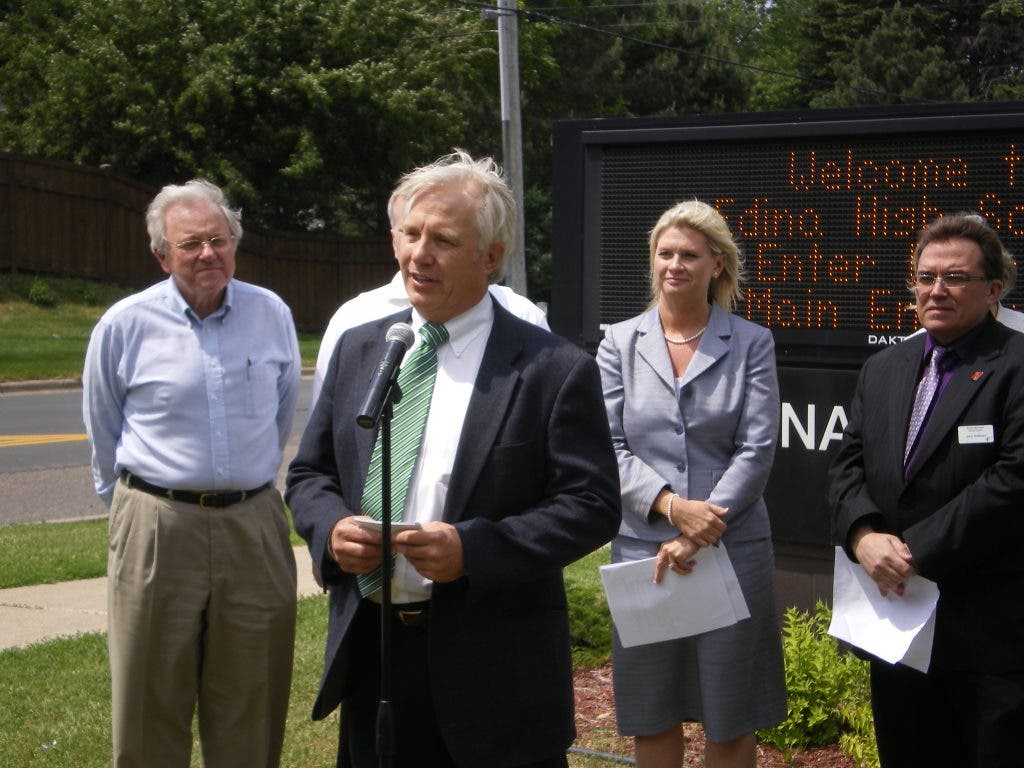


Eight metro area school board members—representing 42 fellow school board members from the Twin Cities metro area and St. Cloud—voiced major opposition to the proposed cuts and funding shifts made by the Minnesota Legislature for K-12 public education.
“We find it unacceptable to pit school districts and students against each other because the legislative proposal results in wide variations in funding allocated to districts,” said Peyton Robb, a member of the Edina School board.
At a news conference Thursday, June 9, outside of , the eight met with the media to reiterate a position taken by the 42. They called for a more balanced approach, increased revenues combined with spending cuts and drew attention to the large disparities in funding allocations and reductions in funding streams.
Find out what's happening in Edinafor free with the latest updates from Patch.
“We are very concerned about large cuts targeted at the Minneapolis, St. Paul, Duluth and St. Cloud schools as well as most of the metro are suburban school districts,” Robb added. “At the same time, rural and charter schools are not among those districts being cut and—in fact—are seeing per pupil aid increased.”
Natalie Fedie, a member of the Stillwater School Board, said a recent offer from the Republican majority in the Legislature to put back $80 million into K-12 funding was misleading because “it is not new revenue, but simply cuts from other programs.”
Find out what's happening in Edinafor free with the latest updates from Patch.
“If those cuts are in health and human services programs, then that doesn’t benefit any of us,” Fedie said.
The 42 school board members signed and sent a letter to legislative leadership last week expressing a myriad of concerns and arguments for re-thinking how the funding is presently being structured.
“School districts have borne the brunt of the accounting shifts over the past eight years to solve other budget deficits and districts would be forced into an even greater reliance on voter approved operating levies under this legislative proposal,” said Robb. “Districts have already had to borrow $416 million because of the shifts to meet monthly payrolls.”
He added that while fully understanding the budget challenges facing the state, the proposed budget neither maintains K-12 funding nor does it hold Minnesota children harmless when it comes to budget cuts.
Jim Gelbmann, a board member from the South Washington County School District—made up of communities like Woodbury, Cottage Grove and Newport—said his district has been “hesitant to innovate and plan because we don’t know if we will have the resources to continue new programs or innovative processes.”
“I have been on the board for 16 years and each year I have seen a decline in state commitment,” Gelbmann said.
Asked about a possible shutdown if no budget agreement is made by the end of this month, he said school districts will truly feel the ramifications of that once the next school year starts in late summer, “although there could be several who will be hit hard before then.”
John Hoffman, vice chair of the Anoka-Hennepin School Board, summed up the feeling of those present and all of the districts they represent.
“It is a slow death, 1,000 cuts at a time.”