Crime & Safety
What Has, And Has Not, Changed In MN Since George Floyd's Death
George Floyd's death was seen by millions around the globe and ignited demands for police reform. How much has actually changed?


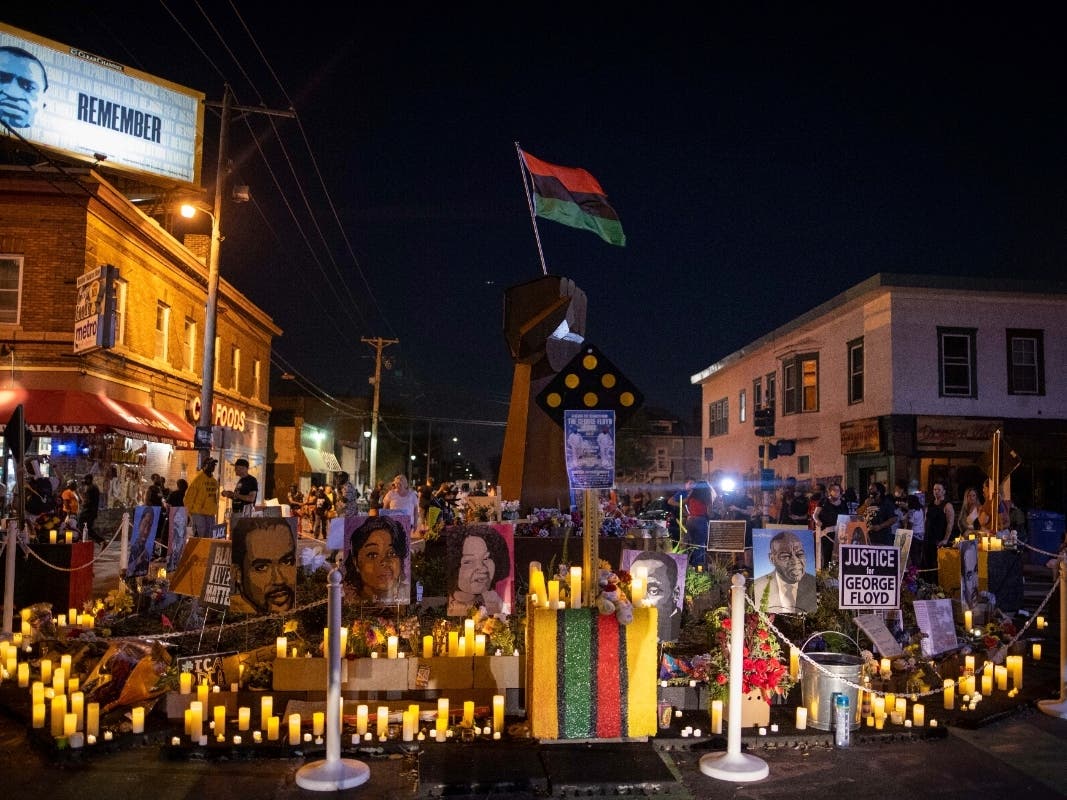
MINNEAPOLIS — Two years ago, on May 25, 2020, George Floyd died while gasping for air under the knee of Derek Chauvin, a veteran Minneapolis police officer.
Chauvin's knee pinned Floyd to the Chicago Avenue asphalt for 9 minutes and 29 seconds. Three other officers assisted Chauvin during that time.
Floyd's death, seen by millions around the globe thanks to a bystander's viral video from the scene, ignited a movement for police reform and racial justice.
Find out what's happening in Southwest Minneapolisfor free with the latest updates from Patch.
But street violence and vandalism also plagued Minneapolis in the days after Floyd's death.
More than 10,000 public safety officials contributed to the effort to restore peace and safety, including the first full mobilization of the Minnesota National Guard since World War II. However, nearly 1,500 Twin Cities businesses were damaged by vandalism, thefts, and fire.
Find out what's happening in Southwest Minneapolisfor free with the latest updates from Patch.
Estimates of the damage in Minneapolis and St. Paul caused by riots exceeded half a billion dollars.
Two years later, Minnesotans remain divided on how to respond to Floyd's death and what changes need to be made in policing.
What has changed since George Floyd's death?
All four former offices have been convicted in the killing of Floyd.
Since Floyd's death, Chauvin has been convicted in both state and federal courts.
On April 20, 2021, a Hennepin County jury found Chauvin guilty of second-degree murder, third-degree murder, and second-degree manslaughter in Floyd's death. He was sentenced to 22 years and six months in prison.
Months later, in December, Chauvin pleaded guilty in federal court to violating Floyd's civil rights in the Black man's death. Under the plea agreement, Chauvin faces a sentence of between 20 and 25 years in prison. A sentencing date has not yet been determined.
Chauvin's state and federal sentences will be served concurrently.
On Feb. 24, a federal jury found the three other former Minneapolis police officers guilty of civil rights violations in Floyd's death. They have not yet been sentenced.
On May 18, Lane pleaded guilty in state court to aiding and abetting second-degree manslaughter in Floyd's death. State prosecutors are asking for a three-year sentence for Lane, which could be served in federal prison.
Kueng and Thao have not pleaded guilty to their state charges, which are identical to the ones that Lane faced.
Court-ordered reforms for the Minneapolis Police Department.
In June of 2020, Hennepin County District Court Judge Karen Janisch ordered the city of Minneapolis to implement the following measures:
- Ban the use of all neck restraints and chokeholds.
- Any police officer, regardless of tenure or rank, must report while still on the scene if they observe another police officer use any unauthorized use of force, including any chokehold or neck restraint.
- Any police officer, regardless of tenure or rank, must intervene by verbal and physical means if they observe another police officer use any unauthorized use of force, including any chokehold or neck restraint.
- Only the police chief or the chief's designee at the rank of deputy chief may approve the use of crowd control weapons, including chemical agents, rubber bullets, flash-bangs, batons, and marking rounds, during protests and demonstrations.
- The police chief must make timely and transparent discipline decisions for police officers as outlined in the order.
- Civilian body-worn camera footage analysts and investigators in the City's Office of Police Conduct Review have the authority to proactively audit body-worn camera footage and file or amend complaints on behalf of the Minneapolis Civil Rights Department.
The changes are part of the Minnesota Department of Human Rights' ongoing civil rights investigation into the police department.
The Minneapolis City Council Friday voted to cut the public information officer (PIO) position from the Minneapolis Police Department. John Elder, who serves as the current PIO, is tasked with providing police-related updates to media and the public.
Minneapolis City Council cuts police PIO position
In July of 2022, the Minneapolis City Council moved to cut the public information officer (PIO) position from the Minneapolis Police Department. The PIO worked under the police chief and was tasked with providing updates to media and the public.
The public information role out now exists in the overall city government, outside of the control of the police department.
The council approved the move despite objections from then-Chief Medaria Arradondo.
The office of the PIO was criticized after police sent a news release about George Floyd's death that said he "physically resisted officers" and died after "medical distress," omitting any role the officers may have had in his condition.
Read the police department's original statement on Floyd's death below:
Man Dies After Medical Incident During Police Interaction
On Monday evening, shortly after 8:00 pm, officers from the Minneapolis Police Department responded to the 3700 block of Chicago Avenue South on a report of a forgery in progress. Officers were advised that the suspect was sitting on top of a blue car and appeared to be under the influence.
Two officers arrived and located the suspect, a male believed to be in his 40s, in his car. He was ordered to step from his car.
After he got out, he physically resisted officers. Officers were able to get the suspect into handcuffs and noted he appeared to be suffering medical distress. Officers called for an ambulance. He was transported to Hennepin County Medical Center by ambulance where he died a short time later. At no time were weapons of any type used by anyone involved in this incident.
The Minnesota Bureau of Criminal Apprehension has been called in to investigate this incident at the request of the Minneapolis Police Department. No officers were injured in the incident. Body worn cameras were on and activated during this incident.
A permanent memorial is being planned for the site of Floyd's death.
The city of Minneapolis is soliciting the public's input as it looks to redesign the 38th Street and Chicago Avenue intersection, where Floyd was killed.
The intersection became known as "George Floyd Square" as a memorial to him after his death. It remained closed to vehicle traffic for over a year but was reopened in June 2021.
"This project will seek to balance traditional asset management needs with the intersectionality of justice, healing, placemaking and culture," the city said in a news release.
"The streets of 38th Street East and Chicago Avenue South were built in phases between 1957 and 1963 and have exceeded their useful life."
What hasn't changed?
The Minneapolis Police Department was neither dismantled nor defunded, despite a push from local activists.
Minneapolis progressives — including those who supported a movement to remove the city's police force — suffered a major backlash in the November 2021 elections.
A City Council-backed ballot proposal to dismantle the Minneapolis Police Department and replace it with a new "Department of Public Safety" was soundly defeated by residents, with 80,506 "No" votes to 62,813 "Yes" votes.
On the same day, voters approved a different ballot measure that strips power away from the city council and gives it to the mayor. Minneapolis city government has changed from a "weak mayor" system to a "strong mayor" system.
Meanwhile, in the mayoral election, Frey overcame progressives Kate Knuth and Sheila Nezhad, who teamed up to defeat the more centrist mayor. Knuth and Nezhad — who supported the police amendment — promoted a "Don't Rank Frey" campaign, hoping to leverage the city's ranked-choice vote system against the incumbent.
United States Rep. Ilhan Omar — who represents Minneapolis — endorsed Knuth and Nezhad and told voters to not rank Frey.
In the end, Frey won with 70,669 votes to Knuth's 55,007 votes in the second round of tabulation. All other candidates were eliminated after the first round.
No statewide reform
In 2021, Gov. Tim Walz called on members of the Republican-controlled Minnesota Senate to pass the package of police reforms that had been approved by the Democratically-controled Minnesota House.
The House bill included the following law enforcement reforms:
- Restricting the use of no-knock warrants
- Banning traffic enforcement stops violations for "secondary offenses"
- Allowing local governments to create civilian oversight councils for local law enforcement departments
- Reform Minnesota's Peace Officer Standards and Training Board
- Improving police response to incidents involving a mental health crisis
- Funding for community organizations
Read the full House bill here.
However, the bill did not earn enough support from Senate Republicans. Walz took some executive action, but any major reform needs approval from state lawmakers.
Police killings in the Twin Cities
The shock of Floyd's death has not put an end to the common occurrence of Black men being killed by police in the Twin Cities.
In February, 22-year-old Amir Locke was quickly killed by Minneapolis police in his own apartment during the execution of a no-knock search warrant. Locke was not named in the search warrant and he was not a suspect in the investigation.
In April, Hennepin County Attorney Michael Freeman and Minnesota Attorney General Keith Ellison announced that they are declining to file criminal charges in Locke's death.
Also in April, Brooklyn Center Mayor Mike Elliott marked the one-year anniversary of the killing of Daunte Wright by former police officer Kim Potter. Wright was killed while Chauvin's state murder trial was going on.
Potter, 49, was convicted in December of first- and second-degree manslaughter in the fatal shooting of Wright, 20, during a traffic stop on April 11, 2021. Potter was given a reduced sentence of two years in prison.
Potter is the third Twin Cities metro police officer to be convicted of manslaughter or murder since 2019. Earlier in 2021, former Minneapolis police officer Derek Chauvin was convicted of second and third-degree murder in the death of George Floyd.
In 2019, former Minneapolis police officer Mohamed Noor was convicted of third-degree murder and second-degree manslaughter in the shooting death of Justine Damond. However, his murder conviction was recently overturned by the Minnesota Supreme Court.
Get more local news delivered straight to your inbox. Sign up for free Patch newsletters and alerts.