Politics & Government
House Backs Minimum Wage Hike, Limits Plastics, Tables OHRV Bill
Democrats that control the New Hampshire House continued to approve legislation that was vetoed by Republican Gov. Chris Sununu last year.

This story was originally published by InDepth NH.
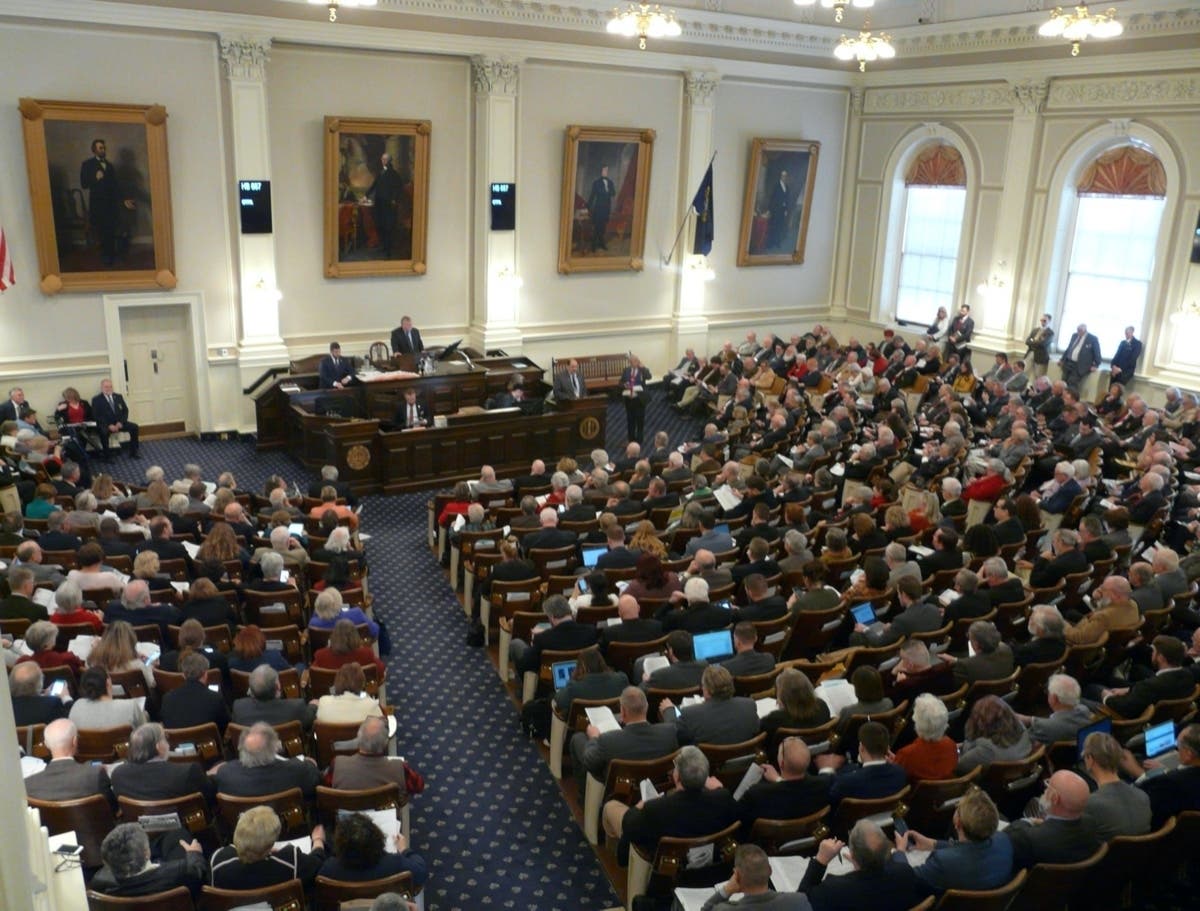
CONCORD, NH — House Democrats passed legislation Thursday that would raise New Hampshire’s minimum wage to $15 dollars an hour by 2025, $2 more than originally recommended. New Hampshire’s current minimum wage is based on the federal minimum of $7.25 an hour. The House voted 212 to 155 to pass House Bill 731.
The bills passed on the second day of Convening Day will require further action.
Find out what's happening in Concordfor free with the latest updates from Patch.
State Rep. Brian Sullivan, D-Grantham, called it a bipartisan vote. “This is a huge step forward for families and workers in our state,” Sullivan said. On Jan. 1, 21 states saw their minimum wages increase, he said.
“New Hampshire was not one of them thanks to Governor Sununu’s veto,” Sullivan said. “We continue to be the only state in New England that allows our minimum wage to be dictated by the federal government.”
Find out what's happening in Concordfor free with the latest updates from Patch.
Sununu vetoed a minimum wage bill last year.
Sullivan said: “His veto message and other public statements show that he does not understand how an increased minimum wage would benefit workers and families in our state. House Democrats are not deterred and will continue to do our jobs, passing legislation that will make the lives of our constituents better.”
Republicans Disagree
House Republican Leader Dick Hinch, R-Merrimack, saw it differently calling it “job-killing legislation.” Hinch said the state has a record number of Granite Staters working, wages are rising with low unemployment.
“Rather than embracing the successful policies of Republican leadership, Democrats seem content to repeatedly try to undermine New Hampshire’s economic progress by mandating a 100% wage hike for some,” said Hinch. “New Hampshire employers know best when it comes to compensation of their employees and we should continue allowing them to make those decisions. This bill would harm those entering the workforce looking for entry-level jobs and our family owned small businesses more than anyone. House Republicans will continue to stand strong against this job-killing legislation.”
Other Bills
The House also voted to pass multiple bills to address the climate crisis in New Hampshire, including SB 122 to invest RGGI funds in energy efficiency and SB 124 to update renewable portfolio standards.
State Rep. Bob Backus, D-Manchester, chair of the House Science, Technology and Energy Committee, called it meaningful change.
“We are strongly encouraged by efforts to bring the climate issue before town meeting voters this spring through petitioned warrant articles," Backus said. "As the public becomes more engaged in the climate crisis and more informed on the issue of carbon pricing, we are confident that approach will be recognized as the most effective way to reduce carbon pollution."
Democrats passed two bills to crack down on the use of plastics, one relative to point of sale bags, HB 559, by a vote of 206 to 158. The other one, House Bill 102, passed by a vote of 215 to 151. It would allow municipalities to set their own rules on the use of plastics.
Hinch criticized the vote on HB 559.
“I’m beginning to think that Democrats trying to turn New Hampshire into the most highly taxed state in New England," he said. "A bag tax? That’s what this is. We are now turning to taxing consumers $.10 to $.50 per single-use plastic or paper bag."
House Bill 683-FN relative to the rights of property owners abutting certain highways and railtrails was laid on the table by a vote of 210 to 150.
Speaking in favor of the bill, state Rep. Suzanne Smith, D-Hebron, chairman of the Committee on Resources, Recreation and Development, said a lot of what was being circulated about the legislation was the bill before the committee worked hard on amending it over the summer.
State Rep. Wendy Thomas, D-Merrimack, for the majority of Resources, Recreation and Development, wrote that as amended, the bill would establish procedural requirements prior to authorizing certain roads or parts of roads for off-highway recreational vehicle (OHRV) use.
OHRV traffic has grown over the years and along with that growth has come significant discrepancies between the OHRV users’ right to participate in a sport and the rights of abutting property owners to live peacefully in their homes, she wrote.
“This bill, as amended, gives abutters a stronger voice in decisions pertaining to opening or closing roads to OHRV use in their municipalities,” Thomas wrote.
State Rep. Michael Gunski, R-Goffstown, for the minority said this bill is premature referring to July 12, 2019, when Sununu signed a bill to study the economic and other impacts of OHRV use in New Hampshire.
This story was originally published by InDepth NH.