Schools
NH Superintendents Say Schools Are Safe, Plans In Place With Police
Several superintendents say while New Hampshire school shootings are rare, officials work with police to keep students as safe as possible.


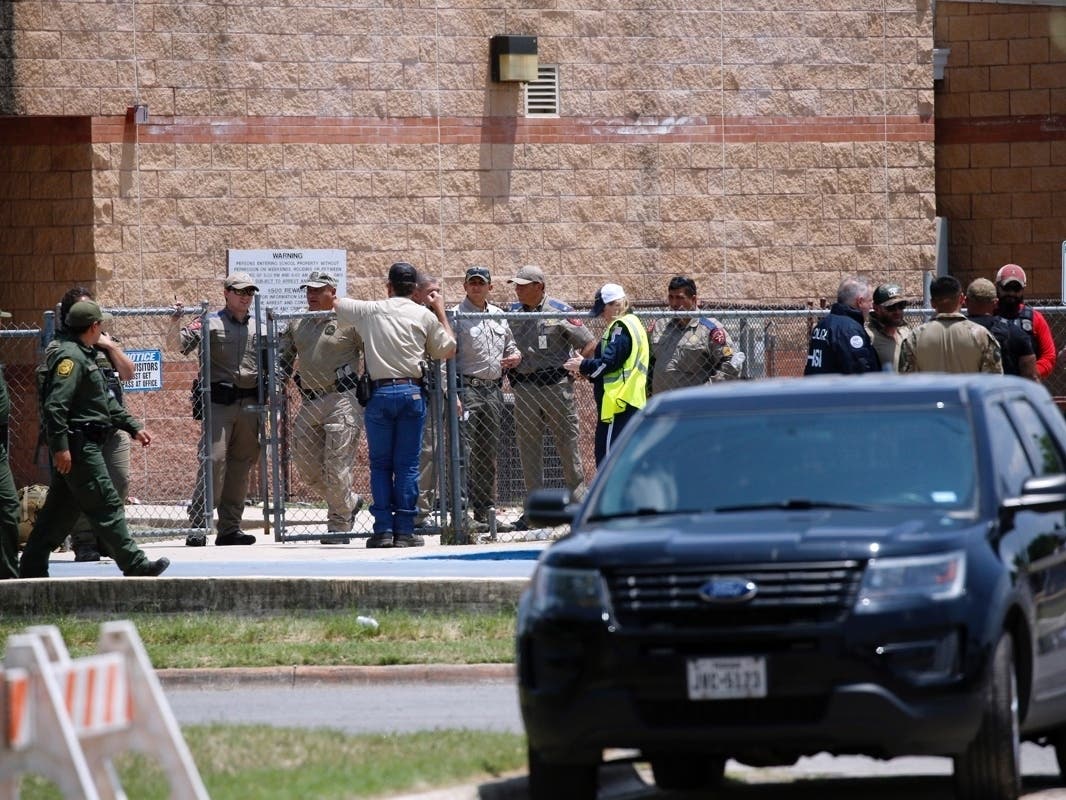
CONCORD, NH — School shootings, such as the one in Uvalde, Texas, on Tuesday, remind both officials and police they can never be too prepared for emergency situations at schools in the state of New Hampshire.
While school shootings are rare in the Granite State, there have only been a handful in the last four decades, incidents around the United States and the headlines they produce have made schools here more proactive when it comes to contingency plans for student safety.
An audit of schools in Patch communities found that all considered school safety a priority and had various plans in place between schools and first responders. Many of the schools were locked down during school hours, required guests to be buzzed in, and had school resource officers to protect students from attacks and investigate crimes inside of the schools. Emergency preparedness plans also need to be filed with the state’s homeland security department.
Find out what's happening in Concordfor free with the latest updates from Patch.
Also Read
- Texas School Shooting: What We Know About Uvalde Victims
- Texas School Shooting: Gunman Killed 19 Kids, 2 Teachers In Same Class
Some schools were excessively transparent with parents and the public about their plans while others were more secretive. Some, too, offered guides to parents even though the biggest threat is not necessarily “stranger danger” or a lone wolf attacker, but were suspects affiliated with the school in some way.
Most of the large mass casualty events like Robb Elementary, Parkland, Sandy Hook, and Columbine, all had young gunmen, with mental health, discipline, and-or prescription drug issues, who were connected to the schools they attacked. That “known suspect” factor is the most worrisome to a few superintendents even though districts were prepared.
Find out what's happening in Concordfor free with the latest updates from Patch.
“Given what we have known about school shootings, I’m not worried about strangers; I’m worried about people we know,” Michael Fournier, the superintendent of the Bedford School District, said. “People get caught up on strangers … but honestly, it’s people (officials) know.”
Fournier said, on days like today, districts, including ones all over the state, work to increase patrols, send out messages, and open up communication with parents. But he admitted even with all that communication, officials could not predict who was going to act violently but often, educators can see the signs.
The staff gets trained in an ongoing manner and Bedford uses the “Run, Hide, Fight” active shooter protocol, particularly at the high school level, he said. Officials meet quarterly with the police and schools meet monthly to discuss their plans. Fournier said the district also has an online guide for emergency incidents for parents.
“Generally speaking,” he said, “schools are the safest places … unfortunately, (shootings) just make you more weary of things.”
Kathleen Murphy, the school superintendent at SAU 8 in Concord, who formerly led the Hampton schools, agreed with Fournier that some schools were vulnerable not by strangers but from people known to the district.
“I think that’s true, we’re very vulnerable,” she said, even with all the security. “You don’t know; you absolutely don’t know. And, in many ways, we have become vulnerable. You still let people in you know; you could put up the wall of China and you’re still going to let in people you know.”
Concealed weapons are allowed in schools in New Hampshire, something she found concerning, even though there were so few incidents. Weapons, Murphy noted, were smaller, too, and not as easy to visually detect.
At the same time, Concord has about 10 drills a year with both fire and police. Students and staff practice lockdowns, shelter in place, and even reverse shelter in place — coming inside after being outside.
“Those are all happening on a regular basis,” she said.
The district has also implemented a new ID scanning system by Raptor Technologies which checks any visitor to the school and runs an instant background check so officials know if they are a potential danger.
Many of the safety components in the city have been implemented since both the Sept. 11 attacks and the Sandy Hook incident.
But most importantly, Murphy said, was the social and emotional learning component — being “vigilant with our students,” to ensure they have the capacity to understand life skills and build relationships with others.
New Hampshire was the first state to embrace the Jesse Lewis Choose Love Movement, the social-emotional learning curriculum created in honor of the boy who died helping save other students during the Sandy Hook shooting. The program is officially a New Hampshire Department of Education partner.
Scott Laliberte, the superintendent in Londonderry who is retiring at the end of the year, said the district also has “an extensive school safety plan” created with the assistance of police and firefighters while also using state and federal resources. The district works with first responders on a regular basis.
“Representatives from police and fire have permanent seats on our Emergency Operations Planning Team,” he said. “We are fortunate to have a very collaborative and productive relationship with LPD, and consider them to be important partners in maintaining school safety.”
Londonderry has a notification system that allows the district to communicate with parents by voice, text, and email, and officials do disclose as much information to parents so they know their role in the response to any emergency.
Lois Costa, the superintendent for SAU 90 in Hampton, said the district works “collaboratively” with both police and fire as well as other agencies to address safety matters in the district. The district plans drills and works to coordinate safety issues with students and staff and the school resource officer — who also focuses on building relationships with students and staff.
“We have hosted safety forums internally with SAU 21 and externally with the community,” she said. “We have conducted a safety audit of the school district with former Navy Seals. They have made recommendations to us that we have acted upon.”
While the schools are locked, two of the three buildings have airlocks, too, and surveillance systems to help with safety and security.
Costa’s counterpart at SAU 21, Meredith Nadeau, said her staffers have devoted many hours of professional development time to prepare for incidents including via the district’s Safety and Security Task Force. Knowing that many of these incidents are connected to students and others who have a relationship with the schools, staff have also been using social-emotional learning tools and strategies in schools to focus on the students — “those programs help to teach children skills and strategies for relating to others, coping with anger, frustration, and adversity, and help to destigmatize mental health and asking for help.”
The district, which covers other Seacoast community schools including North Hampton, also uses Responsive Classroom, Open Circle, and advisories to keep students connected to the school community, she said.
“We have behavioral intervention and response teams in place that are activated when there is a concern about safety on the part of a student,” Nadeau said.
The district also has an anonymous tip line and resources for parents to share with students about school violence.
Nadeau said she told school parents on Wednesday that while she was sitting in her car outside of one of the district’s schools, she felt joy watching the students arrive at school full of energy. But she also felt pain and tears knowing that no matter what preparedness the district made to keep students safe, it was possible it might not be enough.
“I continue to send my children to school and to show up at work each day,” Nadeau said. “I continue to put my faith in our small, New Hampshire communities where we have the ability to know each child and to connect with each other when things aren't OK.”
In Exeter, SAU 16’s safety committee has spent the last decade “deeply invested in ensuring that our schools are safe,” David Ryan, the school superintendent, said.
Along with security, the staff is trained in how to respond to critical incidents and students, too, are reminded about emergency response procedures practiced throughout the school year.
“We continually collaborate with local law enforcement and first responders to reassess and make adjustments to our safety protocols as needed,” he said, “and local law enforcement in our six towns collaborate on plans for multi-agency responses in the event of an incident.”
Ryan said school officials and first responders meet three times per year and work on exercises, simulations, and drills throughout the year.
SAU 16 also has a specialized page on school safety for parents.
While schools in the state are prepared for emergency situations and have been working to keep students safe, some feel there is more work to be done.
Carl Ladd, the executive director of the New Hampshire School Administrators Association, said while members were devastated by the Texas shooting, they were ready to work with anyone to “address gun violence in our schools.” He pointed to Education Week’s tracking of shootings on school grounds since 2018 which showed 189 incidents in the United States resulting in 80 deaths and 200 injuries. Ladd said the time to act was immediately and political leaders should not allow the loss of life to continue.
“Yesterday’s tragedy reminds us that we have done little as a nation to address gun violence, especially toward our most vulnerable population,” Ladd said. “What message do we send parents, families, and communities when we cannot ensure a child’s safety at school? How many more families must lose a child before we act collectively?”
School Shootings In NH
There have only been a handful of school shootings in New Hampshire during the past 40 years.
In December 1985, Louis Cartier, a 16-year-old dropout at Concord High School, showed up at school with a shotgun and held two students hostage. He was shot by police after a standoff and later, died at Concord Hospital.
Back in October 1991, a 16-year-old dropout from the Monadnock Regional High School fired a single rifle shot that wounded two students, according to the Keene Sentinel. After a 15-minute standoff, the student was arrested.
Despite not being deemed one by some officials in the state, the most recent school shooting in New Hampshire occurred at Second Start in Concord in February 2020.
At the time, the incident was reported as a suicide by a student. However, after right-to-know requests for investigation materials, Patch revealed months later that the student actually shot at a teacher before taking his own life, making it officially a school shooting.
Got a news tip? Send it to tony.schinella@patch.com. View videos on Tony Schinella's YouTube.com channel or Rumble.com channel.
Get more local news delivered straight to your inbox. Sign up for free Patch newsletters and alerts.