Politics & Government
Sununu Says He’ll Sign Marijuana Decrim Bill
Breaking: Governor says he'll sign HB 640 changing the law from a misdemeanor to a violation after Senate approves amended House bill.


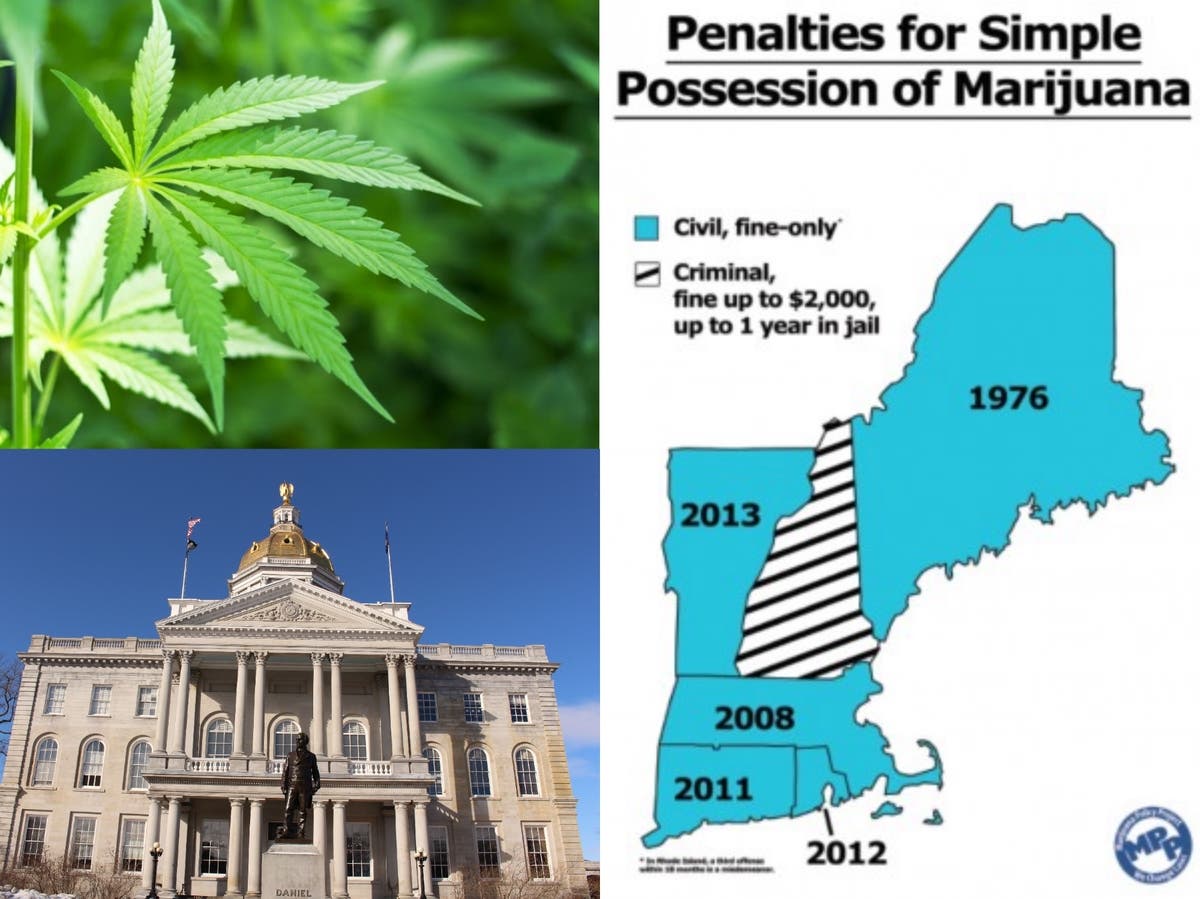
CONCORD, NH — After many years of back and forth arguing, bills approved, and then vetoed by governors that were Democrats, New Hampshire will probably soon be joining its neighboring New England states in decriminalizing small amounts of marijuana. The state Senate on May 11, 2017, approved HB 640 – legislation that changes the penalty for possession of up to three-quarters of an ounce of marijuana from a criminal penalty to a violation – by a 17 to 6 to vote. With Senate approval, the bill now goes back to the House, where a different version allowing for an ounce of marijuana to be decriminalized was previously approved, and then will head to Sununu’s desk.
“I want to thank the Legislature for passing common sense marijuana reform,” Gov. Chris Sununu, R-NH, said in a statement. “I look forward to signing House Bill 640 into law.”
Senate Democratic Leader Jeff Woodburn, D-Whitefield, commended the bipartisan support for the bill in the Senate (nine Democrats and eight Republicans made up the 17 votes) stating it would allow the justice system and law enforcement communities to spend its resources on combating New Hampshire’s heroin, opioid, and fentanyl epidemic.
Find out what's happening in Concordfor free with the latest updates from Patch.
“The decriminalization of marijuana happened today because Democrats pushed marijuana decriminalization through the legislature – it is a proud progressive achievement that moves New Hampshire forward by creating a serious, sensible pathway to marijuana legalization,” he said. “Given the severity of our state’s opioid, heroin and fentanyl public health crisis, it’s prudent to relieve law enforcement from the burden of processing small marijuana possessions as criminal cases and free up resources to address our most urgent substance misuse cases. I’m very pleased with the outcome of today’s vote; I only wish more of our Republican colleagues could have joined us.”
Sununu did not receive an endorsement from the Marijuana Policy Project, a group on the forefront of the medical marijuana and decriminalization fight in New Hampshire, although the group noted that he had shown support for decrim in the past. But Matt Simon, the New England political director for the organization, said he was pleased with approval of the bill and Sununu's comment about signing it into law.
Find out what's happening in Concordfor free with the latest updates from Patch.
“This is a very important reform for the Granite State, and it has been a long time coming,” Simon stated. “The walls of prohibition are crumbling in New England and across the United States. It’s encouraging to see New Hampshire finally begin to catch up with neighboring states by passing decriminalization.”
Simon said that the bill was originally introduced in the House by state Rep. Renny Cushing, D-Hampton, and a bipartisan group of co-sponsors. Currently, marijuana possession is punishable by up to one year in prison and a fine of up to $2,000. The bill creates a fine structure for possession: $100 for a first and second offense and a $300 fine for a third offense within three years of the first offense. A fourth offense within three years of the first offense could be charged as a Class B misdemeanor, but there would be no arrest or possibility of jail time.
New Futures, a wellness organization that has raised numerous issues about medical coverage for addition services as well as other budgetary concerns, stated that while many were worried about the risk that decriminalization could pose for children, the bill included “practical prevention focused reforms aimed primarily at children and youth” as well as other provisions including allowing children to waive the fine if they undergo substance use risk assessment as well as designating fines for substance misuse prevention programs.
The state Senate also approved establishing a statewide needle exchange program today.
“After lengthy yet important debate and input from advocacy organizations, police, and other stakeholders in the past few months, the program that we’ve developed is an appropriate balance between decreasing the spread of preventable disease while maintaining law enforcement’s ability to protect the public,” said state Sen. James Gray, R-Rochester, in a statement about the bill. “This legislation provides protections for individuals who are members of the needle exchange program from being prosecuted for residual amounts of drugs in syringes while providing education on preventable disease and serving to encourage individuals using dangerous illegal substances to seek treatment. The heroin and opioid epidemic continues to be an ongoing fight and we will focus our available resources on programs that prove to be most effective in guiding users to treatment and recovery programs while implementing critical prevention measures.”
Get more local news delivered straight to your inbox. Sign up for free Patch newsletters and alerts.