Asbury Park, NJ|Local Classified|Announcement|
Back-to-School Safety Reminders from K. Hovnanian Children's Hospital
As the summer winds down, the familiar rhythm of the school year will soon begin – a great reminder to focus on safety. As emergency medicine physicians at K. Hovnanian Children's Hospital (KHOV CH) at Hackensack Meridian Jersey Shore University Medical Center, we've seen firsthand the types of accidents and injuries that can occur. By working together, we can ensure a safe and healthy return to school for our children.
On the Move: School Bus and Pedestrian Safety - The journey to and from school presents some of the most significant safety challenges. According to the National Highway Traffic Safety Administration (NHTSA), while school buses are the most regulated vehicles on the road and students are about 70 times more likely to get to school safely on a bus than by car, the most dangerous part of the journey is getting on and off the bus. From 2014 to 2023, there were 209 school-age children who died in school-bus-related crashes, and 79 of them were pedestrians.
For younger bus riders, it’s best to be at the bus stop at least five minutes before the bus is scheduled to arrive. This reduces the need to rush, which can lead to accidents. Teach your children to stay at least 10 feet back from the curb – about three giant steps – and to never walk behind the bus. It is within that 10 foot area that kids are in the most danger of not being seen by the driver.
Once on the bus, children should find a seat and remain there. This minimizes distractions for the driver. For drivers, the start of the school year means being extra vigilant. In New Jersey, the law requires drivers to stop at least 25 feet away from a school bus with its red lights flashing. On a road with no physical divider, traffic in both directions must stop. Failure to do so can result in fines, license points, and, most importantly, a tragic accident.
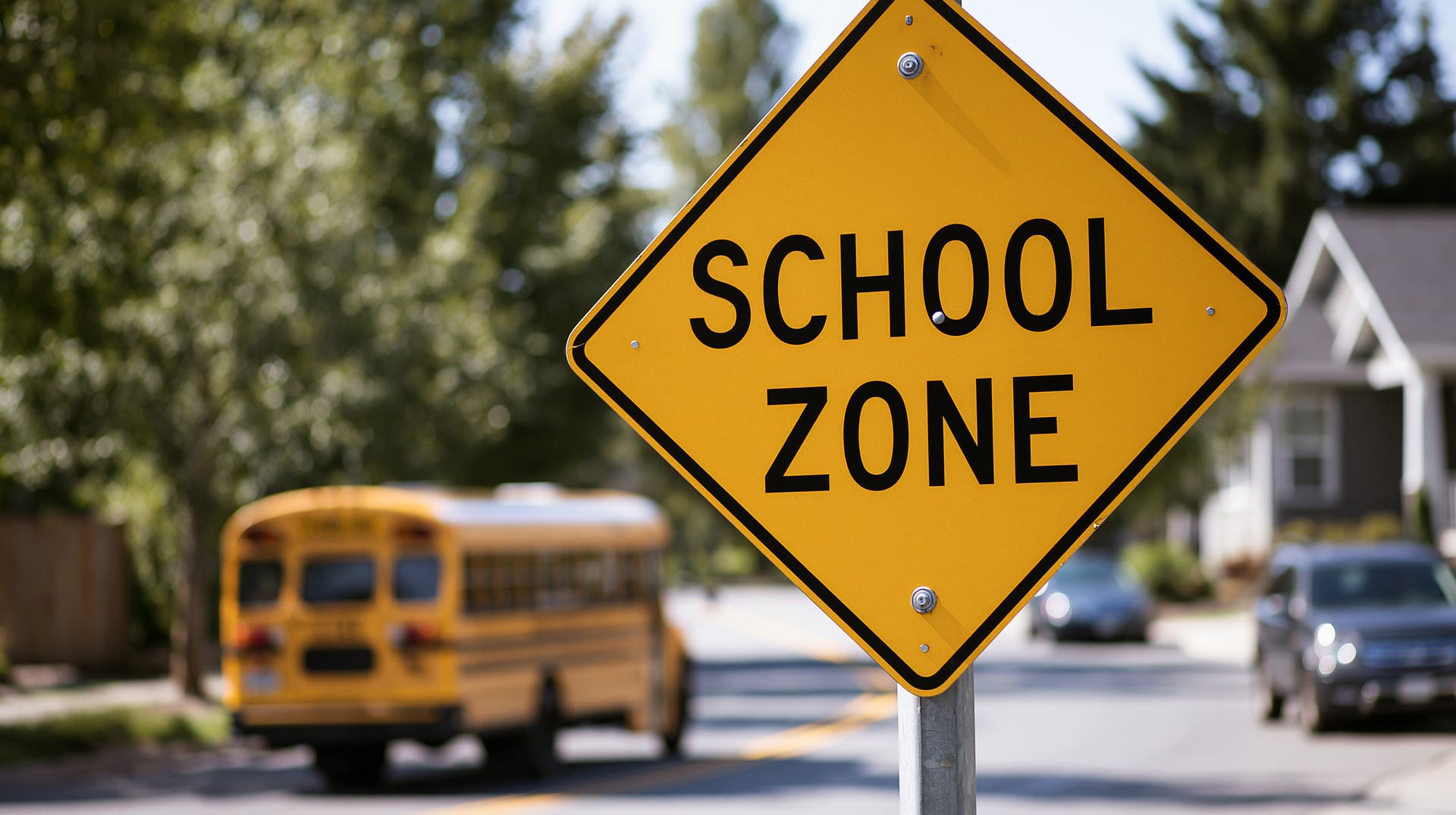
With many children walking to school, pedestrian safety is a major concern. In 2023, 17% of children aged 14 and younger who were killed in traffic crashes were pedestrians, according to the NHTSA. Drivers must slow down in school zones and should be prepared to stop for children at crosswalks even if it’s not during school hours.
Beyond the Commute: Backpacks and In-School Injuries - Safety doesn't stop at the school door. Two common issues we see are backpack-related injuries and head injuries. The American Academy of Pediatrics recommends that a child's backpack should weigh no more than 10% to 20% of their body weight. A heavy backpack can cause back, neck, and shoulder pain. When choosing a backpack, look for one with wide, padded shoulder straps, a padded back, and a waist strap to help distribute the weight evenly. And while your child (especially older kids) may not think it looks cool, always encourage them to use both shoulder straps.
Head injuries are also a significant concern. These injuries can happen on the playground or during sports. According to the Centers for Disease Control and Prevention, contact sports – including football, basketball, and soccer – are associated with 45% of all emergency department visits for sports- and recreation-related traumatic brain injuries and concussions among children ages 17 and under. While injuries can range from a minor cut on the head to more extreme cases that can cause bleeding on the brain or coma, it's crucial to seek medical attention any time a child has a blow to the head – and especially if they show signs of confusion, headache, or vomiting. Ensuring proper head and safety gear will help reduce your child’s risk of injury.
The start of a new school year is a time of new beginnings. By taking a few extra precautions, we can help our children have a safe and successful year. For more information on children's health and safety, please visit hackensackmeridian.org/kids. Grace Marie Ponce, M.D., is the division chief of pediatric emergency medicine and David Bergamo, M.D., is associate director of pediatric emergency medicine at KHOV CH.