Schools
Coyote Seen Near South Toms River School; What You Can Do
Officials believe it was "just passing through;" here's what to do to discourage them from hanging around.


South Toms River school officials and residents are on the lookout, after a coyote was seen lurking around the school on Monday, according to officials.
A coyote was spotted on the grounds of South Toms River Elementary School on Monday and Principal Dennis Holzapfel immediately notified authorities, said Tammi Millar, Toms River Regional district spokeswoman.
“The faculty and the administration at South Toms River Elementary School acted quickly to protect students and inform the authorities,” Superintendent of Schools David M. Healy said. “Parents of all students were notified of the incident with letters home and via e-mail. The students were kept indoors for lunch and recess on Monday and Tuesday as a precaution. At no time were students ever in danger. The police will monitor the situation and animal control has set a humane trap within the area.”
Find out what's happening in Berkeleyfor free with the latest updates from Patch.
The Ocean County Sherriff’s Department facilitated the communication between Holzapfel and a representative of the state Department of Environmental Protection’s Division of Fish and Wildlife.
Coyotes are everywhere throughout the state from Jersey City to Cape May, according to the division. During the summer, coyotes are grouped in family units, and after summer, the pups are full grown and go off on their own.
Find out what's happening in Berkeleyfor free with the latest updates from Patch.
“Fish and Wildlife believes that the coyote was probably just passing by and we will never see it again,” Millar said. The division representative did not feel that the coyote is a threat to people, she said.
“Even though the coyote was never near any students, our students have been very curious and have referred to the coyote as a ‘majestic animal,’ “ Holzapfel said. The incident “created a teachable moment where students asked questions about coyotes and were reminded to be careful around any animals they may encounter.”
School is closed on Wednesday for Yom Kippur, and Healy said that when students return to school Thursday, the school will follow regular routines, including recess.
“Students are always under the close supervision of staff and administration throughout the day and we will continue to monitor the area to ensure the safety of all children,” Healy said.
The Division of Fish and Wildlife says the coyote population in New Jersey has steadily risen since the first recorded sighting in Lambertville in 1939.
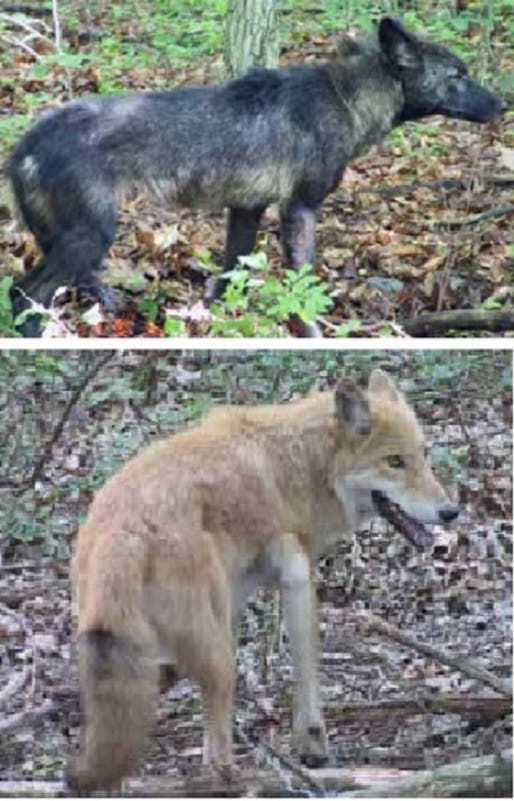
The division said the coyote “closely resembles a small German shepherd with the exception of its long snout and bushy, black-tipped tail. Another key difference from a domestic dog is readily noticeable even from a distance: The coyote has a habit of holding its tail below a horizontal position while standing, walking and running.”
Division officials also offer the following information:
If you observe coyotes in the daytime that show no fear of humans or if a coyote attacks a person, immediately contact your local police and the Division of Fish and Wildlife at 908-735-8793; outside of normal business hours call the DEP Hotline at 877-WARN-DEP.
The following guidelines can help reduce the likelihood of conflicts with coyotes:
- Never feed a coyote. Deliberately feeding coyotes puts pets and other residents in the neighborhood at risk.
- Feeding pet cats and/or feral (wild) cats outdoors can attract coyotes. The coyotes feed on the pet food and also prey upon the cats.
- Put garbage in tightly closed containers that cannot be tipped over.
- Remove sources of water, especially in dry climates.
- Bring pets in at night.
- Put away bird feeders at night to avoid attracting rodents and other coyote prey.
- Provide secure enclosures for rabbits, poultry, and other farm animals.
- Pick up fallen fruit and cover compost piles.
- Although extremely rare, coyotes have been known to attack humans. Parents should monitor their children, even in familiar surroundings, such as backyards.
- Install motion-sensitive lighting around the house.
- Clear brush and dense weeds from around dwellings -- this reduces protective cover for coyotes and makes the area less attractive to rodents and rabbits. Coyotes, as well as other predators, are attracted to areas where rodents are concentrated like woodpiles.
- If coyotes are present, make sure they know they’re not welcome. Make loud noises, blast a canned air siren, throw rocks, or spray them with a garden hose.
(Eastern coyote. Photo courtesy NJDEP)
Get more local news delivered straight to your inbox. Sign up for free Patch newsletters and alerts.